
Journey to the West (2010 TV series)
2010 Chinese TV adaptation of the classic 16th-century novel.

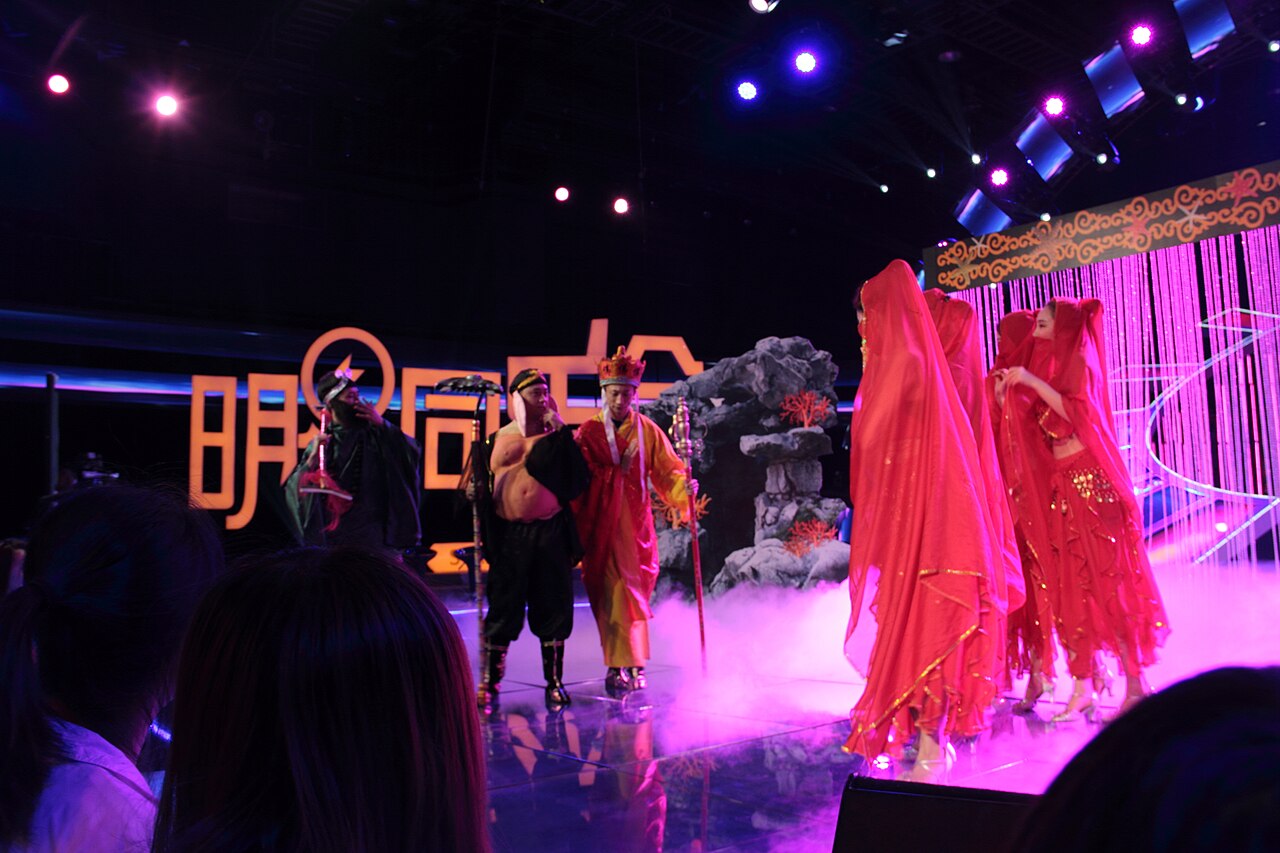
維基小霸王 · CC BY-SA 3.0
Journey to the West is a Chinese television series adapted from the 16th-century novel of the same title. Directed and produced by Cheng Lidong, it first aired on Zhejiang Satellite TV (ZJSTV) in China on 14 February 2010. The series stars Fei Zhenxiang as Sun Wukong, Victor Chen as Tang Sanzang, Xie Ning as Zhu Bajie, and Mou Fengbin as Sha Wujing.
Quick Facts
- Genre
- Chinese mythology, shenmo, fantasy, adventure
- Based On
- Journey to the West · Wu Cheng'en
- Screenplay
- Zhang Pingxi
- Director
- Cheng Lidong
- Starring
- Fei Zhenxiang / Victor Chen / Xie Ning / Mou Fengbin
- Open Theme
- Ta Ge Xi Xing (踏歌西行) performed by Tengger
- End Theme
- 1. Wo Xin Bu Bian (我心不变) performed by Tan Jing / 2. Xi You Ge (西游歌) performed by Fei Zhenxiang, Victor Chen, Xie Ning and Mou Fengbin
- Country
- China
- Language
- Mandarin
- Num Episodes
- 52
- Runtime
- 45 minutes per episode
- Channel
- Zhejiang Television
Facts from the source article.
Lore & Background
The series was directed and produced by Cheng Lidong, who also played the role of Ksitigarbha. It features a large ensemble cast, with Cecilia Han playing multiple roles including White Bone Demoness and White Bird Demoness, and Joan Chen portraying Guanyin. Tang Guoqiang appears as Jade Emperor, and Wang Like plays both Azure Dragon Demon King and Ruler of Women's Kingdom. The opening theme song 'Ta Ge Xi Xing' is performed by Tengger, and the ending theme 'Wo Xin Bu Bian' by Tan Jing. An alternate ending theme 'Xi You Ge' is performed by the four main leads.
Reader's Guide
This 2010 television series is one of several adaptations of the classic Chinese novel Journey to the West. It is distinct from the 2011 television series of the same title produced by Zhang Jizhong. The series was broadcast internationally, including in Sri Lanka where it aired on Rupavahini in late 2016 under the Sinhalese title Maha Wanara. The production features a wide cast with many actors playing multiple roles, and its soundtrack includes songs performed by the lead actors. The series remains a notable entry in the long history of media adaptations of the Journey to the West story.
Did You Know?
- The series first aired on Zhejiang Satellite TV on 14 February 2010.
- Cheng Lidong, the director and producer, also played the role of Ksitigarbha.
- In Sri Lanka, the drama aired dubbed in Sinhalese as Maha Wanara starting in late 2016.
- The opening theme song 'Ta Ge Xi Xing' was performed by Tengger.
Production & Creative Vision
The 2010 television adaptation of Journey to the West was both directed and produced by Cheng Lidong, who assumed the dual responsibility of shaping the series' creative direction and overseeing its production. The project drew its narrative foundation from the classic 16th-century Chinese novel of the same name, translating centuries-old mythology into a modern television format. At the helm of the story stood a core ensemble: Fei Zhenxiang embodied the mischievous Sun Wukong, Victor Chen portrayed the devoted Tang Sanzang, Xie Ning brought Zhu Bajie to life, Mou Fengbin played the steadfast Sha Wujing, and Wang Shuai took on the role of the White Dragon Horse. The series premiered on Zhejiang Satellite TV on 14 February 2010, entering a crowded landscape of Chinese fantasy television. It is important to distinguish this production from the separate 2011 series of the same title helmed by Zhang Jizhong, as the two are entirely different adaptations despite sharing a source material and a similar title.
Ensemble Cast & Role Diversity
One of the most striking features of this production is the sheer breadth of its supporting cast and the frequency with which individual performers juggle multiple characters across episodes. Cecilia Han, for instance, appears as both the White Bone Demoness and the White Bird Demoness, also known as Pian Pian, while Wang Like shifts between the Azure Dragon Demon King, called Qingling, and the Ruler of the Women's Kingdom. Liu Jia similarly splits her time between the Queen Mother of the West and a character called Widow Woman. The roster extends to major mythological figures: Joan Chen plays Guanyin, Tang Guoqiang portrays the Jade Emperor, Fan Zhiqi embodies Taishang Laojun, and Zhu Yanfei takes on the role of Buddha. Eddie Kwan appears as Li Jing, Yin Xiaotian as Erlang Shen, and Dong Meng as the Bull Demon King. Even Cheng Lidong, the series' own director and producer, steps in front of the camera to play Ksitigarbha. This layering of roles across dozens of performers gives the series a dense, mythopoeic texture that mirrors the sprawling world of the original novel.
Musical Identity & Featured Songs
The series built a distinctive sonic identity through a carefully curated set of featured songs that anchored its emotional beats. The opening theme, "Tage Xixing" (Singing on a Journey to the West), was performed by the Mongolian artist Tengger, lending the series a sweeping, epic quality from its very first frame. The closing musical landscape was equally layered: Tan Jing delivered the primary ending theme "Wo Xin Bu Bian" (My Heart Does Not Change), while an alternate closing track, "Xi You Ge" (Song of a Journey to the West), was performed collectively by the four principal actors—Fei Zhenxiang, Victor Chen, Xie Ning, and Mou Fengbin—tying their on-screen bond to the show's musical signature. Beyond the title themes, individual characters received their own vocal moments. Victor Chen sang "Xin Si Lianhua Kai" (Heart Opens Like a Lotus Blossoming), Wang Like performed "Randeng Zhi Ge" (Song of Lighting a Lamp), and the Black Ducks Group contributed "Guose Tianxiang Jinzai Xiliang" (All the Beauties Are in Xiliang). Together, these tracks wove a rich musical tapestry that reinforced the series' mythic scope and emotional depth.
Broadcast Reach & Cultural Context
The series first reached Chinese audiences on 14 February 2010 through Zhejiang Satellite TV, marking its domestic debut during the Lunar New Year period. Its journey beyond China's borders came several years later: in late 2016, the drama began airing in Sri Lanka on the Rupavahini channel, where it was dubbed into Sinhalese and given the local title "Maha Wanara." This international broadcast placed the 2010 adaptation within a broader global conversation about the enduring appeal of the Journey to the West narrative, a story that has inspired countless retellings across East and South Asia. The series also exists within a specific wave of Chinese television adaptations of the same novel, most notably the 2011 production directed by Zhang Jizhong, which is a separate and distinct project. Together, these multiple adaptations underscore how the 16th-century original continues to serve as a generative source for contemporary screen storytelling, with each new version offering its own interpretive lens on the legendary pilgrimage of Tang Sanzang and his companions.
Gallery




Frequently Asked Questions
What is Journey to the West (2010 TV series)?
It is a Chinese television adaptation of the classic 16th-century novel of the same name, directed and produced by Cheng Lidong. The series first aired on Zhejiang Satellite TV (ZSTV) in China on 14 February 2010.
Who plays the main characters in the 2010 Journey to the West?
Fei Zhenxiang portrays Sun Wukong, Victor Chen takes on Tang Sanzang, Xie Ning plays Zhu Bajie, and Mou Fengbin appears as Sha Wujing. These four form the core traveling party of the series.
Where and when did the 2010 Journey to the West first air?
The series premiered on Zhejiang Satellite TV in China on 14 February 2010. It later received an international broadcast in Sri Lanka on Rupavahini in 2016, dubbed into Sinhalese under the title Maha Wanara.
What is the plot of the 2010 Journey to the West?
The story follows Tang Sanzang and his three disciples—Sun Wukong, Zhu Bajie, and Sha Wujing—as they travel westward to obtain Buddhist scriptures. Along the way they face various demons and trials that test their resolve and faith.
Why is the 2010 Journey to the West adaptation significant?
It represents a modern Chinese television interpretation of one of the Four Great Classical Novels, bringing the beloved characters to a new generation of viewers. The series also gained an international audience through its 2016 Sinhalese-language broadcast in Sri Lanka.
More in Television shows about fairies 1-23
Spotted an error? Know more?
Reader corrections go straight into our review queue. Suggest an edit · How this site is sourced