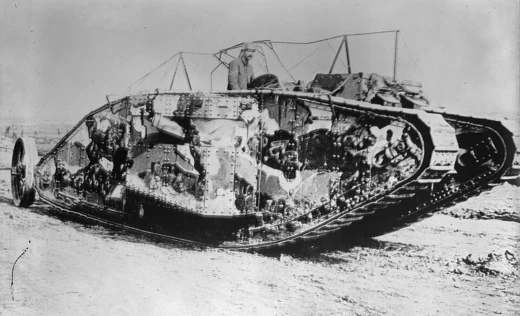
M4 Sherman
The most-produced American tank of World War II.
Last updated

Pakistan Army · Public domain
The M4 Sherman, officially designated Medium Tank, M4, was the primary medium tank used by the United States and its Western Allies during World War II. Known for its reliability and ease of mass production, tens of thousands were supplied via Lend-Lease to the British Commonwealth, the Soviet Union, and other Allied countries. The British named it after Union General William Tecumseh Sherman, and it served as the foundation for self-propelled artillery, tank destroyers, and armored recovery vehicles.
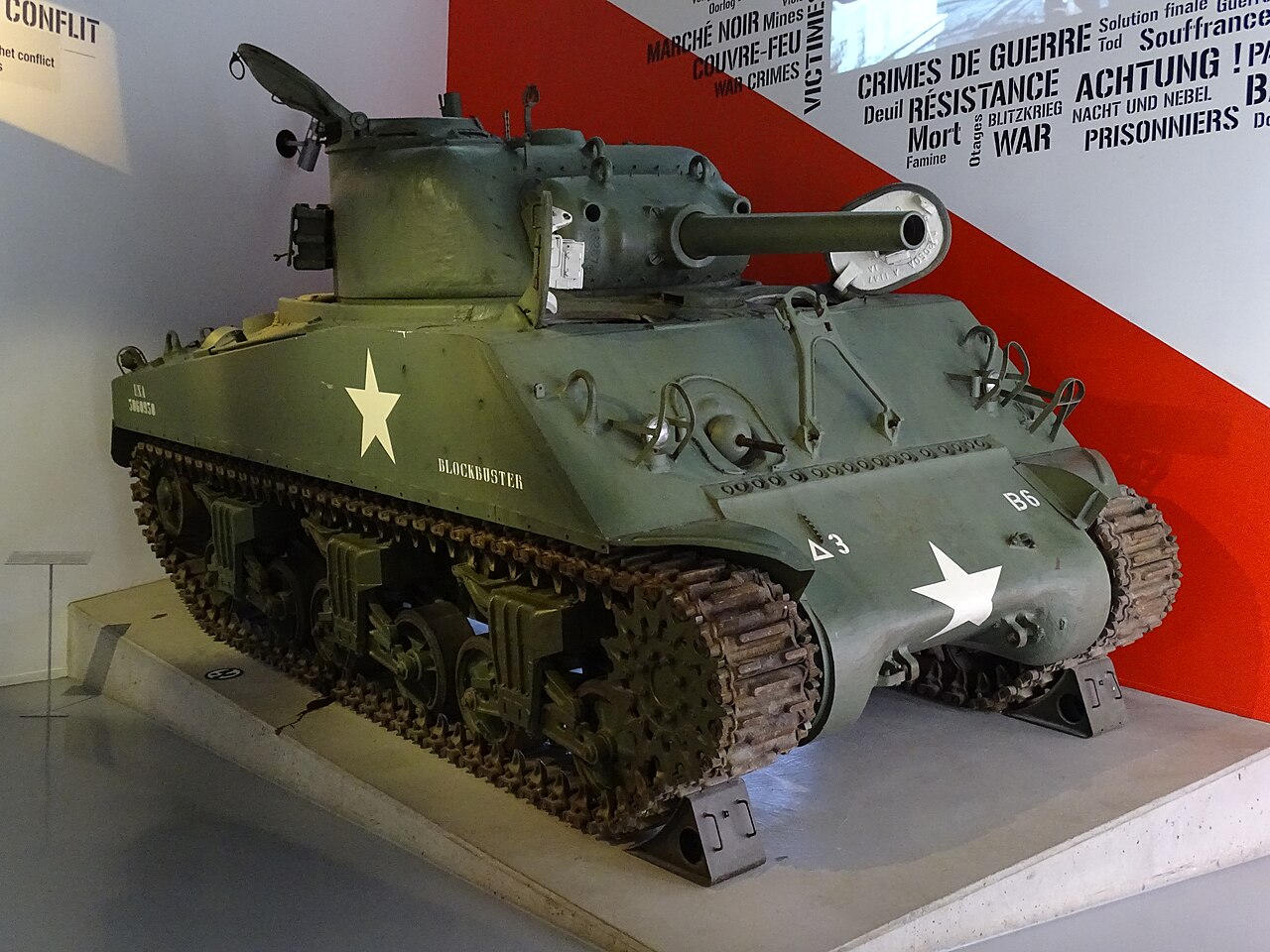
The Sherman evolved from the earlier M3 Lee, whose unusual layout and hull-mounted gun limited its effectiveness. The need for a more efficient design drove the M4's development, which prioritized reliability, production simplicity, and standardization. Parts were standardized to streamline manufacturing and simplify field repairs, while the tank's moderate size and weight eased shipping and allowed it to use existing bridges and transport equipment.
Gun development
With 49,324 units built, the M4 was the most-produced American tank of the war, surpassed only by the Soviet T-34 (about 84,070 units). It first saw combat with the British Army at the Second Battle of El Alamein in late 1942, where its 75 mm gun and superior armor gave it an edge over lighter German and Italian tanks.
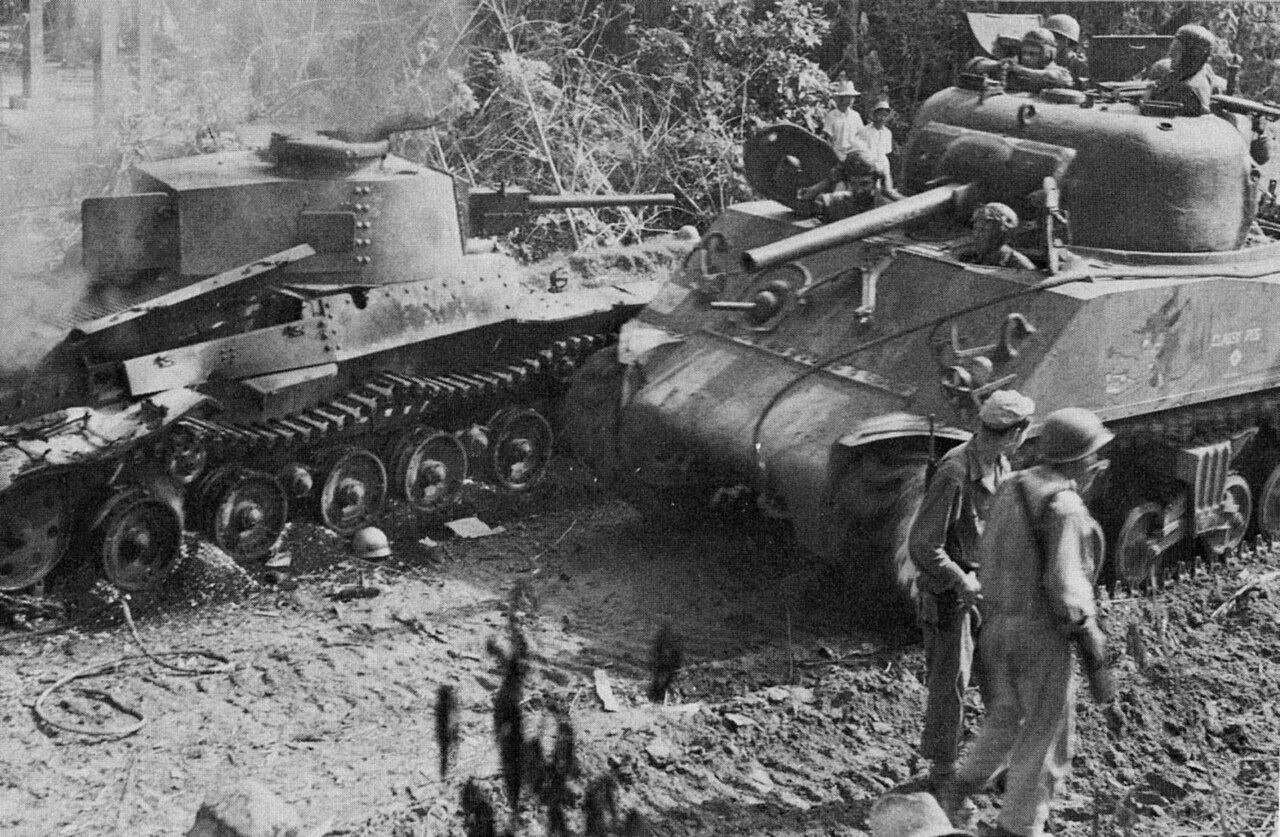
By 1944, however, it was outclassed in firepower and armor by upgraded German medium and heavy tanks like the Panther and Tiger. Most Shermans still carried the 75 mm gun into 1944 but fought on through numerical superiority, better reliability, superior logistics, and support from fighter-bombers and artillery. Later production models received the more powerful 76 mm gun M1, while the British converted some into the Sherman Firefly, armed with the 76.2 mm 17-pounder anti-tank gun.
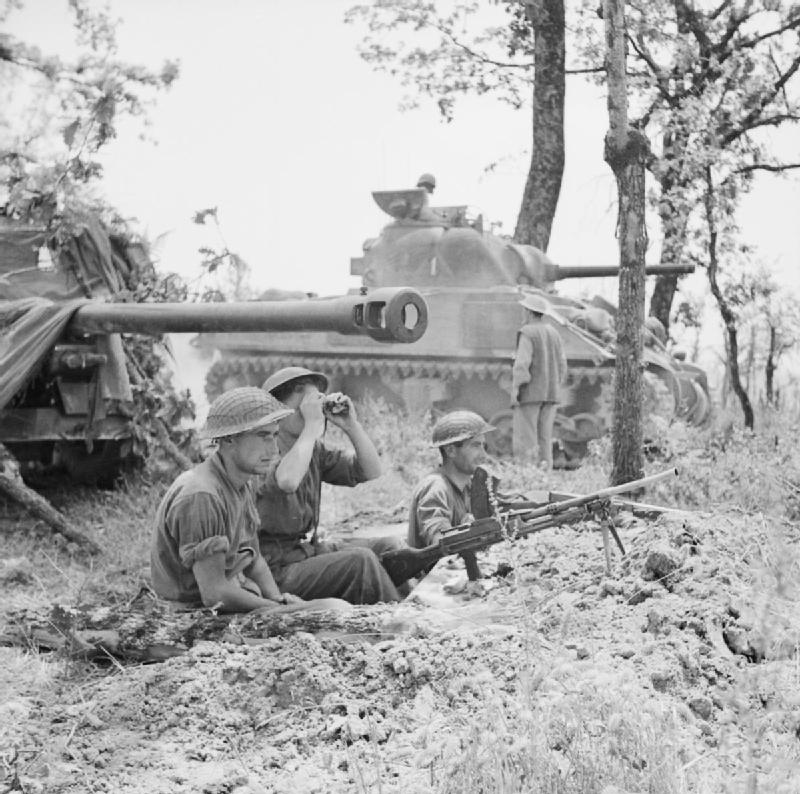
The Sherman was crucial to Allied offensives after 1942, including Operation Torch and campaigns in Italy and France. Its mass production, operational flexibility, and effectiveness made it a key Allied asset, cementing its legacy as a major tank design despite thinner armor compared to German heavy tanks. After World War II, upgraded Shermans served in the Korean War, the Arab-Israeli wars, the Vietnam War (briefly with South Vietnam), and the Indo-Pakistani War of 1965. In U.S. service, it was replaced by the M26 Pershing and M46 Patton.
U.S. prototype
The U.S. Army Ordnance Department designed the M4 to replace the M3 medium tank, which itself was an up-gunned version of the M2 medium tank. The M3 was a stopgap with a high profile and a hull-mounted 75 mm gun with limited traverse. American designers, though initially reluctant, adopted proven British ideas—including concepts from a Canadian General Staff tank design—and eventually developed their own effective 75 mm and 76 mm dual-purpose guns. Detailed M4 designs were submitted on 31 August 1940, but production of the M3 delayed the prototype.
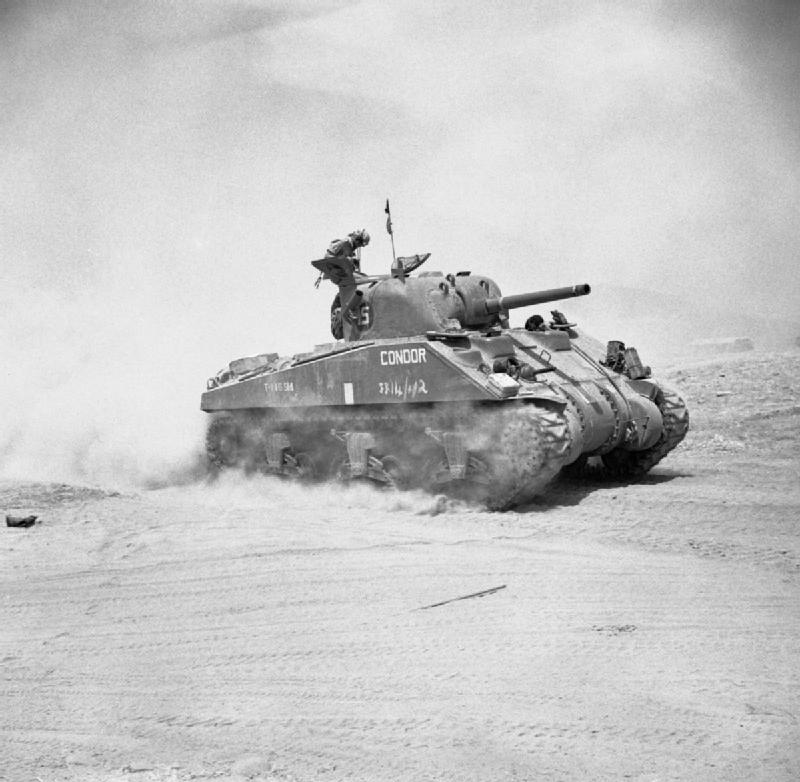
On 18 April 1941, the Armored Force Board selected the simplest of five designs, designated the T6, which used a modified M3 hull and chassis with a new turret mounting the M3's 75 mm gun. The Sherman's reliability came from features developed for U.S. light tanks in the 1930s: vertical volute spring suspension, rubber-bushed tracks, and a rear-mounted radial engine with front drive sprockets. The T6 prototype was completed on 2 September 1941, with a single large casting for the upper hull, an overhead hatch for the driver, and a side hull hatch. This design evolved into the M4A1 production model.
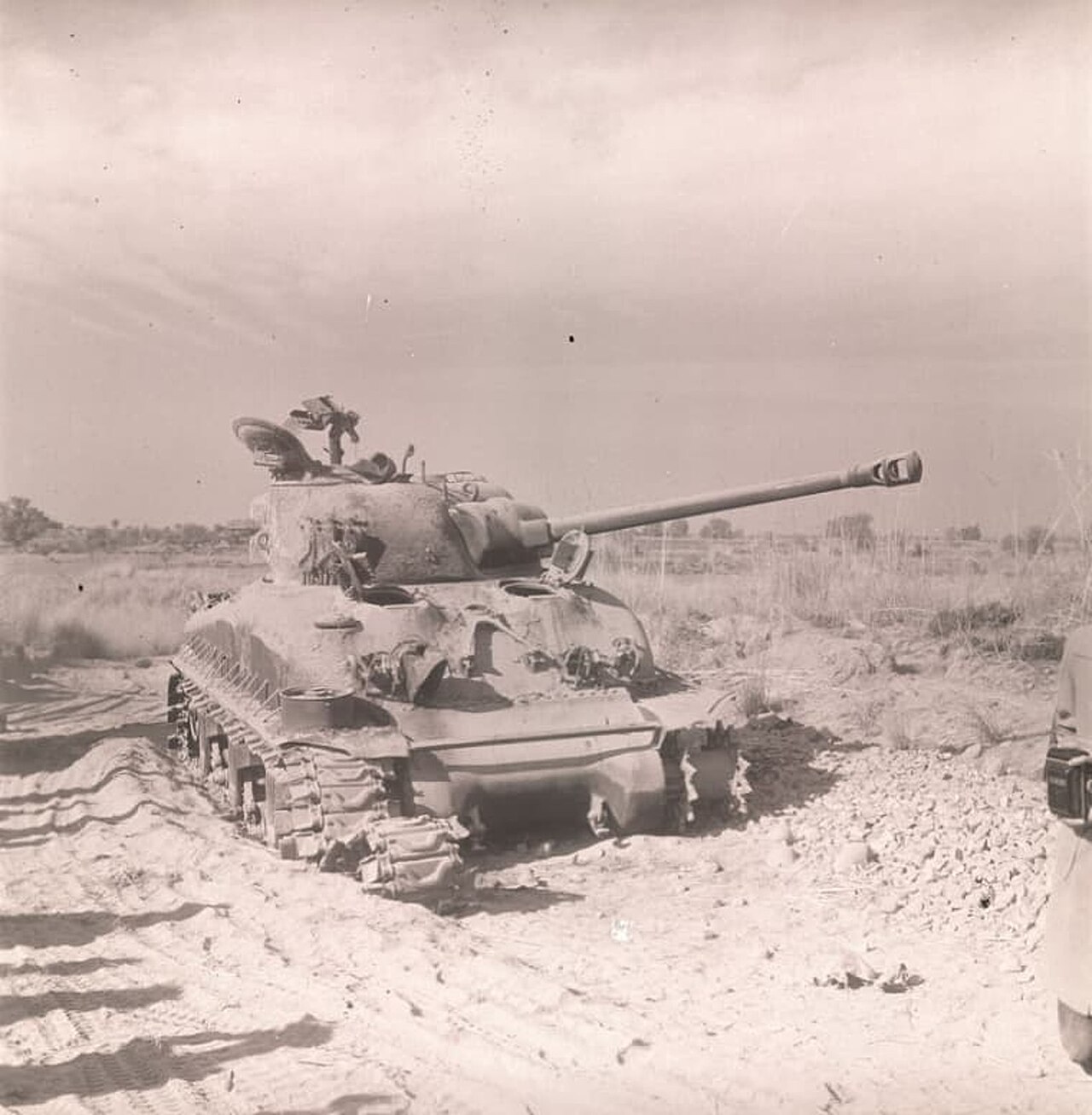
Lore & Background
The M4 Sherman evolved from the earlier M3 Lee, whose unconventional layout and hull-mounted gun prompted the need for a more efficient design. Development emphasized reliability, ease of production, and standardization of parts, allowing streamlined production and efficient supply of replacement components. The tank's size and weight were kept moderate to facilitate shipping and compatibility with existing bridges and transport vehicles. The T6 prototype was completed on 2 September 1941, and first production finished in February 1942.
When the M4 first went into combat in North Africa with the British Army at the Second Battle of El Alamein in late 1942, it increased the advantage of Allied armor over Axis armor and was superior to lighter German and Italian tank designs. Later, a 76 mm gun M1 was incorporated into production, and the British refitted some Shermans with a 76.2 mm 17-pounder gun as the Sherman Firefly. U.S. armored doctrine, governed by Field Manual 100–5 (May 1941), emphasized mobility and firepower for offensive operations against hostile rear areas, not primarily infantry support. The tank destroyer doctrine held that anti-tank work was mainly for towed and self-propelled guns, but this was rarely followed in combat as it proved impractical.
Design Philosophy and the Logic of Mass Production
The M4 Sherman was conceived not as a single-platform showcase of cutting-edge technology but as a vehicle optimized for the realities of industrial-scale warfare. American designers and the Army Ordnance Department prioritized durability, straightforward maintenance, and the ability to be repaired quickly in the field. Parts were standardized so that replacement components could flow efficiently through supply chains, and the tank's moderate size and weight kept it compatible with existing bridges, transport vehicles, and logistical infrastructure.
This philosophy made the Sherman well suited to mass production and wide distribution. Tens of thousands of units rolled off production lines and were shipped to the British Commonwealth, the Soviet Union, and other Allied nations through the Lend-Lease program. The tank also served as the chassis foundation for a family of specialized vehicles, including self-propelled artillery, tank destroyers, and armored recovery vehicles.
From the M3 Lee to the Sherman
The path to the M4 began with the shortcomings of its predecessor. The M3 Lee, an up-gunned evolution of the 1939 M2 medium tank, had been developed as a stopgap until a proper turret-mounted 75 mm gun could be designed. In practice, the M3's layout was awkward: a 37 mm gun turret perched on top created a tall profile, and the main 75 mm gun sat in a side sponson with limited traverse, unable to be aimed across the tank's other flank. Though it served adequately for the British in North Africa, these limitations made clear that a more versatile design was needed.
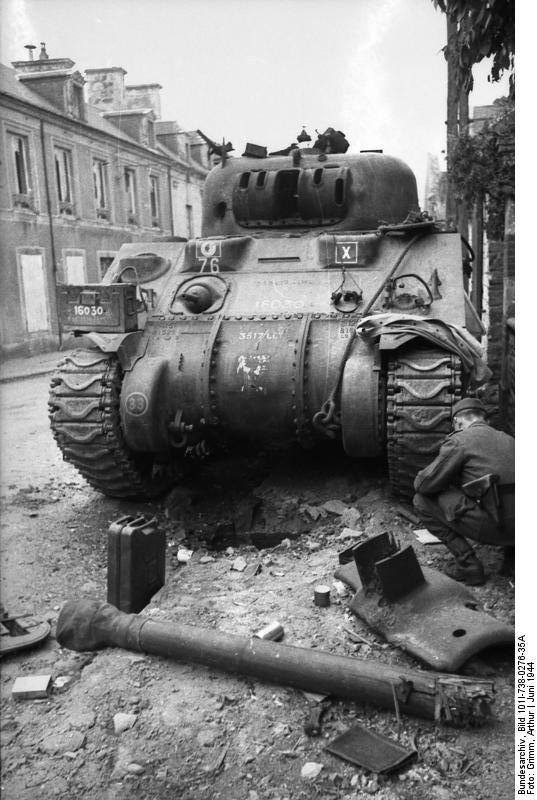
American designers, while generally reluctant to adopt foreign weapons, were open to proven British and Canadian ideas that shaped the new tank's development. The Ordnance Department submitted detailed M4 specifications on 31 August 1940, but prototype work was delayed while M3 production ramped up. On 18 April 1941, the U.S. Armored Force Board selected the simplest of five competing designs—the T6—which paired a modified M3 hull with a new turret housing the 75 mm gun. The T6 was completed on 2 September 1941, and first production units rolled out in February 1942.
Combat Performance Across the War
When the Sherman first entered combat at the Second Battle of El Alamein in late 1942, it held a clear advantage over the lighter German and Italian tanks facing the British in North Africa. Its 75 mm gun and relatively robust armor gave Allied crews a tangible edge at that stage of the war.
German forces fielded increasing numbers of upgraded medium and heavy tanks whose firepower and armor protection outclassed most Shermans, the majority of which still carried their original dual-purpose 75 mm gun. Rather than matching the enemy gun-for-gun, Allied commanders leaned on the Sherman's strengths: overwhelming numerical superiority, greater mechanical reliability, superior logistical support, and the growing fire support of fighter-bombers and artillery. To close the gap, a more effective armor-piercing 76 mm gun M1 was eventually incorporated into production vehicles, and the British went further by refitting some Shermans with the powerful 76.2 mm Ordnance QF 17-pounder, creating the Sherman Firefly.
Legacy and Post-War Service
The Sherman's influence extended well beyond the European and Pacific theaters of World War II. Its operational flexibility and the sheer volume of production made it a cornerstone of the Allied war effort, and its chassis spawned a range of derivative armored vehicles.
After 1945, improved and upgraded Sherman variants continued to see active combat around the globe. In American service, the M4 was eventually supplanted by the heavier M26 Pershing and M46 Patton. Despite its thinner armor compared to German heavy and medium designs like the Tiger and Panther, the Sherman's combination of reliability, ease of maintenance, and industrial scalability cemented its reputation as one of the most influential tank designs of the twentieth century.
Common Misconceptions (Editorial)
Some believe the M4 Sherman was primarily designed for infantry support, but U.S. armored doctrine, as governed by Field Manual 100–5 (May 1941), emphasized mobility and firepower for offensive operations against hostile rear areas. It is also a misconception that the Sherman always fought with a 75 mm gun; later production incorporated a 76 mm gun M1, and the British refitted some with a 76.2 mm 17-pounder, designating them Sherman Firefly.
Why It Matters (Editorial)
The M4 Sherman endures as a symbol of wartime industrial might and strategic cooperation, having been built in tens of thousands and distributed to Allies through Lend-Lease. Its service in numerous post-war conflicts underscores how a reliable, adaptable design can outlast its original era, shaping the evolution of armored warfare for decades.
Frequently Asked Questions
What gun did the M4 Sherman carry?
The standard fit was a 75 mm cannon, later upgraded to a 76 mm M1 gun on many production models for improved anti-armor performance. The British also developed the Sherman Firefly by mounting a 76.2 mm 17-pounder into the hull.
Who is the M4 Sherman named after?
The British coined the nickname 'Sherman' in honor of Civil War Union general William Tecumseh Sherman. The official American designation was simply 'Medium Tank, M4.'
What tank preceded the M4 Sherman in the U.S. medium-tank line?
The M3 Lee was the direct predecessor. The Sherman retained the Lee's production-friendly layout while correcting several of its design weaknesses, which allowed factories to ramp up output quickly and keep the vehicle in service for years after the war.
More in Tanks
Sources
Compiled from Wikipedia and the sources listed below. Text from Wikipedia is available under CC BY-SA 4.0; this entry is adapted from it.
- Wikipedia: M4 Sherman (CC BY-SA 4.0).
Spotted an error? Know more?
Reader corrections go straight into our review queue. Suggest an edit · How this site is sourced