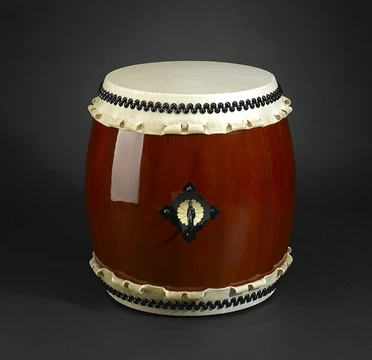
Oedo Sukeroku Taiko
Pioneering professional taiko group from Tokyo.
Back in 1959, a taiko group formed in Tokyo called Oedo Sukeroku Taiko. They are widely seen as the first to tour professionally, and some call them the first professional taiko group. Their distinctive Sukeroku style helped bring taiko performance to North America.
Quick Facts
- Origin
- Tokyo, Japan
- Years active
- 1959-present
- Genre
- Taiko
- Label
- Playasound
- Also known as
- Oedo Sukeroku Daiko
Facts from the source article.
Did You Know?
- The group's name comes from the former name for Tokyo, Edo, and a kabuki character named Sukeroku Hanakawado.
- Sukeroku is a hero in the kabuki play Sukeroku Yukari no Edo Zakura and is thought to represent the traditional spirit of Edo.
History
Oedo Sukeroku Taiko formed in 1959 in the Bunkyo ward of Tokyo under Seidō Kobayashi and three other men: Onozato Motoe, Ishizuka Yutaka, and Ishikura Yoshihisa. They used the Yushima Tenjin Shrine as a practice space. One account holds that the group emerged from a competitive atmosphere among young male drum performers seeking to stand out and impress young women at Bon festivals; Kobayashi and the others had previously performed in a Bon group called Oedo Sukeroku Kai. Some initial members left to start independent groups, including a similarly named Sukeroku Taiko founded by former player Imaizumi Yūtaka after a dispute with Kobayashi over money and direction. Oedo Sukeroku Taiko continues to perform nationally in Japan and internationally in Belgium, Indonesia, and India. In 1969, a student of the group, Seiichi Tanaka, founded the San Francisco Taiko Dojo and teaches Sukeroku-style performance. In 1999, Kobayashi accused North American taiko groups of performing pieces owned by Oedo Sukeroku Taiko, using their style and equipment without permission, acknowledgment, or compensation. In two letters, he demanded that groups study under their group or with the San Francisco Taiko Dojo to obtain permission. These demands were largely ignored, no compensation was given, and the group abandoned their requests.
Sukeroku performance style
Players take a specific stance with the left leg bent and the right leg fully extended, with the drum at approximately waist level. The style blends kata from traditions such as budō and classical music elements from a tradition called hogaku.
More in Taiko Groups
Spotted an error? Know more?
Reader corrections go straight into our review queue. Suggest an edit · How this site is sourced