Gumma (pathology)
A soft granuloma from tertiary syphilis.
Last updated
A gumma is a soft, non-cancerous growth that results from the tertiary stage of syphilis (and yaws). It is a form of granuloma most commonly found in the liver, but can also appear in the brain, heart, skin, bone, testis, and other tissues. Gummas can lead to a variety of potential problems including neurological disorders or heart valve disease.
Quick Facts
- Most common location
- liver (gumma hepatis)
- Other possible locations
- brain, heart, skin, bone, testis, and other tissues
Facts from the source article.
Presentation
A gumma is a type of lesion found only in syphilis, with a hard, dead center surrounded by inflamed tissue that forms a shapeless protein mass. This central area may become partly glassy and dies through coagulative necrosis, but it keeps some of the original tissue structure, unlike tuberculosis granulomas where caseous necrosis destroys all prior architecture.
Around the center lies a zone of epithelioid cells with fuzzy borders and multinucleated giant cells, while the outer edge contains fibroblasts, capillaries, and infiltrating lymphocytes and plasma cells. Eventually, the gumma turns fibrous, leaving an irregular scar or a round fibrous nodule. Growths with this appearance are called gummatous.
Did You Know?
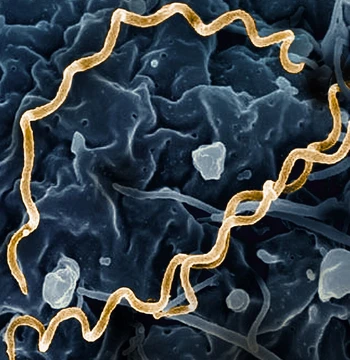
- The gumma is caused by a reaction to spirochaete bacteria in the tissue.
- It appears to be the human body's way to slow down the action of this bacteria, a unique immune response that develops after the immune system fails to kill off syphilis.
- Gummatous lesions are usually associated with long-term syphilitic infection, but can also be a symptom of benign late syphilis.
More in Syphilis
Sources
Compiled from Wikipedia and the sources listed below. Text from Wikipedia is available under CC BY-SA 4.0; this entry is adapted from it.
- Wikipedia: Gumma (pathology) (CC BY-SA 4.0).
Spotted an error? Know more?
Reader corrections go straight into our review queue. Suggest an edit · How this site is sourced