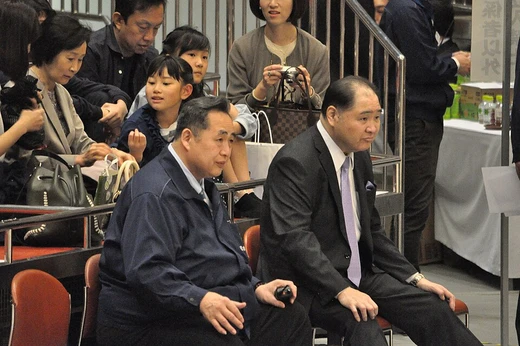
Toshiyori
A sumo elder who coaches and manages within the Japan Sumo Association.
A toshiyori is a sumo elder who serves as a coach for active wrestlers and holds responsibilities within the Japan Sumo Association (JSA). All toshiyori are former wrestlers who reached a sufficiently high rank to be eligible for this status, which guarantees employment until the mandatory retirement age of 65. The position is highly sought after due to its considerable benefits, including a comfortable yearly salary and the right to run and coach in heya (sumo stables).
Quick Facts
- Mandatory retirement age
- 65
- Maximum possible directors
- 15
Facts from the source article.
Did You Know?
- The term toshiyori was used in the Edo period to refer to central and provincial government administrators and community leaders, meaning 'senior citizen'.
- The term oyakata is an honorific suffix referring to a person with the status of surrogate parent or big brother, used for an apprentice master.
- The value of elder shares is high because most retired wrestlers fall back into anonymity in a society that offers little support, and shares represent the last hope of remaining in the sporting world with a salary.
History
The function of sumo elder emerged with the organization of the first tournaments authorized by municipal administrations of major Japanese cities during the Edo period. Masterless samurai, called rōnin, participated in street sumo tournaments called tsuji-zumo, but conflicts over betting money led to tense brawls and deaths. The term was later adopted by his successors to refer to masters leading groups of wrestlers in charity tournaments supporting sanctuaries, who enforced discipline and avoided fights. These toshiyori used their former ring names on delegations to secure authorization from shogunate officers. Meanwhile, associations in Osaka and Kyoto organized around elders known by different terms.
Becoming a {{Transliteration|ja|toshiyori}}
To become a toshiyori, a retired wrestler must acquire a share called kabu within the Japan Sumo Association, which functions as an asset, business rights, and practice license. Each kabu is named after a toshiyori-kabu, a generational family name, and the inheritor receives a diploma with that name. Current conditions are stricter than in the 1990s, when eligibility required competing in one makuuchi tournament or twenty jūryō tournaments, or twenty-five tournaments in any division. A special rule once allowed an apprentice to inherit his stablemaster's share if he participated in at least one jūryō tournament. Now, wrestlers who reached san'yaku ranks (yokozuna, ōzeki, sekiwake, komusubi) for at least one tournament are directly entitled to apply as executives. Maegashira must hold their rank for twenty tournaments, and jūryō wrestlers for thirty tournaments in the top two divisions. Yokozuna and ōzeki can remain without a share for five and three years respectively, becoming coaches under their ring names while seeking an authentic share.
Hierarchy
Toshiyori are not equal within the Japan Sumo Association; a hierarchical organization began developing around the 1780s with charity tournaments. Today, positions of influence are determined by elections every two years. Elders have a rank structure where only the lowest-ranking members are strictly called toshiyori. Ranks include yakuin taigu iin, elders re-hired as consultants between 65 and 70, and riji, directors elected by anonymous vote from all elders. The board elects a chairman (rijichō) from among themselves; other directors serve as department heads, with the Operations director considered the association's number 2. Yokozuna and ōzeki who secure a share receive automatic promotion to Committee Member rank, granting committee attendance but not voting rights. Fuku-riji (assistant directors) are elected by the board of trustees and appointed by the board of directors.
Tasks and occupations
Association members with a share manage various departments until compulsory retirement at 65. Only retired wrestlers can open stables, and elders who were popular wrestlers help attract high-potential recruits. Stablemasters are often the busiest, maintaining scouting networks and training all wrestlers. About half of all elders actually exercise their right to found or manage a stable. Training proceeds gradually by rank, with the stablemaster (shishō) appearing once sandanme wrestlers join; if absent, another oyakata takes over. After retirement at 65, many elders remain informally attached to their former stables, providing advice. Even after retirement, retired masters are treated with high respect. The shishō is the highest authority in the stable but is not necessarily paid more than other toshiyori attached to it, as each elder has internal promotion within the association. The shishō receives bonuses linked to the stable's material organization. Elders are distributed unevenly among stables, creating disparities in training quality.
More in Sumo Terminology
Spotted an error? Know more?
Reader corrections go straight into our review queue. Suggest an edit · How this site is sourced