Borz
Chechen improvised submachine gun produced from 1992 to 1999.
Last updated
The Borz (Chechen for "wolf") is a catch-all name for the various improvised submachine guns made during the Chechen Republic of Ichkeria’s brief period of independence. Only a small number were built, between 1992 and 1999. The first version copied the Armenian K6-92, which itself was a loose copy of the Soviet PPS submachine gun.
History
Production of the earliest model began in 1992 at the Krasniy Molot factory in Grozny. Only a few hundred were made there before the First Chechen War shut the plant down, forcing production into hidden workshops.
Design and deployment
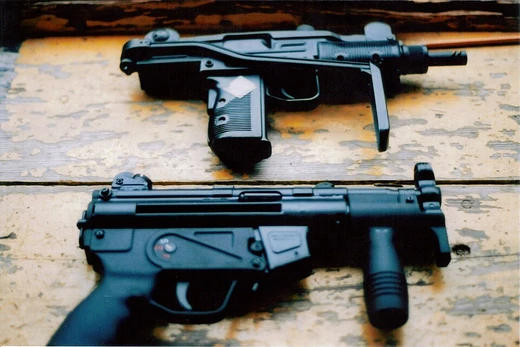
The Borz started as a direct clone of the K6-92, but because it is not a single model from one manufacturer—just a common label for any Chechen hand-built submachine gun with a similar look—individual examples vary widely. Later models from the late 1990s abandoned the original design, using a telescoping bolt and a magazine housed in the pistol grip, much like an Uzi. These are sometimes called "second generation" Borzes, and a few came with silencers or 40-round magazines.
The weapon was cheap and simple to produce, costing around $100 in Chechnya. Its receiver was often square steel tubing with a stamped steel dust-cover and trunnions at the front and rear, though some versions had a round receiver. The bolt copied the Soviet PPS, while the magazine was based on the German MP 40.
The trigger mechanism, which allowed both fully automatic and single shots, shared parts with the Madsen M-50, as did the ejector and barrel locking nut. Light and easy to handle, the Borz was ideal for quick ambushes, making up for its poor build quality. The barrel typically wore out after about three magazines, causing accuracy to drop sharply.
Like other improvised firearms, such as the FP-45 Liberator, the Borz was meant for guerrillas to use in sudden urban attacks on police or soldiers. After the ambush, they could pick up better factory-made weapons from the dead or wounded.
Lore & Background
Production of the first model started in 1992 at the "Krasniy Molot" plant in Grozny. Only a few hundred Borzes were crafted at this plant, because production was stopped by the First Chechen War and moved into underground workshops. The Borz was initially a clone of the Armenian K6-92, which itself was loosely based on the Soviet PPS submachine gun. However, individual models vary greatly, since the Borz is neither a single model of weapon nor made by a particular manufacturer, but a common name for all Chechen hand-made submachine guns with some similarity in design and appearance.
Some Borz models from the late 1990s do not follow the original design and have an Uzi-like telescoping bolt and magazine in the pistol grip. These are often referred to as the "second generation Borz"—some of these also featured silencers and 40-round magazines. The receiver could be square steel tubing with a stamped steel dust-cover on top and trunnions in the front and rear, although some versions have a round receiver.
The bolt design closely mimicked that of the Soviet PPS, and the magazine was based on the magazine used in the German MP 40. The trigger mechanism has features in common with the Madsen M-50, enabling both fully automatic and single fire. The ejector and barrel locking nut also resemble those of the Madsen.
The Borz was very simple and inexpensive to produce, costing about $100 in Chechnya. Its lightweight design and ease of use was ideal for sudden attacks, making up for its quality shortcomings. The barrel would generally wear out after firing about three magazines worth of ammunition, with the result of increasingly poor accuracy. Like many improvised firearms (such as the FP-45 Liberator), the Borz submachine gun was intended for use by guerillas as a crude semi-disposable weapon to ambush police and military forces in urban settings, after which they could obtain higher-quality factory-produced arms from the dead and wounded.
Frequently Asked Questions
What magazine does the Borz use?
Most variants fed from a magazine adapted from the German MP 40, though some later models incorporated a 40-round magazine. This was a practical choice given the parts available to Chechen workshops.
How many Borz were actually produced?
Only a few hundred of the first version rolled out of the Grozny factory before it was shut down. Overall, the total number built across all variants from 1992 to 1999 remained very small, making surviving examples rare.
More in Submachine Guns
Sources
Compiled from Wikipedia and the sources listed below. Text from Wikipedia is available under CC BY-SA 4.0; this entry is adapted from it.
- Wikipedia: Borz (CC BY-SA 4.0).
- Word definitions: the Codexery glossary, each quoted from its Wikipedia article.
Spotted an error? Know more?
Reader corrections go straight into our review queue. Suggest an edit · How this site is sourced