El Kantara
Town and commune in Algeria with a Roman gorge and bridge.
Last updated
Where it is
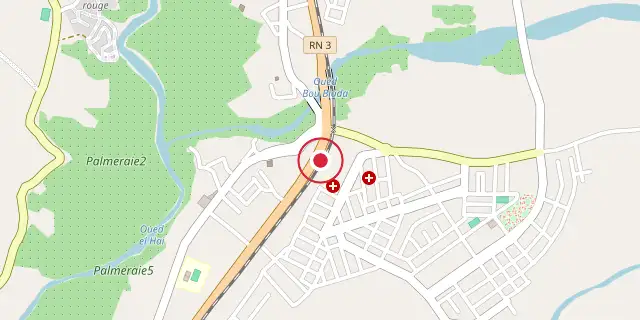
Coordinates: 35°13′01″N 5°42′36″E (35.2170, 5.7100) · Open in OpenStreetMap
Coordinates and connected clubs: the infobox of Wikipedia: El Kantara (CC BY-SA 4.0). Map: drawn by Codexery from OpenStreetMap tiles.
El Kantara is a town and commune in Biskra Province, Algeria. Its name derives from the Arabic word 'al-qantara' meaning 'the bridge', and it was described in the 1911 Baedeker travel guide as 'one of the most important caravan-stations in E. Algeria.' The town is known for the nearby eponymous gorge, called by locals the 'Mouth of the Desert,' which is narrow at only 40 meters wide but with walls up to 120 meters high.
Lore & Background
The gorge, known locally as the 'Mouth of the Desert,' was a strategic passage in antiquity. Roman engineers built an arched bridge over the river at the gorge's bottom to ease passage for caravans and military supplies. In the second century A.D., Syrian archers guarded the town and bridge, though the origin of date palm cultivation in the region predates the Roman period.
Reader's Guide
El Kantara's significance lies in its role as a key caravan station in eastern Algeria, as noted in the 1911 Baedeker guide. The Roman-era gorge, bridge, and road highlight its strategic importance for trade and military movement. The narrow gorge, only 40 meters wide, with walls up to 120 meters high, earned the local name 'Mouth of the Desert.' The Roman bridge, built by the Third Augustan Legion, facilitated the flow of goods and troops. Syrian archers stationed there in the second century A.D. are credited with introducing date palm cultivation to the area.
Today, a highway and railroad follow the same path as the ancient Roman road, underscoring the enduring utility of this route. The town's notable person, Saïd Chengriha, is a senior military leader. Several families of Arab and Berber origin in the region.
More in Specific Regions
Sources
Compiled from Wikipedia and the sources listed below. Text from Wikipedia is available under CC BY-SA 4.0; this entry is adapted from it.
- Wikipedia: El Kantara (CC BY-SA 4.0).
Spotted an error? Know more?
Reader corrections go straight into our review queue. Suggest an edit · How this site is sourced