
Where Longnose spider crab has been recorded
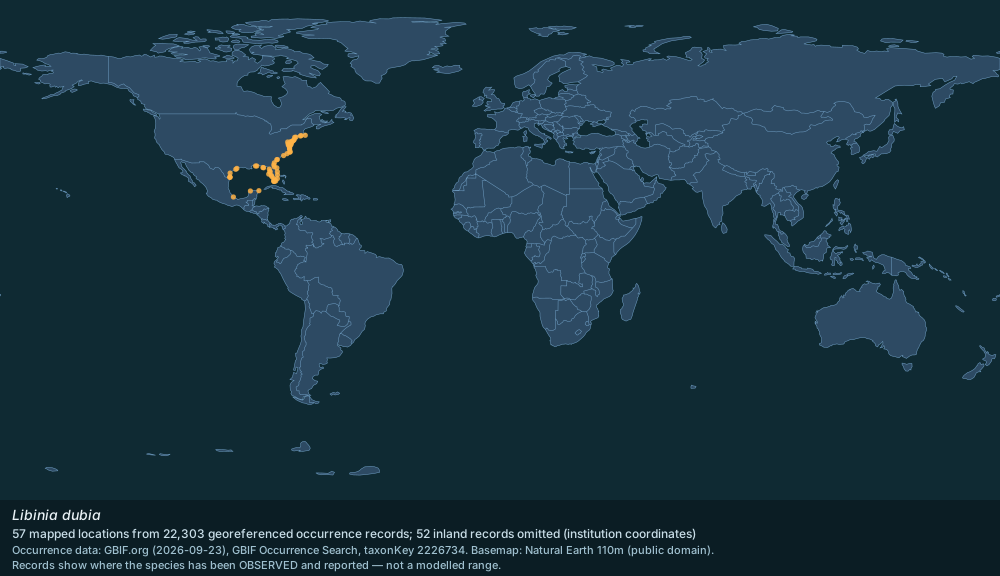
GBIF occurrence records for Libinia dubia, mapped and tabulated by country.

Distribution map plotted from GBIF.org occurrence records; basemap Natural Earth 110m · GBIF records CC0 / CC BY; Natural Earth public domain
22,303 georeferenced occurrence records with coordinates are published for Libinia dubia through GBIF, from 6 countries or marine areas. This page maps those records and lists where they come from. Occurrence records reflect where people have looked as well as where the species lives, so well-surveyed coastlines are over-represented.
- Georeferenced records
- 22,303
- Countries / areas
- 6
- Mapped locations
- 57
- Records sampled for the map
- 3,000
- Inland records omitted
- 52
- Gbif taxonkey
- 2226734
Countries and areas with the most records (GBIF)
United States of America — 22,271 records; Mexico — 28 records; Bahamas — 1 records; Canada — 1 records; Colombia — 1 records; Cuba — 1 records.
Source: GBIF Occurrence Search (taxonKey 2226734) — https://www.gbif.org/occurrence/search?taxon_key=2226734&has_coordinate=true (records CC0 / CC BY). Accessed 2026-09-23.
Marine regions with a WoRMS distribution record
European waters (ERMS scope); North West Atlantic; Mediterranean Sea; Massachusetts; Cuban Exclusive Economic Zone; West Atlantic; Cobscook Bay; Gulf of Maine; Gulf of Mexico; Tunisian part of the Mediterranean Sea - Eastern Basin; Strait of Sicily; Tunisian part of the Mediterranean Sea - Western Basin.
Source: WoRMS distribution records (MarineRegions) — https://www.marinespecies.org/aphia.php?p=taxdetails&id=107335 (CC BY 4.0). Accessed 2026-09-23.
How to read this map
The map plots a sample of 3,000 of the 22,303 records, deduplicated to a half-degree grid, so dense areas do not merge into one blob. The sample covers 2 of the 6 countries or areas with records; the areas absent from the sample hold 4 records in total (Bahamas, Canada, Colombia, Cuba).
52 records plotting inland were omitted: for a marine species those are almost always the holding institution's coordinates rather than a collection site.
Records show where the species has been observed and reported, not a modelled range.
Source: GBIF Occurrence Search (taxonKey 2226734) — https://www.gbif.org/occurrence/search?taxon_key=2226734&has_coordinate=true (records CC0 / CC BY); WoRMS distribution records (MarineRegions) — https://www.marinespecies.org/aphia.php?p=taxdetails&id=107335 (CC BY 4.0); Natural Earth 110m basemap — https://www.naturalearthdata.com/ (public domain). Accessed 2026-09-23.
Gallery
Related in Longnose spider crab
Links follow this subject's own source article.
Elsewhere in Longnose spider crab
Spotted an error? Know more?
Reader corrections go straight into our review queue. Suggest an edit · How this site is sourced