Frequently Asked Questions
The most-asked questions about Oriental butterflyfish.
What exactly is 'Oriental butterflyfish'?
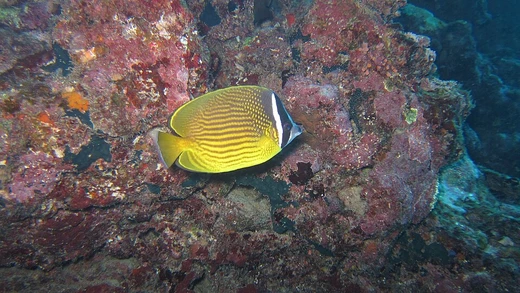
It is the common umbrella term for the genus Chaetodon, a group of more than 100 small, laterally compressed reef fish native to the Indo-Pacific. They are named for their wing-like fins and the bold, often symmetrical color patterns that set each species apart.
Which species are the 'headliners' that dominate fan discussion?
The Moonlight butterflyfish (C. lunula), the Threadfin butterflyfish (C. auriga), and the Pygmy butterflyfish (C. pygmaeus) consistently top community conversations because of their striking markings, popularity in the aquarium trade, and frequent appearances in reef photography.
Where should a newcomer start exploring the topic?
A practical entry point is learning to identify the 15–20 most commonly encountered species in the Red Sea, the Great Barrier Reef, and the Coral Triangle, since those three regions account for the bulk of available footage and community content.
What is the size range across the genus?
Most Oriental butterflyfish land between 8 and 20 cm (roughly 3–8 in) at adult length. The Pygmy butterflyfish sits at the tiny end around 5 cm, while the Threadfin pushes toward the upper limit.
What do they eat in the wild?
Diet is highly species-specific: some graze almost exclusively on coral polyps, others pick sponges or small invertebrates from the reef, and a few filter plankton from the water column or scavenge algae and detritus.
How do they reproduce?
Most species form long-term pair bonds and spawn at dusk, with the female releasing a cloud of buoyant eggs that the male fertilizes externally. The resulting planktonic larvae drift in the open water for several weeks before settling onto a reef.
What are the biggest conservation concerns for the group?
Over-collection for the ornamental aquarium trade, coral-reef degradation from bleaching and coastal development, and incidental bycatch in trawl fisheries are the three pressures most frequently cited by marine-biology communities.
What is a 'notable moment' in the group's history that fans often reference?
The 2014 formal description of Chaetodon paucifasciatus from deep waters off Palau was widely celebrated because it confirmed that new butterflyfish species are still being discovered in the Indo-Pacific well over a century after the genus was first described.
Why are they called 'butterfly' fish?
The common name comes from their tall, laterally compressed bodies and the way the dorsal and anal fins flare outward, giving a silhouette that closely resembles a butterfly in flight when viewed from the side.
Can you keep them in a home reef aquarium?
Several species are routinely kept by experienced aquarists, but most are sensitive to water quality, need a large tank with established live rock, and often require species-specific feeding. Beginners are generally steered toward the hardier Threadfin or Moonlight species.