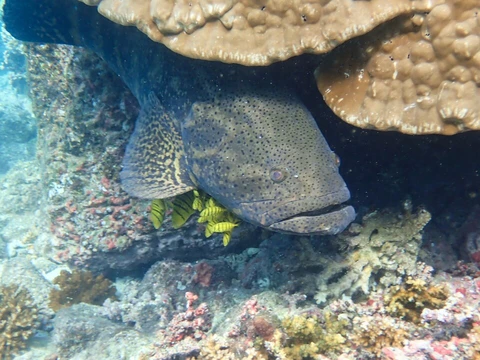
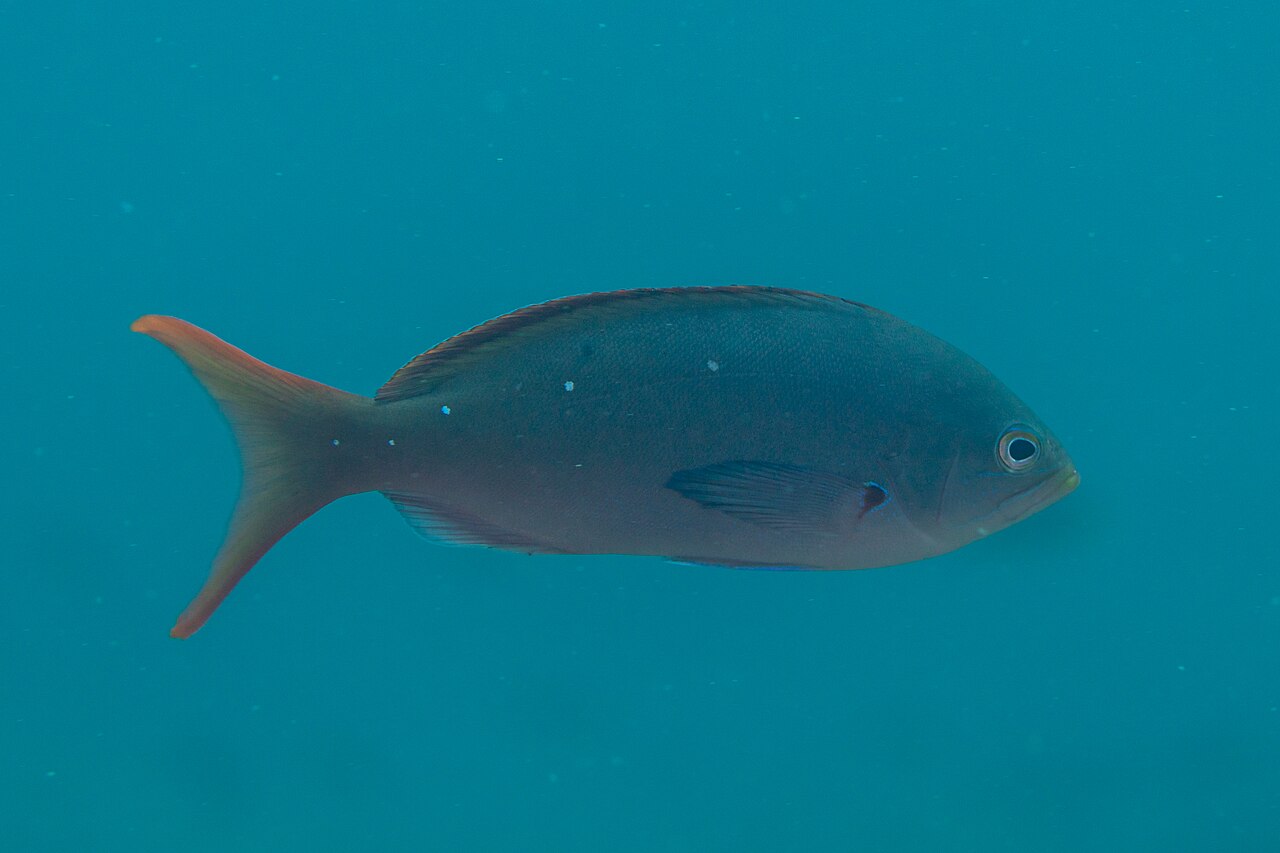
Pacific creole-fish (Cephalopholis colonus)
Source-cited species reference: taxonomy from WoRMS, biology from FishBase, occurrence map from GBIF, conservation from IUCN Red List, description from Wikipedia.

Diego Delso · CC BY-SA 4.0
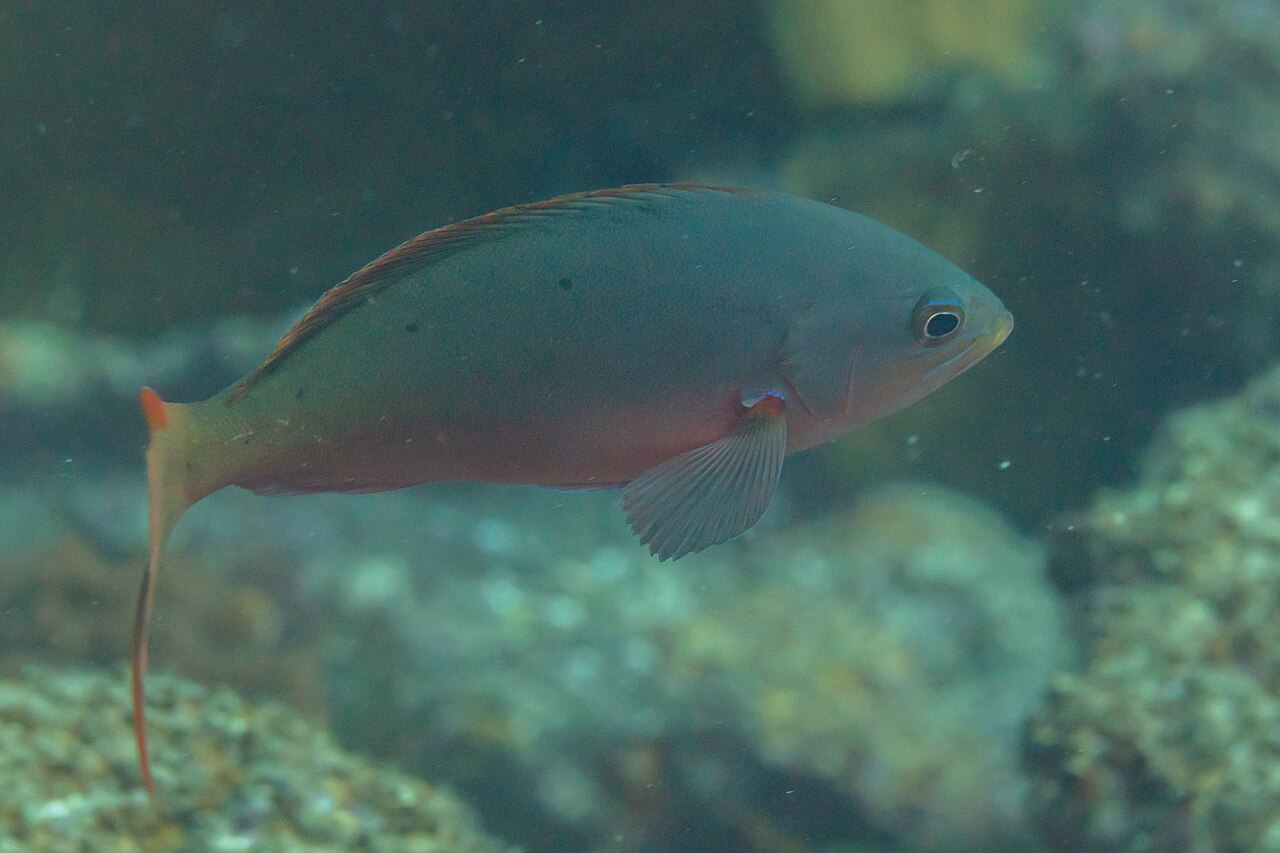
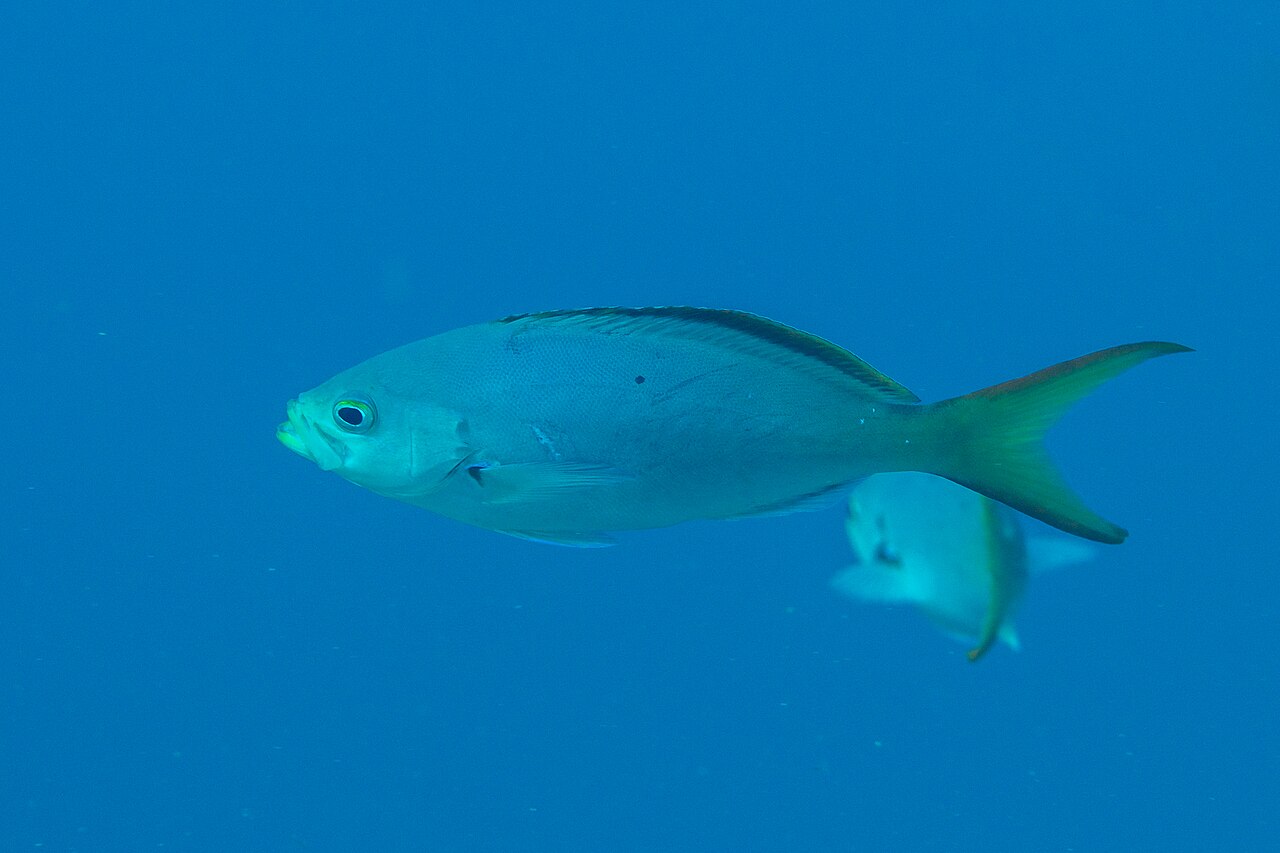
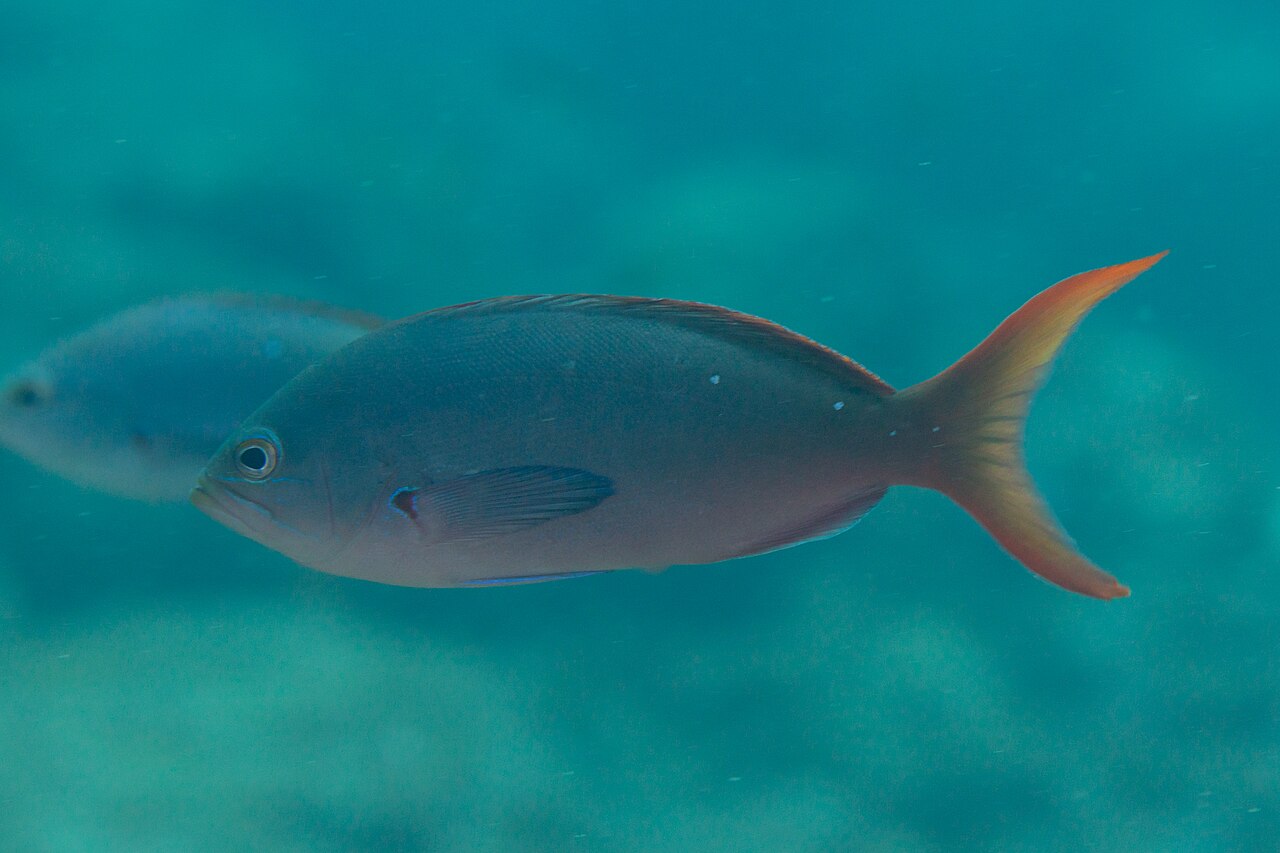
Cephalopholis colonus (the Pacific creolefish) is a species of grouper found in the Eastern Pacific Ocean. They are typically found in small aggregations well above reefs, but will retreat to the reef at the approach of danger. They form large midwater schools while feeding on plankton. They occur up to a depth of 100 m. They feed mainly on small planktonic animals that are picked individually from the water, made possible by their shortened snout which facilitates close-range binocular vision.
- Scientific name
- Cephalopholis colonus
- Authority
- (Valenciennes, 1846)
- Family
- Epinephelidae
- Order
- Perciformes
- Maximum length
- 35.599998474121094 cm
- Depth range
- 10–70 m
- Habitat zone
- reef-associated
- Iucn red list
- Least Concern
- Gbif occurrence records
- 982
A Name Borrowed from Greek Myth
The peacock hind carries a species name drawn from one of the most vivid figures in Greek mythology: Argus, the hundred-eyed shepherd assigned to watch over the goddess Hera. The fish earned this comparison through the hundreds of small, dark-edged iridescent blue spots that scatter across the dark brown bodies of younger individuals, giving the impression of countless tiny eyes staring outward. As the fish matures and grows toward its maximum length of roughly sixty centimeters, some specimens develop four to six paler vertical bars along the rear half of the body, softening that dense spotted pattern. Taxonomically, the species sits within the subfamily Epinephelinae, the groupers, which in turn belongs to the broader family Serranidae — a family that also encompasses the anthias and the sea basses. Despite its mythological namesake, the peacock hind is a medium-sized predator rather than a creature of legend, yet the visual resemblance to a field of watching eyes remains one of its most striking features.
A Vast Indo-Pacific Range
The peacock hind enjoys one of the broadest distributions of any reef-associated grouper. Its natural waters stretch from the Red Sea and the coast of South Africa in the west all the way to French Polynesia and the remote Pitcairn group in the east, with additional populations in northern Australian waters, around Lord Howe Island, and off the coast of Japan. Beyond this native range, the species was deliberately introduced to the Hawaiian Islands in the 1950s, a decision that would later prove ecologically consequential. Within its preferred environment, the fish gravitates toward the exposed frontal slopes of coral reefs, where it can be found at depths reaching forty meters. It is not restricted to a single habitat type, however, and will exploit a variety of reef structures. In the aquarium trade, the species is regarded as hardy enough for large marine tanks, though its aggressive temperament and predatory appetite for smaller tankmates mean it is best kept alone or alongside other large, similarly bold species such as lionfish and moray eels.
Hunting Partnerships and Color Fights
The peacock hind is a patient ambush predator that typically perches on a coral head, retreating into cover when startled. To strike, it may lie flat on the substrate and then surge forward at a passing juvenile surgeonfish or crustacean, or it may hover motionless in the open water column before lunging. In the Red Sea, these attacks cluster around morning and evening. What makes the species particularly fascinating is its willingness to cooperate with other predators. An individual may follow an octopus or a moray eel, or even blend itself into a school of surgeonfish, waiting for a partner to flush out prey. Multiple groupers have been observed working together to harass an eel into releasing its catch. Social dynamics extend into territorial disputes, where two males position themselves at right angles and engage in color fights, repeatedly flashing their vertical bars between dark and light. The loser fades to a pale color and withdraws; a draw can escalate into a physical confrontation. In Micronesia, spawning pairs darken their bodies at dusk, leaving only a distinctive white keyhole-shaped patch at the center.
The Hawaiian Invasion and Its Ecological Toll
When Hawaii's Division of Aquatic Resources introduced the peacock hind in the 1950s to bolster local fisheries, the species quickly became the reefs' dominant predator. Its population has swelled fifteen-fold since the 1980s, and its biomass now exceeds that of all other reef-fish predators combined. In a three-square-mile stretch off the Kona Coast, roi are estimated to consume ninety tonnes of reef fish annually — roughly 8.2 million individuals — with parrotfish making up nearly a quarter of their diet. This is devastating because parrotfish are essential for grazing algae off coral and generating sand. Hawaii already harbors the highest rate of nearshore marine fish endemism at 24.3 percent, and ichthyologist Dr. Jack Randall has judged the roi's impact to be greater than fishing and aquarium collection combined. Compounding the problem, a 2007 study found that 18 percent of sampled roi contained ciguatera toxin above safe consumption levels, with no reliable way to predict which individuals are dangerous. The local fishery generates only about a thousand dollars in sales per year. Spearfishing Roi Roundup tournaments, which began on Maui, have since spread to other islands as communities attempt to curb the population and raise public awareness.
Gallery
Frequently Asked Questions
Who is Pacific creole-fish (Cephalopholis colonus)?
Cephalopholis colonus is a small grouper species native to the Eastern Pacific Ocean, first formally described by Valenciennes in 1846. It belongs to the family Epinephelidae within the order Perciformes and grows to a maximum length of roughly 35.6 cm.
What are Pacific creole-fish (Cephalopholis colonus)'s powers/role?
Its standout adaptation is a notably shortened snout that grants close-range binocular vision, letting it pluck individual planktonic animals from open water. This makes it a specialized midwater planktivore rather than a typical reef predator like most other groupers.
Why is Pacific creole-fish (Cephalopholis colonus) important?
It fills a niche that most other grouper species ignore: actively foraging on plankton in the midwater column above reefs. By forming large feeding schools, it links the pelagic plankton community to the reef ecosystem in a way few other Epinephelidae do.
Where can you find Pacific creole-fish (Cephalopholis colonus) in the wild?
This species is restricted to the Eastern Pacific Ocean, where it occupies depths from about 10 to 70 meters, with some records reaching 100 m. It is most often spotted in small groups hovering above coral reefs rather than on the reef itself.
Spotted an error? Know more?
Reader corrections go straight into our review queue. Suggest an edit · How this site is sourced