Frequently Asked Questions
The most-asked questions about Orange angelfish.
What is an orange angelfish?
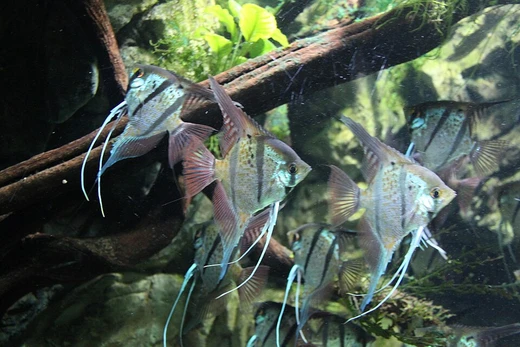
It is a color morph of the freshwater cichlid Pterophyllum scalare, native to the Amazon basin, instantly recognizable by its vivid orange-gold body and the tall, triangular silhouette that earned the species its 'angel' nickname.
How large do orange angelfish grow?
Adults typically reach five to eight inches in height with a lateral spread of about six inches, placing them among the larger species kept in community aquariums.
What tank size is recommended?
A minimum of 30 gallons is the usual starting point, but 55 gallons or more gives the fish enough open swimming space and helps reduce territorial friction.
What do orange angelfish eat?
They are omnivorous and will take flakes, quality pellets, frozen brine shrimp, bloodworms, and the occasional live treat; a varied diet also helps maintain their bright orange coloration.
Are orange angelfish aggressive tankmates?
They are generally calm but become noticeably territorial when space is tight or during spawning, and they may nip at long, flared fins of other species.
Which fish pair well with orange angelfish?
Medium-to-large, similarly sized community members such as larger tetras, corydoras catfish, and other gentle cichlids tend to coexist peacefully, while very small or heavily finned fish risk being nipped or swallowed.
How long do orange angelfish live in captivity?
With stable parameters and good nutrition, a lifespan of six to ten years is common, and some individuals in well-maintained tanks have been reported to exceed that range.
How do orange angelfish reproduce?
They form long-term pairs, select and clean a flat surface, then the female deposits a clutch of eggs that the male fertilizes; both parents guard the eggs and newly hatched fry until they become free-swimming.
What water conditions do they prefer?
They thrive in warm water between roughly 72 and 82 °F (22–28 °C), a pH near 6.5–7.5, soft-to-moderately hard water, and gentle filtration that avoids strong surface currents.
How does an orange angelfish differ from a white angelfish?
Both are the same species; the distinction is a selectively bred color morph, with orange variants expressing more carotenoid-based pigmentation in their scales while white variants lack that pigment entirely.