Frequently Asked Questions
The most-asked questions about Blotched foxface.
What is a Blotched foxface?
The Blotched foxface (Heterotis maculicollis) is a small freshwater cichlid native to Lake Tanganyika in East Africa. It is a member of the genus Heterotis and is recognized for its compact body and irregularly spotted coloration.
Where does it live in the wild?
In its natural range, this species frequents the shallow, rocky shorelines of Lake Tanganyika, particularly along the Tanzanian and Congolese coasts. It favors areas dense with boulders and crevices where it can forage and take cover.
How big does a Blotched foxface get?
Adults typically top out around five to seven centimeters, placing it among the smaller Tanganyikan cichlids. That modest size makes it a practical choice for mid-sized community aquariums.
What does it eat?
In the wild it picks through rock crevices for tiny invertebrates, algae films, and organic detritus, reflecting an omnivorous feeding strategy. In a home tank it readily accepts fine flakes, small pellets, and the occasional live or frozen treat.
What does the word 'blotched' refer to?
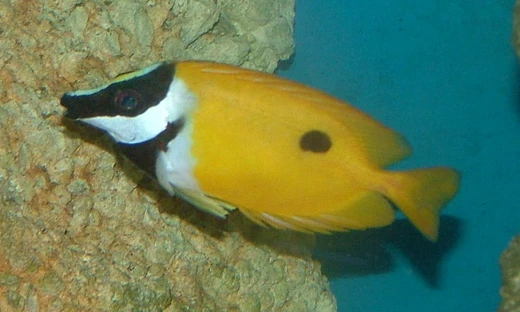
It describes the irregular dark spots and smudges scattered across the body and fins that distinguish this species from more uniformly patterned relatives. The mottling doubles as camouflage against the rocky substrate of its native lake.
How is it different from other 'foxface' cichlids?
Several Tanganyikan species share the 'foxface' nickname because of their body shape, but the Blotched foxface is set apart by its specific spotting pattern and its placement in the Heterotis genus. Fin structure and coloration details separate it from look-alikes in other genera.
What kind of aquarium setup suits it?
A rocky or lightly planted tank with generous hiding spots and moderate water flow mirrors its natural environment. Water should be on the harder, slightly alkaline side to echo Lake Tanganyika conditions.
Is it aggressive or good for a community tank?
It is widely regarded as peaceful and non-territorial, so it slots well into community groupings. Rather than being confrontational, it tends toward a shy, mid-water or substrate-foraging temperament.
When was the species first formally described?
It was named in the scientific literature during the 19th-century wave of African Great Lakes ichthyology, and the binomial Heterotis maculicollis has appeared in taxonomic references ever since. It remains one of the less frequently discussed members of its genus.
Where should a beginner look for reliable care information?
Lake Tanganyika–focused aquarium societies, established cichlid forums, and well-regarded African-fish husbandry guides are solid starting points. Local African-cichlid clubs often have experienced keepers who can offer practical, species-specific tips.