Frequently Asked Questions
The most-asked questions about Bicolor angelfish.
What exactly is a Bicolor angelfish?
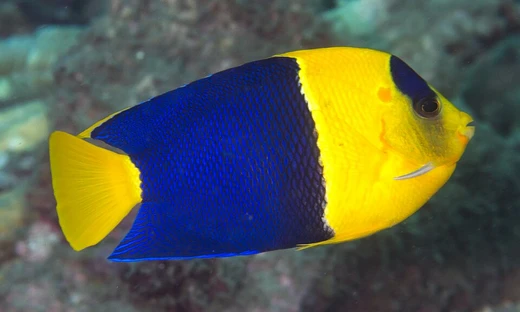
It is a selectively bred color morph of the freshwater angelfish (Pterophyllum scalare) distinguished by two sharply divided color blocks on its body, most commonly a split of jet black and clean white. The pattern is genetic and stable across generations, setting it apart from the more mottled wild-type markings.
Where do Bicolor angelfish originate?
Their wild ancestor, Pterophyllum scalare, is native to slow-moving, blackwater rivers in the Amazon basin of Brazil. The bicolor variant itself is a product of decades of captive selective breeding within the aquarium hobby rather than a naturally occurring wild form.
How large do they grow and how long can they live?
Adults typically reach six to eight inches in height with a wingspan of roughly ten inches when fully extended. With stable water parameters and a quality diet, a well-kept bicolor angelfish can live anywhere from seven to ten years in captivity.
What tank conditions do they need?
They thrive in warm, slightly acidic to neutral water (around 75–82 °F, pH 6.5–7.5) with gentle flow and plenty of open swimming space. A minimum of a 55-gallon tank is generally recommended for a single pair, with smooth décor to avoid tearing their long dorsal and anal fins.
What do Bicolor angelfish eat?
They are omnivores that will accept a mix of quality flakes, pellets, frozen brine shrimp, and occasional live or frozen beef heart. A varied diet helps maintain the crisp contrast of their two-tone coloration.
Can they be housed with other species?
They are semi-aggressive cichlids and do best with mid-sized, peaceful tankmates such as larger tetras, plecos, or other cichlids that won't nip at their fins. Small, slow-moving fish or species with long flowing fins are at risk, especially during feeding or breeding periods.
How does the bicolor pattern differ from other angelfish variants?
Whereas marble, zebra, or koi angelfish show mottled, streaked, or patchy coloration, the bicolor displays a clean, symmetrical division—usually a vertical or horizontal line separating two solid color fields. This crisp boundary is the hallmark that breeders select for and that distinguishes the morph at a glance.
Are Bicolor angelfish easy to breed?
They are egg-scatterers and will readily spawn on flat surfaces in a mature pair, making them one of the more approachable cichlid breeding projects. The fry are free-swimming within a day or two and can be fed infusoria or finely crushed flakes until they are large enough for baby brine shrimp.
Is there a common misconception about their temperament?
Many newcomers assume that because angelfish are cichlids they will be highly aggressive, but bicolors are generally calm and even gentle outside of breeding season. True aggression is usually limited to a paired male and female defending a nesting site rather than constant harassment of tankmates.
Where should a beginner start learning to care for them?
Start by researching stable water chemistry and a properly cycled tank, since angelfish are sensitive to ammonia and nitrite spikes. Reputable aquarium forums, local fish-keeping clubs, and extension-service aquaculture guides offer practical, up-to-date care sheets without the hype of commercial product marketing.