Frequently Asked Questions
The most-asked questions about Rusty jobfish.
What exactly is a rusty jobfish?
The rusty jobfish (Oxymonacanthus longirostris) is a deep-sea filefish native to the western Pacific Ocean. It is the only recognized species in its genus and is instantly identifiable by its elongated, beak-like snout and muted bronze-rust coloration.
Who first described the species and when?
The rusty jobfish was formally described by the Scottish naturalist John Richardson in 1845. His original account, based on specimens collected during mid-19th-century Pacific expeditions, remains the taxonomic baseline for the species.
Where do rusty jobfish live?
They inhabit the mesopelagic to upper-bathypelagic zone of the western Pacific, generally between roughly 200 and 1,000 metres depth. Because of that depth range, they are rarely encountered outside of research trawls or deep-sea submersible surveys.
What does one actually look like?
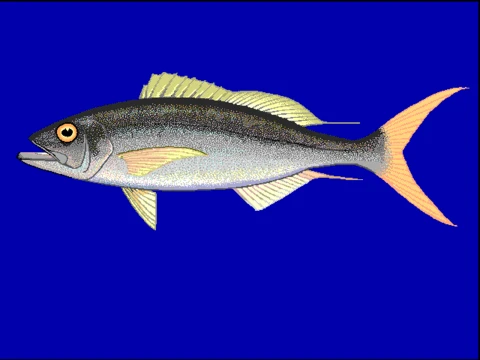
The body is laterally compressed and torpedo-shaped, topped by a very long, narrow rostrum that gives the fish a prehistoric, stork-like profile. The flanks shimmer in dull coppery-rust tones, the fins are small and rounded, and the overall impression is of a slender, ghostly deep-water drifter.
How large do they grow?
Adults typically reach a total length in the neighbourhood of 30 to 40 centimetres, with the elongated snout accounting for a noticeable share of that measurement. Males and females appear similar in size, and no dramatic sexual dimorphism has been documented.
What do they eat?
They are carnivorous, snapping up small crustaceans, polychaete worms, and other invertebrates that drift through the deep-water column. Their long, pointed jaws are well suited to probing crevices and extracting prey from the substrate.
Which family does it belong to, and what are its closest relatives?
The rusty jobfish sits in the family Monacanthidae (filefishes and triggerfishes), specifically in the subfamily Monacanthinae. Its nearest relatives are other small, deep-water filefishes that share the single dorsal spine and generally placid temperament of the group.
Is it of any commercial or conservation concern?
No. The species is far too deep-dwelling and sparse to be a target of commercial fisheries, and it has no listed IUCN threat category. Its primary relevance to humans is as a curiosity specimen in museum collections and a subject of deep-sea biodiversity surveys.
What is the most commonly cited 'wow' fact fans mention?
The rostrum-to-body ratio: the snout can be nearly as long as the rest of the head and neck combined, making the fish look like a living deep-sea dart. That extreme specialisation for probing dark, sediment-rich environments is what most sparks the species' cult following among marine-biology enthusiasts.
Where should a newcomer start if they want to learn more?
Begin with Richardson's 1845 original description for historical context, then move to modern deep-sea faunal checklists (such as the FishBase or WoRMS entries) for up-to-date distribution and synonymy notes. From there, deep-sea expedition photo logs from the R/V Kairei and similar research vessels offer the best visual references available.