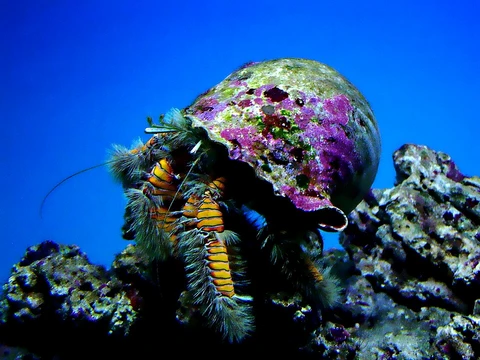
Hairy yellow hermit (Aniculus maximus)
Source-cited species reference: taxonomy from WoRMS, biology from SeaLifeBase, occurrence map from GBIF, description from Wikipedia.

ErgoSum88 · Public domain
Aniculus maximus, the hairy yellow hermit crab or large hairy hermit crab, is an aquatic hermit crab of the family Diogenidae.
- Scientific name
- Aniculus maximus
- Authority
- Edmondson, 1952
- Family
- Diogenidae
- Order
- Decapoda
- Depth range
- 10–150 m
- Habitat zone
- benthic
- Gbif occurrence records
- 77
Classification (WoRMS)
Full classification as recorded by WoRMS: Kingdom: Animalia · Phylum: Arthropoda · Class: Malacostraca · Order: Decapoda · Family: Diogenidae · Genus: Aniculus.
Accepted name: Aniculus maximus · Authority: Edmondson, 1952 · Taxonomic status: accepted · AphiaID: 208664.
Source: World Register of Marine Species (WoRMS) — https://www.marinespecies.org/aphia.php?p=taxdetails&id=208664 (CC BY 4.0). Accessed 2026-09-23.
Biology and life history (SeaLifeBase)
Measured values published by SeaLifeBase for Aniculus maximus. Only fields the database actually holds for this species are shown; these are database values, not aquarium guidance.
Depth range: 10–150 m · Habitat zone: benthic.
Source: SeaLifeBase species summary (SpecCode 21020) — https://www.sealifebase.se/summary/Aniculus-maximus.html (CC BY-NC 3.0 — non-commercial use only). Accessed 2026-09-23.
Distribution and occurrence records (GBIF)
77 georeferenced occurrence records for Aniculus maximus are published through GBIF from 18 countries or marine areas. The map above plots 36 distinct locations from a sample of 77 records, omitting 5 inland records that carry an institution's coordinates rather than a collection site; it shows where the species has been observed and reported, not a modelled range.
Most records by country or area: United States of America (20); French Polynesia (13); Indonesia (10); Réunion (8); South Africa (6); Mozambique (4); Mayotte (3); Solomon Islands (2); Seychelles (2); Australia (1); Fiji (1); Guatemala (1); Northern Mariana Islands (1); Maldives (1); Papua New Guinea (1).
Marine regions with a valid WoRMS distribution record: Seychellois Exclusive Economic Zone; Mayotte Disputed area: France / Comoros; French Polynesian Exclusive Economic Zone; Réunion Exclusive Economic Zone.
Source: GBIF Occurrence Search (taxonKey 2224442) — https://www.gbif.org/occurrence/search?taxon_key=2224442&has_coordinate=true (records CC0 / CC BY); WoRMS distribution records (MarineRegions) — https://www.marinespecies.org/aphia.php?p=taxdetails&id=208664 (CC BY 4.0); Natural Earth 110m basemap — https://www.naturalearthdata.com/ (public domain). Accessed 2026-09-23.
Description and natural history (Wikipedia)
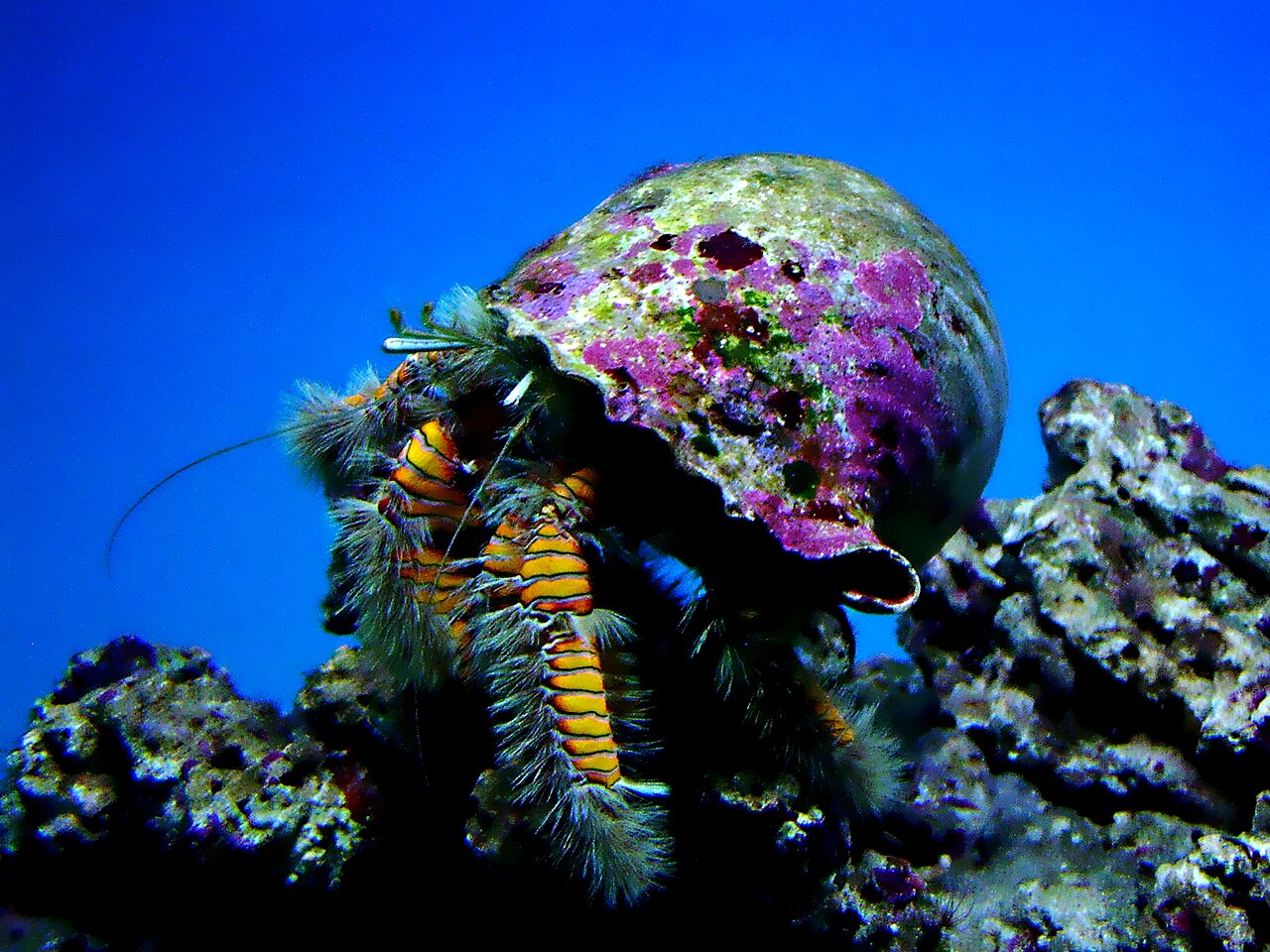
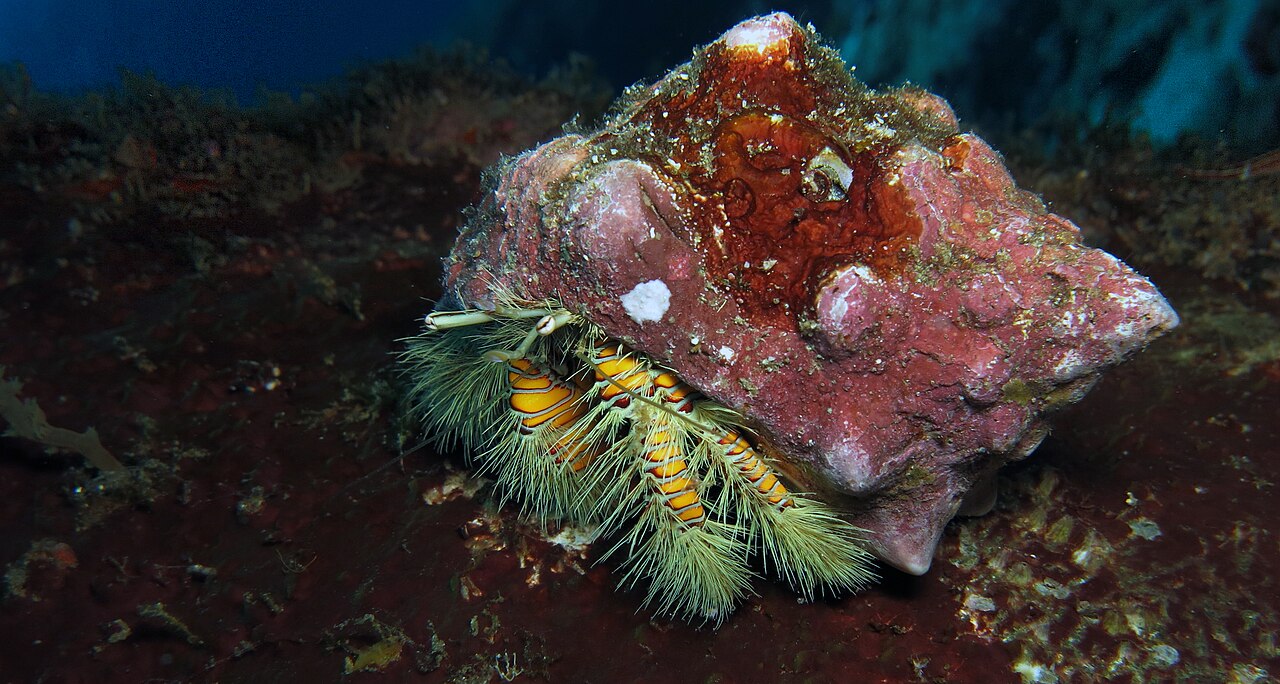
Its colour ranges from intense red to golden yellow. It has white hairy bristles that extend from under its distinct yellow legs. Its shield is marked with a series of furrows.
The hermit crab's width can reach up to 10 cm. Charles H. Edmonson of the Honolulu Bishop Museum gave it the name "maximus" or "the greatest" to describes its large size, as its known to grow up to the size of a hand.
It is found in the Indo-Pacific region and inhabit the Benthic zone which ranges from 10 – 100 m deep. They are most commonly found at depths of 50 feet or deeper and habit ledges or caves. At shallower depths of their habitat range, around 15 m deep, they have been observed on coral reefs, rock reefs, and barrel sponges.
It tends to feed on mollusks and has been seen killing them over a range of days for their shell. Aside from mollusks, the hairy yellow hermit crab is an omnivore and will eat algae or other meat it can find.
The mating process of Aniculus maximus begins with a ritual initiated by olfactory and tactile indicators. It reproduces sexually and indirectly through the use of spermatophores. After mating, the female hermit crab keeps the fertilized eggs inside the underside of her shell. The eggs hatch into planktonic larvae that find shells of their own once mature enough.
Source: Wikipedia: Aniculus maximus — https://en.wikipedia.org/wiki/Aniculus_maximus (CC BY-SA 4.0). Accessed 2026-09-23.
Gallery
Spotted an error? Know more?
Reader corrections go straight into our review queue. Suggest an edit · How this site is sourced