Frequently Asked Questions
The most-asked questions about Oman anemonefish.
What exactly is an Oman anemonefish?
It is a geographic color variant of the anemonefish (most often classified under Amphiprion ocellaris) collected from waters around Oman. Hobbyists and some taxonomists recognize it as a distinct regional form rather than a separate species, valued for its particular hue and stripe pattern.
How do Oman anemonefish differ visually from other regional variants?
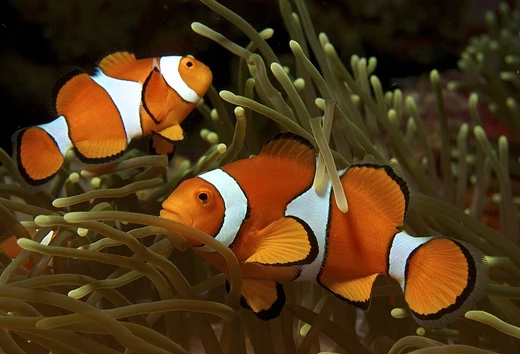
They typically display a deeper, more saturated orange-to-red body with bolder white bars compared to, say, Indonesian or Red Sea forms. The exact shade can shift with the individual's stress level, diet, and the specific host anemone it bonds with.
Where in the wild can you find them?
They inhabit shallow coral-reef lagoons and outer-reef slopes along Oman's coastline, usually within or very near a host sea anemone. Their range is limited to that narrow stretch of the northeastern Arabian Sea, which makes them less common in the trade than broader-range variants.
What host anemones do they bond with?
Like all anemonefish, they rely on a symbiotic relationship with a specific anemone species for shelter and protection. In Omani waters the most commonly reported hosts are Heteractis and Stichodactyla species, though the exact pairing can vary by reef site.
Who are the key figures most associated with Oman anemonefish in the hobby?
There is no single 'creator' the way a TV show has writers; interest in this variant grew organically through Omani and Gulf-region collectors who began exporting them to the global marine-aquarium market in the early 2000s. A few well-known Omani fish-farmers and a handful of marine-biology researchers who have published on Arabian-Sea Amphiprion populations are the names most often cited in hobby forums.
Where should a newcomer start learning about this variant?
Reputable marine-aquarium forums and the published taxonomic literature on Arabian-Sea Amphiprion are the two most useful entry points. Starting with a good general anemonefish husbandry guide and then reading one or two peer-reviewed papers on Omani reef fauna will give you both the practical and the scientific background.
Are Oman anemonefish captive-bred or wild-caught?
The vast majority still come from wild collection in Omani waters, though a small number of dedicated breeders in the Gulf region have begun producing captive-raised fry. Because the source population is geographically limited, the trade leans heavily on sustainable harvest quotas and careful netting practices.
What is a common misconception about this variant?
Many hobbyists assume 'Oman' is a formal species or subspecies name, but it is really a trade and collector designation for a color morph within an existing species. Another frequent mix-up is confusing them with the similarly colored Red Sea variant, which has subtly different bar thickness and body depth.
What conservation or trade considerations should fans be aware of?
Oman anemonefish fall under CITES Appendix II, meaning international export requires proper documentation and quota tracking. Responsible keepers look for fish tagged or certified by Omani fisheries authorities to confirm legal, quota-compliant harvest rather than unregulated collection.
What makes Oman anemonefish a 'notable' subject in the marine-reef community?
Their limited geographic range, striking coloration, and the relative novelty of the Omani export market have made them a sought-after centerpiece for display tanks. For many fans, the appeal lies in supporting a small, region-specific fishery and in the visual distinction the variant offers over more widely available anemonefish forms.