Frequently Asked Questions
The most-asked questions about Amphiprion barberi.
What is Amphiprion barberi in plain terms?
It is a species of anemonefish (clownfish) in the genus Amphiprion, family Pomacentridae, most often called Barber's anemonefish. It is a small, reef-dwelling marine fish that lives in a mutualistic partnership with sea anemones.
Where does it live in the wild?
Its known range is the western Pacific, with collections concentrated in the Philippine archipelago. It occupies shallow coral-reef habitats where a suitable host anemone is available.
How large does an adult get?
Like many smaller members of the genus, it stays compact, typically only a few centimetres from snout to tail. This makes it noticeably smaller than popular aquarium species such as A. ocellaris.
What does its colour pattern look like?
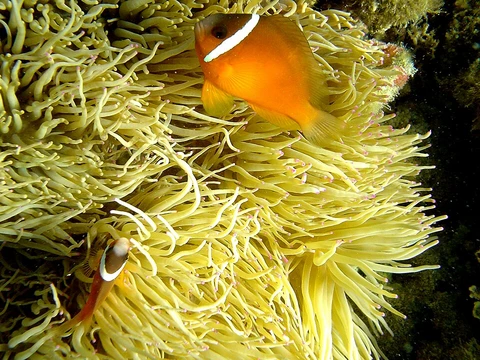
It shows the familiar orange-and-white clownfish palette interrupted by dark bars or blotches across the body and fins. Subtle variation in bar width and placement is normal among individuals.
Which anemones does it associate with?
As with all anemonefish, it shelters among the tentacles of one or more compatible anemone species, gaining protection from predators while providing the anemone with food scraps and water circulation.
How does it differ from the clownfish most hobbyists know?
Compared to A. ocellaris or A. percula, it is smaller, geographically more restricted, and displays a slightly different bar arrangement and overall hue. These distinctions are visible in side-by-side photos but can be subtle.
Who was the species named after?
The specific epithet 'barberi' follows the standard taxonomic practice of honouring a person surnamed Barber who was connected to the specimen's collection or early study. The full attribution appears in the original species description.
Is it easy to find in the aquarium trade?
It is far less commonly stocked than the widely farmed ocellaris and percula species, so most hobbyists encounter it only through specialty importers or wild-caught specimens. This rarity makes it a niche choice for reef tanks.
What is its current conservation outlook?
It is not presently flagged as threatened on the IUCN Red List, but its narrow geographic range and dependence on specific anemone hosts leave it potentially sensitive to reef degradation and coastal development in the Philippines.
Where should a newcomer begin researching this species?
Start with a general anemonefish field guide to learn the genus-level biology, then read the original taxonomic description and any subsequent revisions for precise diagnostic details. Regional marine-biology publications and dedicated reef-keeping forums add practical context on behaviour and husbandry.