Frequently Asked Questions
The most-asked questions about Yellowfin damsel.
What exactly is a Yellowfin damsel?
The Yellowfin damsel (Amblyglyphidodon aureus) is a small, brightly colored reef fish belonging to the damselfish family Pomacentridae. It is a saltwater species popular in marine aquariums and a common sight on Indo-Pacific coral reefs.
How can I tell a Yellowfin damsel apart from other small yellow reef fish?
It has a vivid lemon-yellow body, a silvery-white head, and a small dark ocellus (eye-spot) on the mid-flank. Unlike the blue damsel, which is cobalt-blue with a white face, the Yellowfin damsel is uniformly yellow below the head, and unlike many Chromis species it lacks the elongated dorsal-fin rays.
Where in the wild can you find this species?
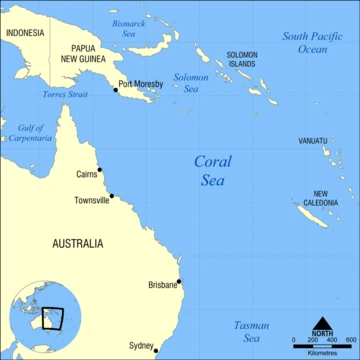
Its range spans the central Indo-Pacific, from the Red Sea and East African coast eastward through Indonesia, the Philippines, and into the Great Barrier Reef and surrounding Pacific islands. It typically inhabits shallow lagoon and outer-reef slopes at depths of roughly 1 to 30 meters.
How large does a Yellowfin damsel grow?
Adults reach a maximum total length of about 5 to 6 centimeters (roughly 2 to 2.5 inches), making it one of the smaller damselfish species. Males and females are similar in size, though males may appear slightly more robust during breeding season.
What does it eat in the wild and in a home tank?
In nature it is a mixed feeder, grazing on microalgae, diatoms, and tiny zooplankton drifting over the reef. In captivity it readily accepts frozen brine shrimp, mysis, and high-quality marine pellets, though a varied diet that includes algae-based foods keeps its coloration vivid.
Is it suitable for a beginner saltwater aquarium?
It is hardy and tolerant of minor water-parameter fluctuations, which makes it approachable for experienced beginners. However, it can become noticeably territorial over rockwork, so a tank of at least 75 gallons with open swimming space and several hiding spots is advisable.
What is its taxonomic classification?
It sits in the family Pomacentridae, subfamily Pomacentrinae, genus Amblyglyphidodon. The species was first described by Cuvier in 1830 and has no currently recognized subspecies.
How does it behave in a group or with other fish?
Outside the breeding season it often forms loose, active shoals of a few individuals near rocky outcrops. Males become more aggressive and guard a small territory during spawning, while females and juveniles are generally peaceful and will school with other compatible damselfish.
What are some notable behaviors or facts fans often mention?
Males perform a characteristic head-shaking display to court females and defend their patch, and the species is known for its energetic, darting swimming style that makes it a lively addition to a reef tank. It also occasionally engages in mild symbiotic interactions, allowing cleaner wrasses to pick parasites from its body.
What is its conservation status and are there any threats?
The Yellowfin damsel is listed as Least Concern by the IUCN because of its wide distribution and general abundance across the Indo-Pacific. Local threats include coral-reef degradation and overcollection for the ornamental fish trade, but no population-level declines have been documented.