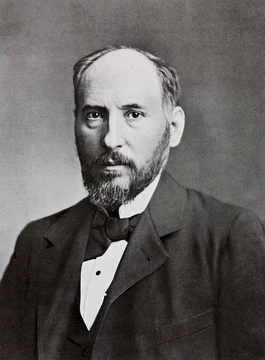
Jerónimo de Ayanz y Beaumont
Spanish inventor of early steam pump and diving suit.
Last updated
Jerónimo de Ayanz y Beaumont was a Spanish polymath whose work spanned soldiering, painting, astronomy, music, and invention. He advanced early steam engine design, created mining ventilation systems, improved scientific tools, and developed windmills and new furnaces. He also invented a diving bell, patented an immersion suit, and designed a submarine.
Biography
Jerónimo de Ayanz y Beaumont was born in Guendulain, in the Navarrese region of Cizur, to Carlos de Ayanz, a captain in the Pamplona garrison, and Catalina de Beaumont. He was the second son; his older brother, Don Francés de Ayanz, was born a year before him. Their mother, Catalina de Beaumont y Navarra, raised them with the manners and learning expected of their social standing. Jerónimo spent his early years at the family manor in Guenduláin until 1567, when he became a page to King Felipe II.
At court, he studied military tactics, literature, the arts, and mathematics, knowledge he later used for cosmography. His father had fought in France, notably at the Battle of St. Quentin in 1557 and in the raid on the pirate haven of San Juan de Luz. After training at El Escorial, Jerónimo began his own military service in 1571.
Military career
In 1573, he fought in Tunisia under John of Austria. Following the failed defense of La Goleta in 1574, he was sent to Lombardy, where he served under Alexander Farnese for several years. He then marched with the tercio commanded by Lope de Figueroa along the Spanish Road from Milan to Namur, covering the route in a remarkable 32 days during winter to reach Flanders at the Duke of Alba’s summons. He fought at the Battle of Gembloux in 1578 and, during the assault on Zierikzee, performed a legendary feat: severely wounded, he kept fighting until he drove off his attackers.
The playwright Lope de Vega later immortalized these exploits in his comedy Lo que pasa en una tarde, calling him “the new Alcides” and “the knight with the bronze fingers” for his ability to break plates with just two fingers. In 1579, while convalescing in Madrid, he received a pension from Felipe II. The next year, he led a detachment under Sancho Dávila in the Portuguese campaign.
In 1581, he thwarted a Frenchman’s planned attack on the king. In 1582, under the Marquis of Santa Cruz, he boarded ships bound for the Azores and took part in the Battle of Vila Franca do Campo. For his courage, the king granted him the Military Order of Calatrava. He received the Ballesteros de Calatrava Commandery on May 7, 1582, and later the Abanilla Commandery on January 30, 1595.
Patented inventions
Up to 48 inventions were recognized in 1606 by the privilegio de invención signed by Philip III. He built an air-renovated diving suit that allowed a man to remain underwater in the Pisuerga river on 2 August 1602; the diver spent an hour underwater before being ordered to return by King Philip III. He also designed a submersible load barge and a smaller bathyscaphe, both equipped with oars, gloves, portholes, floating snorkels to renovate air via pumps, and an inner water-powered fan to cool the crew.
He patented a steam-powered pump system to drain water and gas from mines after a mining accident in which he almost died. This mechanism was successfully tested in Guadalcanal. He also improved scientific equipment, windmills, and developed new types of furnaces for industrial, military and household use.
More in Spanish Inventors
Sources
Compiled from Wikipedia and the sources listed below. Text from Wikipedia is available under CC BY-SA 4.0; this entry is adapted from it.
- Wikipedia: Jerónimo de Ayanz y Beaumont (CC BY-SA 4.0).
Spotted an error? Know more?
Reader corrections go straight into our review queue. Suggest an edit · How this site is sourced