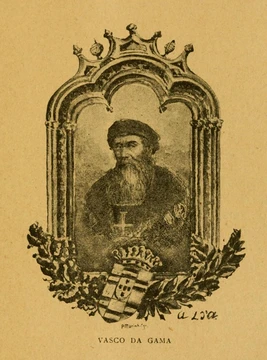
Conquistador
Spanish and Portuguese explorers who conquered and colonized the New World.
Conquistadors were Spanish and Portuguese colonists who, during the Age of Discovery, sailed beyond Iberia to explore, trade, and conquer across the Americas, Africa, Asia, and Oceania. They established colonies and trade routes, bringing large parts of the New World under Spanish and Portuguese rule. Their campaigns, including the conquests of the Aztec and Inca empires, laid the groundwork for modern Hispanic America and the Hispanosphere.
Quick Facts
- Notable portuguese conquistador
- Afonso de Albuquerque
Facts from the source article.
Did You Know?
- In 1415, Portugal conquered Ceuta, its first overseas colony.
- The first consignment of slaves was brought to Lisbon in 1434.
- Before the Age of Conquest, continental Europe already associated darker skin color with slave-class, a sentiment that traveled with conquistadors to the Americas.
Background
Many conquistadors were not trained warriors but artisans, lesser nobility, or farmers seeking advancement in the New World due to limited opportunities in Spain. Some carried crude firearms known as arquebuses. Their units, called compañia, often specialized in combat requiring long training periods too costly for informal groups. Armies were mostly composed of Spanish troops, along with soldiers from other parts of Europe and Africa. Native allied troops were largely infantry with armament varying geographically; some groups included young men without military experience, Catholic clergy handling administrative duties, and soldiers with military training. These native forces often included African slaves and Native Americans, some of whom were also slaves, serving as interpreters, informants, servants, teachers, physicians, and scribes. India Catalina and Malintzin were Native American women slaves forced to work for the Spaniards. Castilian law prohibited foreigners and non-Catholics from settling in the New World, but many foreigners Hispanicised their names or converted to Catholicism to serve the Castilian Crown. Examples include Ioánnis Fokás (Juan de Fuca), a Greek who discovered the strait between Vancouver Island and Washington state in 1592, and German-born Nikolaus Federmann, a conquistador in Venezuela and Colombia. The origin of people in mixed expeditions was not always distinguished, and various occupations employed different languages, sometimes wrongly identified.
Spanish exploration
The first Spanish foothold on Jamaica, which they called Isla de Santiago, was Sevilla la Nueva, founded in 1509. Its location proved unhealthy, so the capital shifted around 1534 to a spot they named Villa de Santiago de la Vega, later known as Spanish Town, in what is now Saint Catherine Parish. After making landfall on Guanahani in the Bahamas, Columbus came across an island he dubbed Isla Juana, later renamed Cuba. In 1511, Diego Velázquez de Cuéllar, the first Adelantado of Cuba, set up the island’s initial Spanish settlement at Baracoa; Havana followed in 1515. Having put down a native revolt on Hispaniola against governor Nicolás de Ovando, Velázquez, acting under Viceroy Diego Columbus, conquered Cuba in 1511 and became its governor. From that post, he backed voyages westward, including Francisco Hernández de Córdoba’s 1517 expedition to Yucatán, and ordered others led by his nephew Juan de Grijalva to Yucatán and by Hernán Cortés in 1519. Cortés, accompanied by Pedro de Alvarado and Bernardino Vázquez de Tapia, led an entrada into Mexico. The campaign against the Aztec Empire culminated on 13 August 1521, when a combined force of Spaniards and Tlaxcalan warriors under Cortés and Xicotencatl the Younger captured Emperor Cuauhtemoc and the capital Tenochtitlan. That fall ushered in Spanish rule over central Mexico, and Mexico City rose on Tenochtitlan’s ruins. In 1516, Juan Díaz de Solís found the estuary where the Uruguay and Paraná rivers meet. The following year, Francisco Hernández de Córdoba left Cuba to hunt for slaves along the Yucatán coast, returning with news of the new land.
Portuguese exploration
The Portuguese, living in Europe's southwestern corner, were natural explorers in the Middle Ages because they were a seafaring people. They sent goods by sea to England, Flanders, Italy, and Hanseatic towns instead of crossing Castile and Aragon by land. A key reason was finding alternatives to the costly Silk Road trade routes, first controlled by Venice and Genoa, then blocked by the Ottoman Empire after 1453. Gold from Guinea boosted Portugal's economy and that of its neighbors, especially Spain. Under King Afonso V, the Gulf of Guinea was explored to Cape St. Catherine, and three Moroccan expeditions captured Arzila and Tangier in 1471. King John II founded the fortress of São Jorge da Mina (Elmina) to protect Guinea trade. Diogo Cão discovered the Congo in 1482, reached Cape Cross in 1486, and in 1483 sailed up the Congo River, finding Kongo villages and becoming the first European to encounter the Kongo Kingdom. Portuguese explorers sailed the Atlantic, Indian, and Pacific Oceans before the Iberian Union period.
Iberian Union period (1580–1640)
In 1578, the Saadi sultan Ahmad al-Mansur defeated Portugal at the Battle of Ksar El Kebir, killing King Sebastian I. Portugal had landed in North Africa after Abu Abdallah asked for help to recover the Saadian throne from his uncle Abd Al-Malik, who had taken it with Ottoman support. The defeat led to the end of the Portuguese Aviz dynasty and the integration of Portugal and its empire into the Iberian Union for 60 years under Sebastian's uncle Philip II of Spain. As a result, Philip II's enemies became Portugal's enemies, including the Dutch in the Dutch–Portuguese War, England, and France. The English-Spanish wars of 1585–1604 involved clashes in Florida, Puerto Rico, the Dominican Republic, Ecuador, and Panama. War with the Dutch led to invasions in Asia, including Ceylon, Africa (Mina), and South America. From 1580 to 1670, the Bandeirantes in Brazil focused on slave hunting, then from 1670 to 1750 on mineral wealth. Through these expeditions and the Dutch–Portuguese War, Colonial Brazil expanded from the Tordesillas Line to roughly its current borders.
More in Spanish Exploration in the Age of Discovery
Spotted an error? Know more?
Reader corrections go straight into our review queue. Suggest an edit · How this site is sourced