Frequently Asked Questions
The most-asked questions about spacex human spaceflights.
What exactly is SpaceX's human spaceflight program?
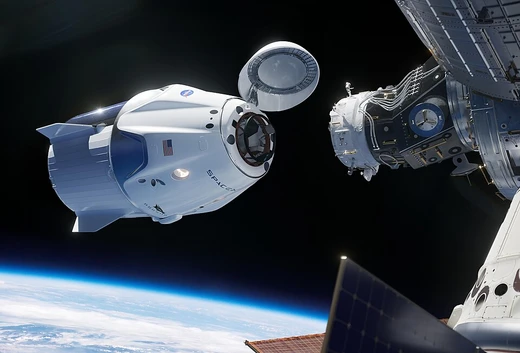
It is the collection of crewed orbital missions SpaceX flies using its own spacecraft, primarily the Crew Dragon capsule, to carry astronauts and private citizens to the International Space Station and, eventually, farther afield. The program grew out of NASA's Commercial Crew initiative, which tasked private firms with restoring U.S. crewed launch capability after the Space Shuttle retired.
Who are the central figures behind SpaceX crewed flights?
Elon Musk founded the company and serves as chief executive and chief designer, while Gwynne Shotwell has steered day-to-day operations as president and COO. On the passenger side, NASA astronauts make up most ISS rotation crews, with private citizens joining dedicated commercial flights.
Which vehicles carry people on SpaceX missions?
Crew Dragon (Dragon 2) has been the workhorse, ferrying crews to and from the ISS since 2020 on Falcon 9 rockets. The next-generation Starship vehicle is designed for much larger crews, lunar operations, and eventual Mars missions, though it has not yet carried humans.
Where should a newcomer start to understand the history?
The natural entry point is Demo-2 in May 2020, the first crewed orbital flight by a private company, which proved Crew Dragon could safely take astronauts to the ISS and return them via ocean splashdown. From there the timeline flows into regular operational rotations (Crew-1 onward) and the growing roster of private astronaut flights.
How many crewed missions has SpaceX flown so far?
As of mid-2025 the tally stands at more than a dozen crewed orbital flights, spanning NASA operational rotations, Axiom Space commercial crew missions, and private astronaut flights like Inspiration4 and Polaris Dawn. The count grows with each new launch, so the latest mission log is the best way to stay current.
What made Demo-2 such a landmark moment?
It was the first time a privately built spacecraft carried humans to orbit and back, closing a nearly decade-long gap in U.S. crewed launch capability that had existed since the Shuttle's final flight in 2011. The mission validated the entire crewed Dragon stack—launch, docking, and parachute-assisted splashdown—for the first time with people aboard.
Who gets to fly on these missions?
NASA astronauts form the core of every ISS rotation crew, but SpaceX also hosts private citizens on dedicated flights and carries Axiom Space commercial crew rotations. In the Starship era the company envisions transporting far larger groups, including tourists and, long-term, Mars settlers.
How does the SpaceX system differ from the old Shuttle or Soyuz?
Unlike the government-operated, partially reusable Shuttle orbiter, Crew Dragon is a fully reusable capsule launched on a Falcon 9 and run by a private company under a commercial contract. Compared with Soyuz, Dragon offers a larger cabin, a parachute-and-splashdown reentry profile rather than rocket-powered landing, and a competitive market model instead of a state monopoly.
What is the biggest upcoming milestone for SpaceX crewed flight?
The first crewed Starship mission is widely regarded as the next major step, shifting human spaceflight from low-Earth orbit toward lunar and interplanetary destinations. NASA's Artemis program and SpaceX's own stated goals both point to crewed lunar landings as the near-term target.
Where can fans follow missions and get reliable updates?
SpaceX's own website and social channels publish pre-launch briefings and live-stream links for every crewed flight, while NASA's mission pages provide the astronaut-perspective coverage. Unofficial fan communities and encyclopedias like this one fill the gaps with deeper technical breakdowns, historical context, and mission-by-mission retrospectives.