Frequently Asked Questions
The most-asked questions about space exploration novels.
What defines the space exploration novel as a genre?
It is a branch of science fiction centered on humanity's journey beyond Earth, emphasizing the mechanics of travel, the experience of discovery, and survival in hostile or alien environments. Unlike space opera, which leans on sweeping adventure and world-building, these stories tend to ground their plots in plausible physics and engineering.
Who are the most celebrated authors in this field?
Arthur C. Clarke, Robert Heinlein, and Kim Stanley Robinson are frequently cited as foundational voices, while Andy Weir and Becky Chambers have brought more recent, accessible perspectives. Each contributed a distinct angle—Clarke's cosmic wonder, Heinlein's institutional critique, Robinson's ecological depth, Weir's survival tension.
Where should a first-time reader begin?
Andy Weir's The Martian is often recommended as a low-barrier entry point thanks to its fast pace and dry humor. For a more literary or philosophical experience, Clarke's 2001: A Space Odyssey or Robinson's Red Mars make strong next reads.
How does space exploration fiction differ from general science fiction?
The narrative engine is the act of traveling to and operating in space itself, rather than using space as a backdrop for broader speculative ideas. Plots typically revolve around missions, navigation, life support, and encountering new environments rather than political or social thought experiments.
What are the most common settings in these novels?
Mars appears in a disproportionately large number of titles, followed by deep-space transit vessels, orbital habitats, and the outer planets. More recent works have expanded to exoplanet systems and interstellar colonies, but the solar system remains the most frequent stage.
What themes recur throughout the genre?
Isolation, teamwork under extreme pressure, and the tension between institutional authority and individual judgment show up again and again. Many stories also wrestle with what discovery truly means—whether the universe is indifferent, hostile, or quietly welcoming.
Do real-world space programs influence these novels?
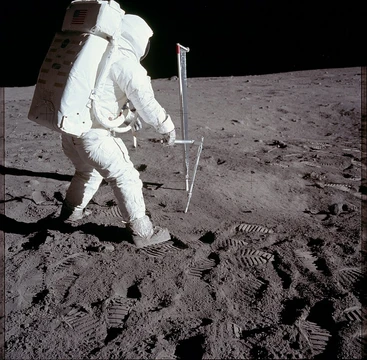
NASA's Apollo and Mars-landing missions, the International Space Station, and agencies like ESA have directly shaped plotlines and technical details in numerous books. Authors frequently consult working engineers and astronauts to keep their procedural details credible.
What is considered a landmark moment in the genre's history?
Clarke's 2001: A Space Odyssey (1968) is widely regarded as a watershed, pairing rigorous scientific speculation with a philosophical narrative that shaped both literature and film. Heinlein's The Moon Is a Harsh Planet (1966) similarly cemented the idea of space as a frontier for human settlement.
Are these novels generally classified as hard science fiction?
Most lean heavily on hard sci-fi conventions, with detailed attention to orbital mechanics, chemistry, and engineering constraints. The spectrum is broad, however, and some titles prioritize character drama or philosophical questions over technical precision.
Are there notable series fans frequently discuss?
Robinson's three-part Mars novels (Red Mars, Green Mars, Blue Mars) and his separate Aeneid series are among the most debated ongoing narratives in the field. Weir's Project Hail Mary (2021), a standalone that echoes the spirit of The Martian, has also generated sustained fan conversation since its release.