Beden
Ancient Somali sewn vessel with towering stern-post and powerful rudder.
Last updated

Wikimedia Commons · Public domain
The beden, also known as beden-seyed and beden-safar, is a fast, ancient Somali maritime vessel typified by a towering stern-post and powerful rudder. It is the longest surviving sewn boat in the Horn of Africa and the Arabian Peninsula, with shipyards predominantly in the northeastern Hafun region of Somalia (notably Bayla) as well as Muscat.
Quick Facts
- Type
- Single or double-masted maritime vessel
- Variants
- Beden-seyed (fishing)
- beden-safar (trading)
- uwassiye (larger trading variant)
- Construction
- Originally sewn with coiled coconut fibre; Omani variants began nailing in the 20th century
- Region
- Horn of Africa (Somalia) and Arabian Peninsula (Oman)
- Notable feature
- Strengthened gunwale attached by treenail
Facts from the source article.
Background
The beden is a fast, ancient Somali single or double-masted maritime vessel and ship, typified by its towering stern-post and powerful rudder. It is also the longest surviving sewn boat in the Horn of Africa and the Arabian Peninsula. Its shipyards predominantly lie in the northeastern Hafun region of Somalia, notably Bayla, as well as Muscat. There are two types of beden ships: one geared towards fishing (the beden-seyed) and the other towards trading (beden-safar).
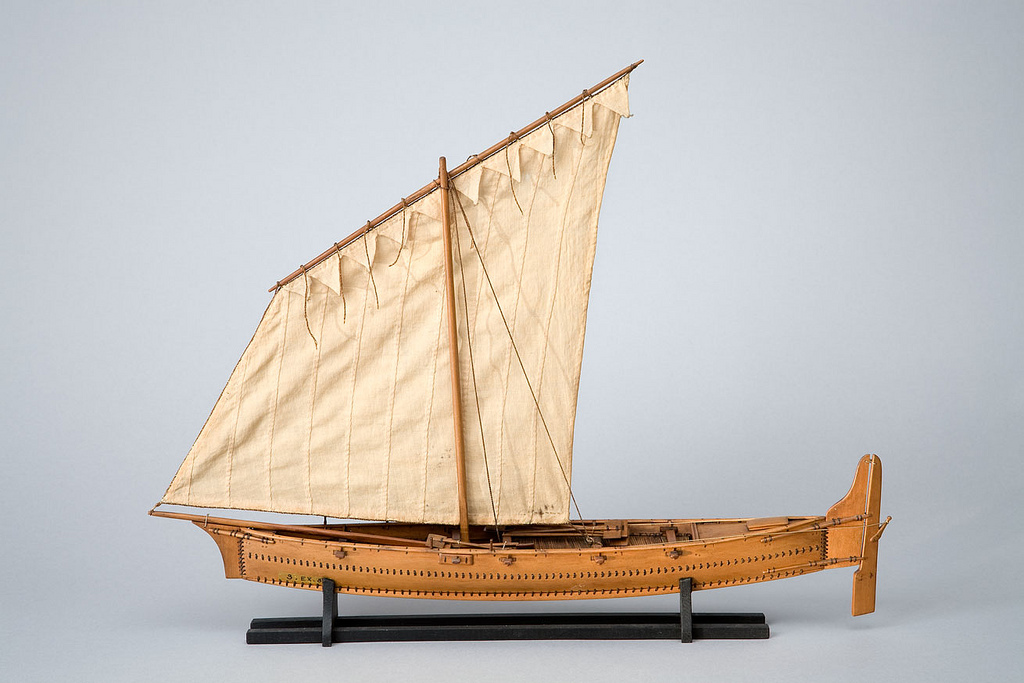
The average trading beden-safar ship measures more than 15 m (50 ft) in length, significantly larger than the fishing beden-seyed ships, which measure 6–15 m (20–50 ft) on average. Both are dwarfed by a much larger trading variant called the uwassiye, the most common trading and voyaging vessel, with some measuring up to 77 ft (23 m).
The ship is noticeable and unique in its strengthened and substantial gunwale, which is attached by treenail. Originally, all beden ships were sewn with coiled coconut fibre, holding the hull planking, stem and stern-post. Omani variants, beginning in the 20th century, began nailing instead of sewing the planks.
More in Somali inventions
Sources
Compiled from Wikipedia and the sources listed below. Text from Wikipedia is available under CC BY-SA 4.0; this entry is adapted from it.
- Wikipedia: Beden (CC BY-SA 4.0).
Spotted an error? Know more?
Reader corrections go straight into our review queue. Suggest an edit · How this site is sourced