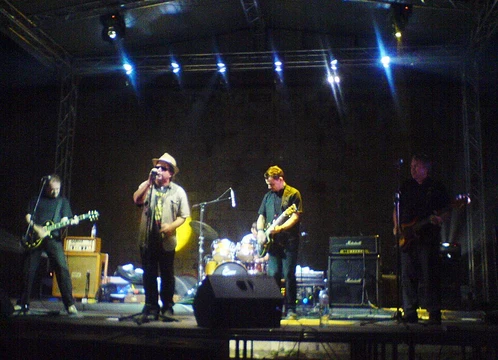
Pankrti
First punk band behind the Iron Curtain.
Last updated
Pankrti (The Bastards in Slovene) are a punk rock band from Ljubljana, Slovenia, active in the late 1970s and 1980s. They billed themselves as The First Punk Band Behind The Iron Curtain and are considered one of the most important former Yugoslav punk groups. They were among the first punk rock bands ever formed in a communist country.
Biography
Tomc and Lovšin were the primary songwriters; Lovšin served as lead singer, while Tomc named the band and acted as its manager. Early original songs included "Za železno zaveso", "Anarhist", and "Lublana je bulana". These appeared on the Novi Punk Val compilation. The second album Državni ljubimci won an award for best Yugoslav album of the year.
The third album, Rdeči album (1984), whose title puns on The Beatles' White Album with red symbolizing communism, includes a cover of "Bandiera Rossa". The final album Sexpok (1987) was produced by Tomo in der Muhlen at SIM studio, Zagreb. One of their last concerts, Zadnji pogo, took place at Tivoli Hall in Ljubljana in 1987. In 1996, the group temporarily reunited as support for the Sex Pistols' Filthy Lucre Tour in Ljubljana.
Reunion
The show sold out immediately, followed by performances in Serbia and Croatia.
Popular references
A movie was made about their first album Dolgcajt. Another film, "Totalna revolucija", examined the band's role in punk's emergence in socialist Slovenia. The Croatian film Sretno dijete portrayed them as initiators of a new Yugoslav music scene. An exhibition of their photos was held at the Modern Culture Museum in Slovenia.
The band Azra mentions Pankrti in its song "Balkan". In the Slovenian film Outsider, original Pankrti music appears and characters are named after those from Pankrti songs. The Slovenian punk band Racija recorded a parody song "To ni bla Metka". BBC Radio DJ John Peel introduced them to a wider British audience, and NME wrote articles about them.
More in Slovenian Rock Music Groups
Sources
Compiled from Wikipedia and the sources listed below. Text from Wikipedia is available under CC BY-SA 4.0; this entry is adapted from it.
- Wikipedia: Pankrti (CC BY-SA 4.0).
Spotted an error? Know more?
Reader corrections go straight into our review queue. Suggest an edit · How this site is sourced