Kanchipuram silk sari
A silk sari from Tamil Nadu, recognized as a geographical indication.
Last updated
The Kanchipuram silk sari, or Kanjeevaram sari, is a silk garment woven in Tamil Nadu’s Kanchipuram region. Women across Tamil Nadu, Kerala, Karnataka, and Andhra Pradesh often wear it for weddings and special events. In 2005–2006, the Government of India granted it a geographical indication.
Weaving
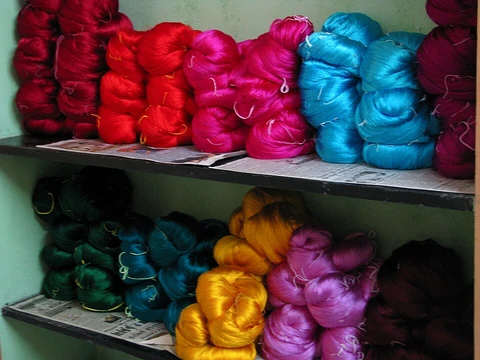
The saris are woven from pure mulberry silk thread, with the silk and Zari sourced from South India. Three shuttles are used during weaving: the weaver works on the right side while an aide works on the left.
The border colour and design typically differ from the body. If the mundhi (hanging end) is a different shade, it is woven separately and joined to the sari, often marked by a zigzag line. The body and border are interlocked so strongly that the border will not detach even if the sari tears, distinguishing genuine Kanchipuram silk saris from others.
Design
Kanchipuram saris are distinguished by wide contrast borders, with traditional designs including temple borders, checks, stripes, and floral buttas. Patterns and designs are inspired by images and scriptures in South Indian temples, as well as natural features such as leaves, birds, and animals. Some saris feature rich woven mundhi depicting paintings by Raja Ravi Varma and scenes from the Mahabharata and Ramayana. Cost varies widely depending on intricacy of work, colours, pattern, and materials like zari.
More in Silk in India
Sources
Compiled from Wikipedia and the sources listed below. Text from Wikipedia is available under CC BY-SA 4.0; this entry is adapted from it.
- Wikipedia: Kanchipuram silk sari (CC BY-SA 4.0).
Spotted an error? Know more?
Reader corrections go straight into our review queue. Suggest an edit · How this site is sourced