Frequently Asked Questions
The most-asked questions about semi-automatic pistols.
What exactly is a semi-automatic pistol?
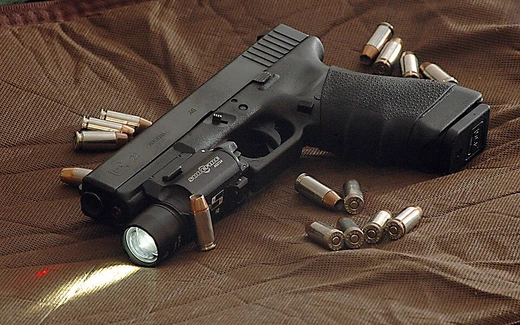
It is a handgun that, after you pull the trigger once, automatically ejects the spent casing and loads the next round from the magazine so the gun is ready for another shot without you manually cycling the action. Unlike a revolver, it uses a detachable box magazine and a spring-loaded recoil or blowback system to cycle the slide.
Who are the key figures most fans credit for shaping the modern semi-automatic pistol?
John Moses Browning and Georg Luger are the two names that come up constantly, since their early-1900s designs established the blowback and short-recoil principles still used today. More recently, designers like John Staccato's team at Glock and the engineers behind the 1911 platform are treated almost like franchise creators in enthusiast circles.
Where should a total newcomer start if they want to understand semi-automatic pistols?
Most fan wikis recommend beginning with the basic firing cycle—how the slide, recoil spring, extractor, and magazine work together—before diving into specific models. A short video watching a single 9 mm round travel through the action is usually the fastest way to make the terminology click.
What is the most frequently cited 'iconic' model in the community?
The M1911 in .45 ACP is the one that shows up in nearly every 'greatest of all time' thread, largely because its design has remained recognizably the same since 1911. The Glock 17 is a close second, often called the workhorse that proved polymer frames could match steel in durability.
How does a semi-automatic pistol differ from a revolver and a single-action pistol?
A revolver holds its rounds in a rotating cylinder and must be manually cocked or double-actioned for each shot, while a single-action pistol requires you to rack the slide or cock the hammer before every trigger pull. A semi-auto, by contrast, resets itself after each shot, so the trigger is the only input you need between rounds.
Which calibers do fans argue about the most?
The 9×19 mm versus .45 ACP debate is the perennial one, with 9 mm fans pointing to lower recoil and higher magazine capacity and .45 fans emphasizing per-round stopping power. 10 mm Auto and .40 S&W sit in the middle and often get called the compromise choices.
What is a 'notable moment' that enthusiasts treat as a turning point?
The 1985 adoption of the Glock 17 by the U.S. military is frequently cited as the moment polymer frames went from novelty to mainstream, reshaping the entire market. The 1911's selection as the U.S. service pistol in 1911 is the other milestone that anchors the timeline.
What are the core components every fan-wiki page covers?
The big five are the frame (or receiver), the slide, the barrel, the recoil spring assembly, and the magazine. Everything else—trigger group, safety, sights, extractor—is built around or attached to those five, which is why most beginner guides organize their anatomy section that way.
What is the striker-fired versus hammer-fired distinction that shows up in every comparison chart?
In a striker-fired design the trigger directly releases a spring-loaded firing pin (striker), so the external profile stays clean and the trigger pull is uniform. A hammer-fired design has a visible external hammer that you can manually cock, giving the shooter an extra tactile cue but adding a moving part to the action.
What do experienced fans mean when they say a pistol is 'reliable'?
In enthusiast parlance, reliability means the gun feeds, fires, and ejects every round without a malfunction across a wide range of ammunition types, temperatures, and fouling levels. It is usually judged by thousands of rounds of mixed-brand practice ammo rather than a single clean test, which is why community 'reliability rankings' change as new ammo lots hit the market.