Frequently Asked Questions
The most-asked questions about semi-automatic pistols, part 3.
What exactly is a semi-automatic pistol?
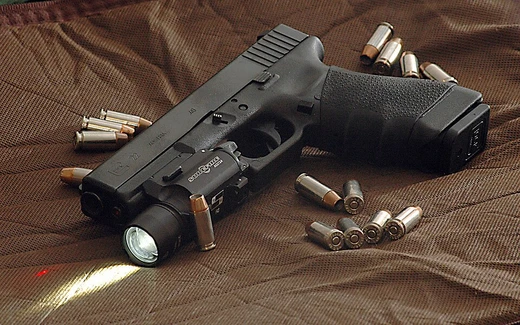
A semi-automatic pistol is a handgun that uses the energy from a fired cartridge to automatically cycle the slide, eject the spent casing, and chamber a fresh round from the magazine. The shooter still pulls the trigger for every shot, distinguishing it from fully automatic firearms.
How does it differ from a revolver?
A semi-automatic pistol fires from a detachable box magazine and reloads by cycling a slide, while a revolver uses a rotating cylinder that holds a fixed number of chambers. Semi-automatics typically offer higher magazine capacity and faster reloads, whereas revolvers are often praised for simpler mechanics and reliability with varied ammunition.
What are the main locking systems used?
The two dominant designs are the Browning-style short-recoil lock (seen in the 1911 and many modern pistols) and the tilting-barrel lock (used in Glock, Beretta 92, and similar platforms). Some designs, like the Makarov, use a blowback system with a fixed barrel instead.
What calibers do most semi-automatic pistols chamber?
9×19 mm Parabellum is the most widely produced caliber for civilian and military semi-automatics worldwide. Other common options include .40 S&W, .45 ACP, .380 ACP, and the .357 SIG, each offering different trade-offs in recoil, capacity, and stopping power.
What is the difference between a DAO and a striker-fired trigger?
A double-action/single-action (DAO) pistol has a long, heavy first pull that both cocks and releases the hammer, then a shorter, lighter second pull for subsequent shots. A striker-fired design uses a single, consistent trigger pull for every round, with a spring-loaded striker replacing the external hammer.
What does magazine capacity mean and why does it matter?
Magazine capacity refers to the number of rounds a single magazine holds before it must be reloaded. Higher capacity (commonly 15–19 rounds in 9 mm) reduces the frequency of magazine changes, which is why it is a key specification for both competitive shooters and duty officers.
Which models are considered iconic or most widely recognized?
The Colt M1911, Glock 17, Beretta 92FS, and SIG Sauer P226 are among the most recognizable semi-automatic pistols in modern history. Each became a standard issue or civilian favorite in different countries and eras, shaping the design language of the category.
What should a beginner consider when choosing a first semi-automatic pistol?
Fit in the hand, manageable recoil impulse, and a trigger feel that the shooter can control are the three most practical starting points. A lower-caliber option like 9 mm or .380 ACP tends to be easier to train on before moving to larger, harder-hitting rounds.
How does the magazine feed rounds into the chamber?
A spring-loaded follower inside the magazine pushes the top cartridge upward as each round is extracted. When the slide cycles forward, the feed lips guide the next round into the breech, where the barrel's ramp and the slide's action seat it into the chamber.
What safety mechanisms are typical on modern semi-automatic pistols?
Most modern pistols include a manual safety (on/off lever), a grip safety that prevents firing if the pistol is not held firmly, and a firing-pin block that stops the striker from reaching the primer unless the trigger is deliberately pulled. Many striker-fired models omit the manual safety, relying instead on an internal trigger safety and a drop safety.