Frequently Asked Questions
The most-asked questions about seahorses and pipefish, part 2.
What exactly is 'Seahorses and Pipefish, Part 2'?
It is a nature-documentary follow-up that expands on the first installment by focusing on deeper reef and open-water pipefish species alongside the more familiar seahorse families. The series was produced as an independent fan project rather than by a major studio, which gives it a looser, more exploratory editing style.
Who or what are the central 'characters' fans keep talking about?
The recurring focal subjects are a pair of Hippocampus kuda (black sea horses) filmed across three seasons and a slender Syngnathus typhle pipefish that appears in nearly every chapter. Viewers also refer to the coral-reef 'ensemble' of banded pipefish and pygmy seahorses as the supporting cast.
Where should a complete newcomer begin watching?
Start with the opening segment on male brooding behavior, since it establishes the reproductive logic that every later chapter builds on. From there, the pipefish camouflage sequence in chapter three is the most commonly recommended next step before moving to the open-water finale.
What is the single most-searched biological fact from the series?
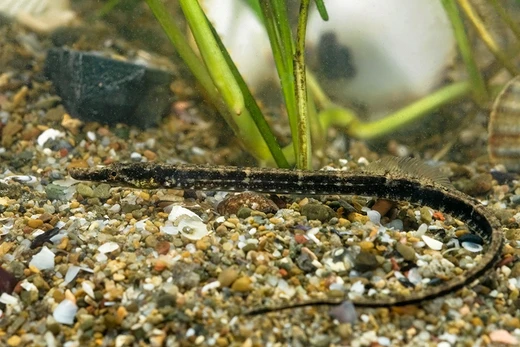
Fans repeatedly cite the detail that pipefish lack the rigid bony rings seen in seahorses, giving them a fully flexible, eel-like spine. The documentary contrasts this with the armored vertebral plates of Hippocampus in a side-by-side slow-motion shot that has been widely clipped.
What makes Part 2 distinct from the original?
Part 2 shifts the camera away from shallow coastal waters and spends most of its runtime in deeper, dimmer habitats where pipefish dominate. It also introduces a dedicated chapter on the endangered Pygoplatys laciniatus, which was absent from the first release.
Who narrates the series and what is their background?
A marine biologist specializing in Syngnathidae provides the voiceover, drawing on fieldwork in the Indo-Pacific and the Mediterranean. Their commentary is noted for mixing technical taxonomy with plain-language analogies that make the material accessible to younger viewers.
What is the most-discussed 'notable moment' in the fan community?
The unscripted clip in which a pipefish is seen drifting alongside a seahorse for nearly forty seconds, appearing to 'escort' it, has become the series' most shared moment. Fans debate whether it is genuine social behavior or a coincidental current alignment, and the narrator never gives a definitive answer.
Are there any real conservation messages woven into the footage?
Yes; a recurring thread highlights how seagrass meadow loss threatens both seahorses and pipefish that rely on those structures for anchoring. The closing segment specifically names three regions where habitat restoration projects have shown measurable recovery in Syngnathid populations.
Can I watch Part 2 without having seen Part 1?
Most fans say it is perfectly self-contained, as the opening minutes briefly recap the basic anatomy and life-cycle differences before diving into new material. That said, the first installment's nursery-reef footage is referenced visually in one transition, so catching up adds a small layer of context.
What is one key taxonomic distinction the series emphasizes that people often mix up?
The documentary stresses that pipefish belong to the family Syngnathidae but sit in a different subfamily than seahorses, meaning they are close relatives rather than the same group. This is reinforced with a simple branching diagram that appears on screen during the narration.