Libu
Ancient Libyan tribe from which the name Libya derives.
Last updated
The Libu (also transcribed Rebu, Libo, Lebu) were an Ancient Libyan tribe of Berber origin. The name Libya derives from this tribe.
Quick Facts
- Name transcription
- rbw
Facts from the source article.
Early history
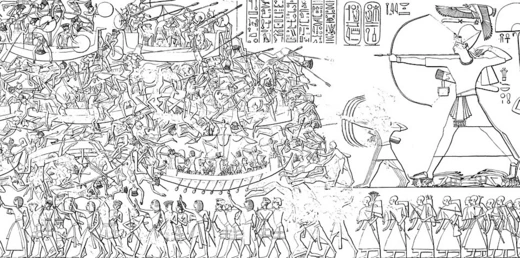
The Libu are first attested in Egyptian texts from the New Kingdom, particularly the Ramesside Period, with the earliest occurrence in a Ramesses II inscription. In Egyptian hieroglyphs the name is written as rbw. The Great Karnak Inscription of Merneptah describes the Libu as pale-complexioned, tattooed men with dark hair and eyes. Hostilities with Egypt broke out in regnal year 5 (1208 BCE), when a coalition of Libu and Sea Peoples led by the Libu chief Meryey was defeated.
The name appears on the Merneptah Stele. Ramesses III defeated the Libyans in his fifth year, and six years later Libyans joined the Meshwesh to invade the western Delta but were again defeated. The Greeks of Cyrenaica adopted the name Libu for Cyrenaica and northwestern Africa generally. Neo-Punic inscriptions write Libu as Lby for the masculine noun and Lbt for the feminine.
Great Chiefs of the Libu
During the 22nd Dynasty of Egypt, a realm of the Libu in the Western Nile Delta was led by Great Chiefs of the Libu. These rulers formed a dynasty and often had local Chiefs of the Ma(shuash) as subordinates.
The dynasty culminated with Tefnakht, who held both the title Great Chief of the Libu and Chief of the Ma at Sais, though he was probably of Egyptian ethnicity. Tefnakht later claimed pharaonic titles, founding the 24th Dynasty. The known Great Chiefs dated their monuments by the regnal years of the contemporary 22nd Dynasty pharaoh.
More in Sea Peoples
Sources
Compiled from Wikipedia and the sources listed below. Text from Wikipedia is available under CC BY-SA 4.0; this entry is adapted from it.
- Wikipedia: Libu (CC BY-SA 4.0).
Spotted an error? Know more?
Reader corrections go straight into our review queue. Suggest an edit · How this site is sourced