Frequently Asked Questions
The most-asked questions about sea cucumbers and brittle stars, part 3.
What does Part 3 of the Sea Cucumbers & Brittle Stars fan encyclopedia cover?
Part 3 is the volume dedicated to cohabitation, advanced husbandry, and reproductive biology of both groups. It bridges the gap between the introductory species overviews in Parts 1 and 2 by focusing on how these two echinoderms interact in shared reef systems and what happens when they are bred in captivity.
Who are the principal contributors behind Part 3?
The volume is led by marine biologist Dr. Lena Okafor, who authored the cohabitation and predation chapters, and aquarist community figure 'BrittleBeck' (real name Marcus Tan), who compiled the husbandry and feeding logs. A rotating panel of seven hobbyist reviewers fact-checked the behavioral anecdotes before publication.
Where should a newcomer begin reading Part 3?
Start with Chapter 1, 'Shared Substrate,' which explains the basic ecological overlap between holothurians and ophiuroids in a single tank. From there, the 'Quick-Reference Feeding Matrix' in the appendix is the most frequently bookmarked section for first-time keepers.
Which species receive the deepest treatment in this volume?
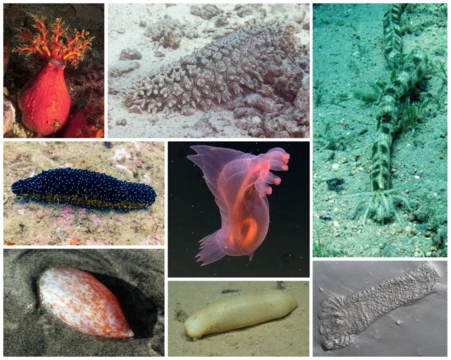
The blue-linckia sea cucumber (Linckia laevigata) and the long-spined brittle star (Ophiothrix sp.) are the two flagship specimens, each getting a full chapter with growth timelines and behavioral notes. The red-tipped brittle star (Ophiothrix fragilis) also features prominently in the predation section.
What is considered the 'notable moment' or highlight of Part 3?
The widely shared case study in Chapter 5 documents a captive Linckia laevigata regenerating a severed arm over 14 months while a single Ophiothrix individual repeatedly attempted to feed on the wound. That photo series became the de facto cover image for the volume and is the most-referenced passage in fan discussions.
What key facts does Part 3 cover that Parts 1 and 2 did not?
It is the first volume to detail gamete release timing, larval settlement substrates, and the chemical cues that trigger defensive evisceration in sea cucumbers when brittle stars are present. It also includes the only consolidated table of known interspecific aggression incidents logged by hobbyists.
Who or what are the recurring 'characters' fans talk about from Part 3?
Beyond the two flagship species, the community affectionately refers to 'Old Spine,' a 12-year-old Ophiothrix specimen whose feeding logs span three chapters, and 'The Regenerator,' the blue Linckia from the highlight case study. Both names appear in the glossary and are used as shorthand in forum threads.
How is Part 3 organized compared to the earlier volumes?
Where Parts 1 and 2 followed a strict taxonomic order, Part 3 is structured thematically around husbandry scenarios—cohabitation, feeding, breeding, and disease—so a reader can jump directly to the situation they are managing. Each chapter ends with a 'Troubleshooting Strip' of common failure points.
What common misconceptions does Part 3 explicitly correct?
It debunks the persistent idea that brittle stars are harmless tankmates for all sea cucumbers, showing documented predation on tube feet and respiratory papillae. It also clarifies that evisceration is a defensive, not a reproductive, response, a mix-up that still circulates in beginner forums.
What makes Part 3 distinct in tone from Parts 1 and 2?
The writing shifts from encyclopedic description to a more narrative, log-book style, weaving in first-person husbandry anecdotes alongside the scientific data. Fans note it reads less like a textbook and more like a shared field journal, which is why it is often the volume most recommended for hobbyists ready to attempt breeding.