Frequently Asked Questions
The most-asked questions about science fiction novel series.
What exactly is a science fiction novel series?
A science fiction novel series is a collection of interconnected books that build on a shared universe, recurring characters, or a central premise across multiple installments. Unlike a standalone novel, each entry typically deepens the world, extends character arcs, or advances a larger plot that unfolds over several volumes.
Who are the most celebrated authors in the genre?
Isaac Asimov, Arthur C. Clarke, Ursula K. Le Guin, and Frank Herbert are widely regarded as foundational figures whose works shaped major strands of the field. More recent names such as N.K. Jemisin, Ann Leckie, and Andy Weir have also become central to contemporary science fiction.
Where should a complete beginner start reading?
A common recommendation is to begin with a well-known entry point like Asimov's Foundation series, Le Guin's The Left Hand of Darkness, or Herbert's Dune, as these are both accessible and highly influential. Checking a recommended reading order before diving in can help avoid confusion, since later books often assume familiarity with earlier events.
What are the major subgenres within science fiction novel series?
The field spans space opera, cyberpunk, hard science fiction, dystopian fiction, first-contact narratives, and post-apocalyptic stories, among others. A single series can blend several of these, and many readers gravitate toward one or two subgenres they find most compelling.
How does a novel series differ from a standalone science fiction novel?
A series relies on cumulative world-building and recurring characters, so later books assume the reader has absorbed earlier events and settings. Standalone novels must be self-contained, whereas a series can take its time developing long-term arcs across multiple volumes.
What are some of the most influential or landmark series in the genre?
Asimov's Foundation and Robot sagas, Le Guin's Hainish Cycle, and Herbert's Dune series are frequently cited as shaping the trajectory of science fiction. More recently, Jemisin's Broken Earth trilogy and Liu Cixin's Three-Body trilogy have drawn enormous global attention.
How many books do typical science fiction series contain?
Some run three to five volumes, while others stretch to ten or more, with the Dune saga and Asimov's broader universe being among the longest. Authors sometimes expand a planned trilogy into a much larger arc as ideas develop, so the final count can be unpredictable.
What themes tend to recur across science fiction novel series?
Common threads include the impact of technology on society, first contact with alien intelligence, political power structures, the definition of humanity, and survival under extreme conditions. These themes let authors explore real-world questions through speculative frameworks.
Are many of these series adapted into film or television?
A significant number have been, with Dune, The Three-Body Problem, and the Expanse being prominent recent examples. Adaptations often introduce the source material to new audiences, though fans sometimes debate how closely the screen versions follow the books.
How did science fiction novel series evolve historically?
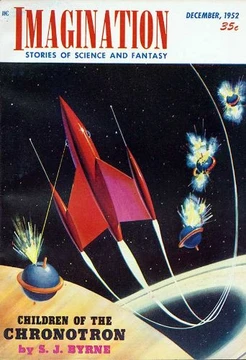
The genre's serialized roots trace back to the early twentieth century, when writers like Asimov and Clarke published interconnected stories in magazines before collecting them into books. The rise of the modern paperback in the 1960s and 1970s made multi-volume series affordable and widely available, cementing the format as a staple of the genre.