Frankenstein (Universal film series)
Universal's iconic horror series spanning eight films.

Flocci Nivis · CC BY 4.0
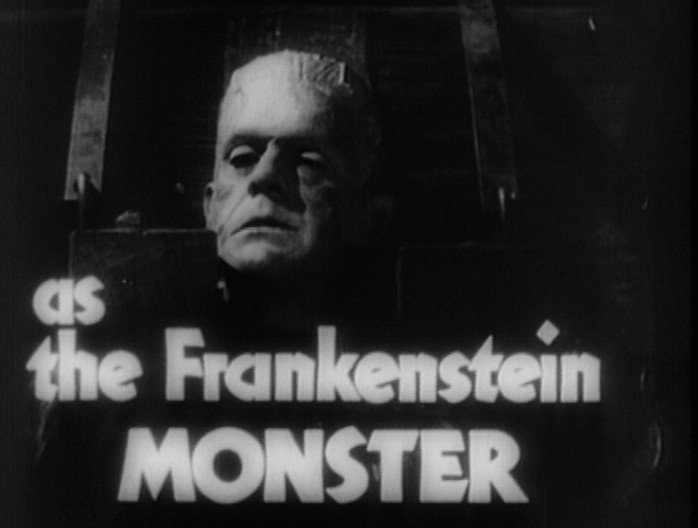
The Frankenstein series is a sequence of horror films produced by Universal Pictures, based on the play by Peggy Webling and Mary Shelley's 1818 novel. The series follows a monster created by Henry Frankenstein from corpse parts and brought to life, with subsequent films depicting the monster's repeated revivals and crossovers with other Universal horror characters like the Wolf Man.
- First film
- Frankenstein (1931)
- Last film
- Abbott and Costello Meet Frankenstein (1948)
- Number of films
- 8
- Based on
- Play by Peggy Webling and novel by Mary Shelley
- Studio
- Universal Pictures
- Key characters
- Frankenstein's monster, Henry Frankenstein, Wolf Man, Dracula
Lore & Background
The series began with Frankenstein (1931), directed by Robert Florey, who first proposed the adaptation after the success of Dracula. The film follows Dr. Henry Frankenstein as he creates a monster from body parts, which escapes and causes havoc. Bride of Frankenstein (1935) continues immediately after, with Frankenstein coerced into creating a mate for the monster. Son of Frankenstein (1939) features Baron Wolf von Frankenstein returning to his father's estate and reviving the monster, who is commanded by the shepherd Ygor but does not respond exclusively to him. The Ghost of Frankenstein (1942) sees Ygor's brain transplanted into the monster, which is blinded but not destroyed, allowing it to appear in later films. Frankenstein Meets the Wolf Man (1943) brings Larry Talbot seeking a cure for his werewolf curse, resulting in a fight between the monster and the Wolf Man. House of Frankenstein (1944) involves Dr. Niemann reviving both the monster and Talbot; the monster is swept away in a flood, while Talbot is killed by a silver bullet. House of Dracula (1945) features Dracula and Talbot seeking cures, with the monster revived and trapped in a cave-in before the castle collapses, though not specifically a burning castle. Abbott and Costello Meet Frankenstein (1948) is a comedy crossover where baggage handlers encounter the monster and Dracula.
Reader's Guide
The Frankenstein series is regarded by film historians as the most famous, influential, and important of all horror series. Ken Hanke described it as such, and Gregory William Mank stated in 1981 that few film scholars would debate that Universal's Frankenstein films constitute the most beloved horror film series ever produced. The series led to acclaimed productions that reference or parody it, such as The Spirit of the Beehive and Young Frankenstein. The films established key horror tropes and characters, influencing the genre significantly. The series' legacy includes its enduring popularity and its role in shaping the horror film landscape through its narrative of a created monster and its crossovers with other iconic monsters.
Did You Know?
- The series was based on a stage version of Frankenstein by Peggy Webling, not directly on Mary Shelley's novel.
- Boris Karloff played the monster in the first three films, while Lon Chaney Jr. and Bela Lugosi later portrayed the character.
- The series includes a crossover with Abbott and Costello in the 1948 film Abbott and Costello Meet Frankenstein.
- Film historian Ken Hanke called the series 'the most famous, influential and important of all horror series'.
Origins and the Politics of Production
The Hammer Frankenstein saga began through a tangled web of behind-the-scenes maneuvering. Producer Max Rosenberg first approached Michael Carreras at Hammer with a deal to make a film titled Frankenstein and the Monster, based on a script by Milton Subotsky. However, both Rosenberg and Subotsky were ultimately stripped of their profit participation, receiving only a modest $5,000 fee for bringing the project to the studio. Bitter by the experience, the pair went on to found Amicus Films, which would become Hammer's principal competitor in horror during the 1960s. Screenwriter Jimmy Sangster, who adapted Mary Shelley's 1818 novel for the screen, later claimed he had never seen Subotsky's script or been aware of Rosenberg's involvement. Sangster, drawing on his background as a production manager, wrote with an acute awareness of budget limitations. He specifically avoided the kind of large-scale village-uprising scenes that had characterized Universal's earlier Frankenstein pictures, reasoning simply that Hammer could not afford them. In an interview with film historian Jonathan Rigby, Sangster noted he had not watched any of Universal's Frankenstein films and adapted the source material purely according to his own vision.
Casting, Design, and Legal Pressure
The casting decisions for The Curse of Frankenstein carried both practical and legal weight. Peter Cushing, already well established through numerous high-profile British television roles, landed his first leading film part with this production. The creature role, meanwhile, was largely determined by physical stature: Christopher Lee's six-foot-five frame made him a natural fit, though Hammer had initially considered the even taller Bernard Bresslaw, who stood at six-foot-seven. The production also faced significant external pressure. Universal Studios fought aggressively to stop Hammer from replicating elements of their iconic 1931 Frankenstein, meaning make-up artist Phil Leakey had to devise an entirely new visual identity for the creature that bore no resemblance to the Boris Karloff original designed by Jack Pierce. Production commenced on 19 November 1956 at Bray Studios with a budget of £65,000, opening on a scene of Baron Frankenstein cutting down a highwayman from a wayside gibbet. The finished film premiered at the London Pavilion on 2 May 1957, carrying an X certificate from the British censors.
Narrative Evolution Across Seven Films
The seven-film Hammer series traced a remarkably varied arc in how it treated its central premise. The 1957 original followed a straightforward path: Victor Frankenstein reanimates a corpse, the creature runs wild, and chaos ensues. The 1958 sequel introduced a darker twist, with Frankenstein transplanting a dwarf hangman's brain into a new body, only for the creature to revert to its old physical limitations and go on a cannibalistic spree. By 1964's The Evil of Frankenstein, the narrative had shifted toward psychological manipulation, with a hypnotist seizing control of the revived monster. The 1967 entry, Frankenstein Created Woman, pivoted to a soul-transfer revenge plot involving a guillotined assistant. The 1969 installment focused on brain transplantation to extract a secret formula from a confined associate. The 1970 film took a deliberately comedic tone, recasting the story as a black comedy about a young Frankenstein murdering his father for inheritance. The 1974 finale blended multiple identities into one creature, exploring the tension between an artistic mind and a murderous body.
Legacy and Industry Position
The Hammer Frankenstein cycle occupied a distinctive position within the broader landscape of British horror cinema. As part of Hammer's larger horror catalogue, the seven installments—six of which featured Peter Cushing as the title scientist—helped define the studio's signature blend of gothic atmosphere and visceral spectacle. The series' very existence was shaped by its relationship to Universal's earlier franchise; the legal battles and design constraints that Universal imposed actually forced Hammer to develop a fresh visual and narrative identity rather than simply imitating the American template. The X certificate awarded to The Curse of Frankenstein signaled the studio's willingness to push boundaries in content, distinguishing these productions from more restrained British fare. The series also played a role in the wider industry ecosystem: the departure of Rosenberg and Subotsky to found Amicus Films created a direct competitive rival that kept Hammer innovating throughout the 1960s. Together, these factors cemented the Hammer Frankenstein films as a self-contained body of work with its own internal logic, evolving from a straightforward reanimation tale through brain transplants, soul transfers, and dark comedy, all while maintaining the Baron's obsessive, morally ambiguous character at the center.
Gallery

More in Science fiction film series 1-24
Spotted an error? Know more?
Reader corrections go straight into our review queue. Suggest an edit · How this site is sourced