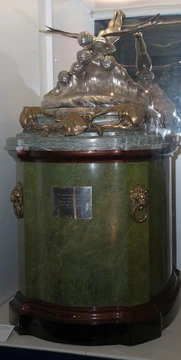
High Speed Flight RAF
RAF unit formed to win the Schneider Trophy outright.
The RAF High Speed Flight was a small unit of the Royal Air Force formed to compete in the Schneider Trophy contest for racing seaplanes in the 1920s. It remained active only until the trophy was won outright, after which it was disbanded.
Quick Facts
- Unit name
- High Speed Flight
- Dates
- 1927-1931
- Branch
- Royal Air Force
- Role
- Special unit competing for the Schneider Trophy
- Garrison
- RAF Calshot; RAF Felixstowe
Facts from the source article.
Did You Know?
- The British defeat of 1925 was attributed to technical inferiority and lack of organisation, leading to the formation of the High Speed Flight.
- In March 1928, Samuel Kinkead died when his Supermarine S5 plunged into the water during an attempt on the air speed record.
- The costs of the 1927 and 1929 meetings were stated as £196,000 and £220,000 respectively.
1927
For the 1927 competition, six aircraft from three manufacturers were taken to Venice: two Supermarine S.5s, three Gloster IVs and a single Short Crusader. The Crusader, intended for training, crashed on 11 September 1927 due to a control rigging error after reassembly. The Supermarine S.5s finished first and second; no other aircraft completed the race. As the winning nation, the UK hosted the next event, which became biannual.
1929
The 1929 race was held at Cowes. Government money only purchased completed products; development was private. Rolls-Royce's supercharged R engine powered the new Supermarine S.6, while Gloster's VI used a supercharged Lion VIID. S.6 N247, piloted by Waghorn, came first; N248 was disqualified for cutting a turn. The Gloster VI was withdrawn before the race but set a speed record the next day, soon broken by an S.6.
1931
A third win would secure the trophy outright. After the 1929 victory, Prime Minister Ramsay MacDonald stated the intention to win again, but official support was withdrawn due to economies after the Wall Street crash. The Cabinet vetoed RAF involvement and government funding. Public backing and a £100,000 donation from Lady Lucy Houston allowed the RAF to compete. No new aircraft could be designed; the S.6 was modified into the S.6B with a 2,300 hp engine, and existing S.6s became S.6As. No other countries entered. Flight Lieutenant Boothman won in S.6B S1595 at 340.08 mph. A record attempt followed: after S1596 sank, S1595 was used with a sprint engine and special fuel, and Flight Lieutenant Stainforth achieved 407.5 mph, the first over 400 mph. The Flight was wound up within weeks.
Post-war reformation
Two Meteor IVs, EE549 and EE550, were prepared with uprated Derwent engines and aluminium cockpit hoods. Over a course between Littlehampton and Worthing, Donaldson achieved 616 mph and Waterton 614 mph.
More in Schneider Trophy
Spotted an error? Know more?
Reader corrections go straight into our review queue. Suggest an edit · How this site is sourced