
Katana
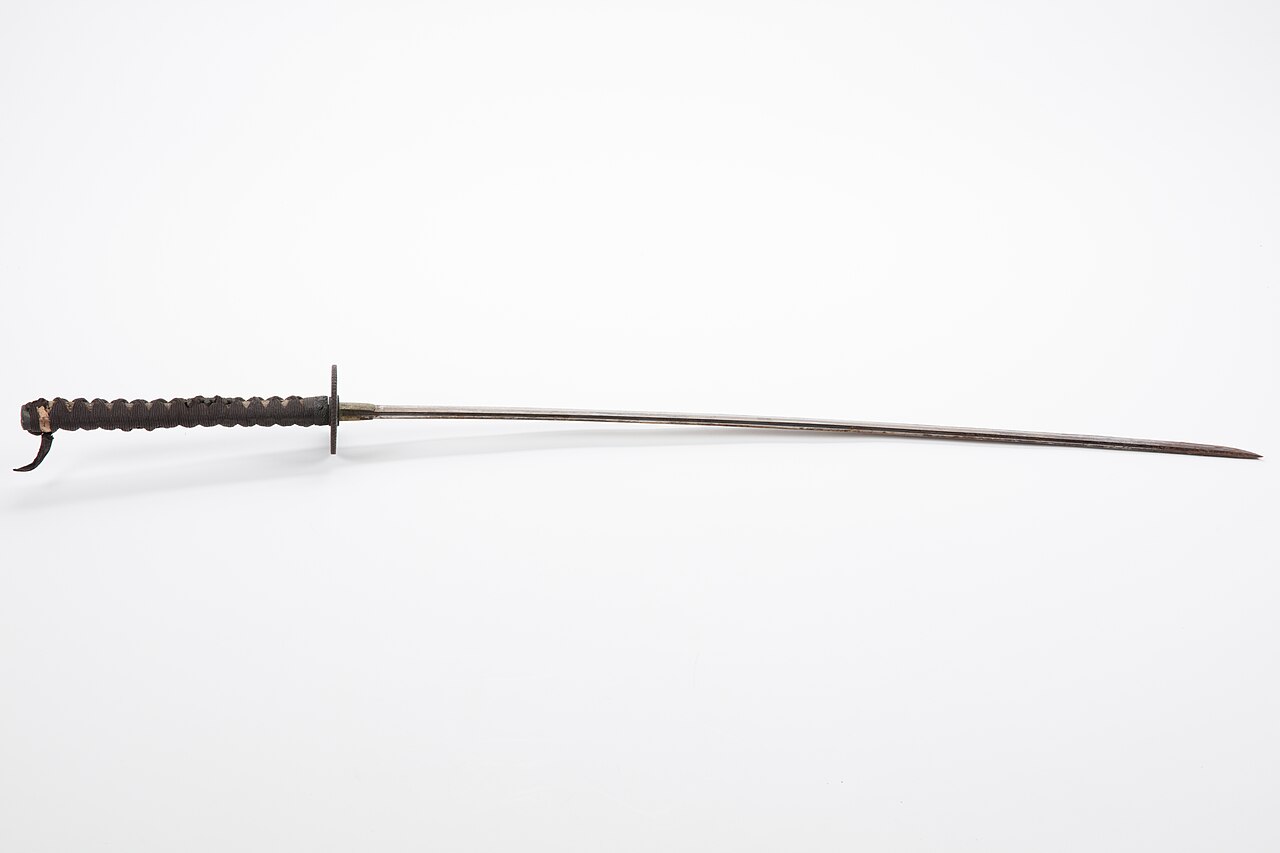
The curved, single-edged sword of the samurai, worn edge-up.

[Sada], Kane · CC BY 4.0
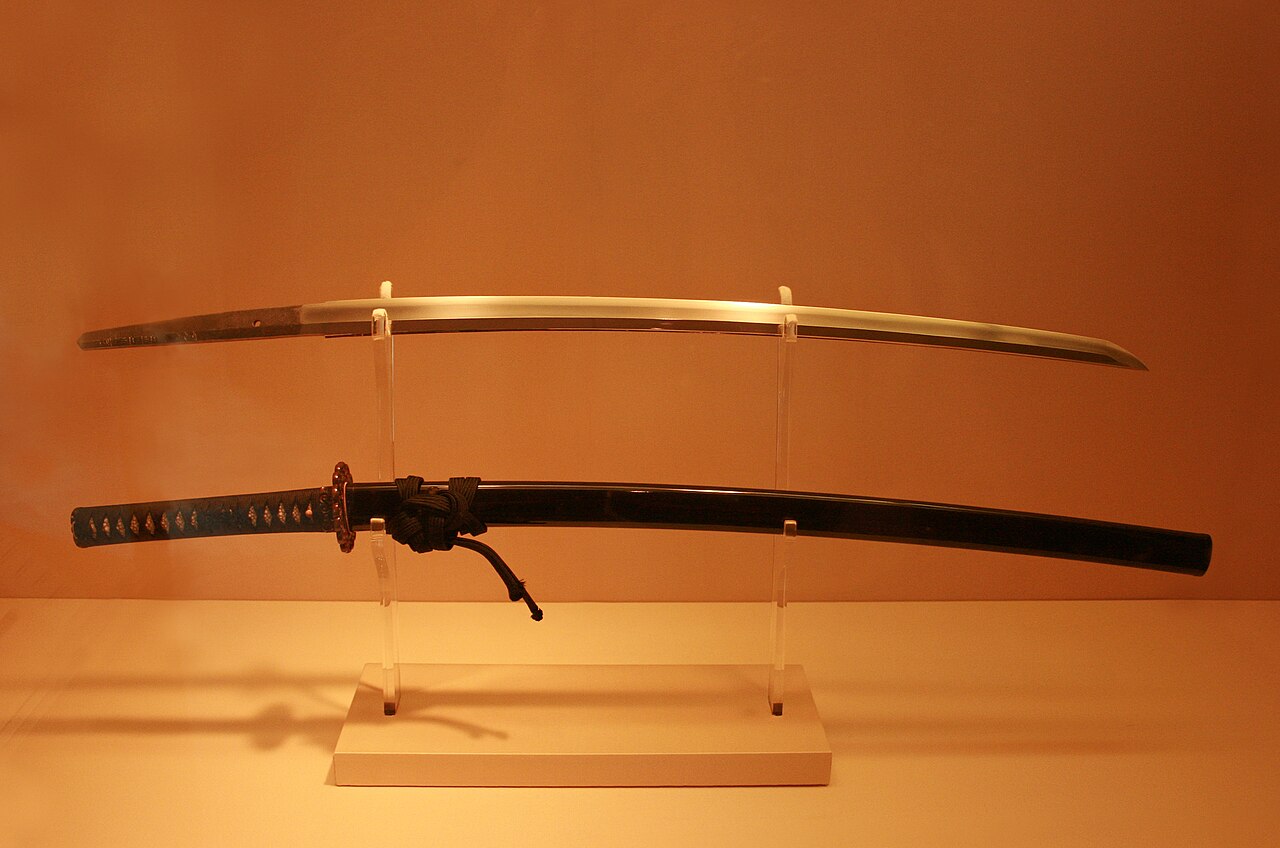
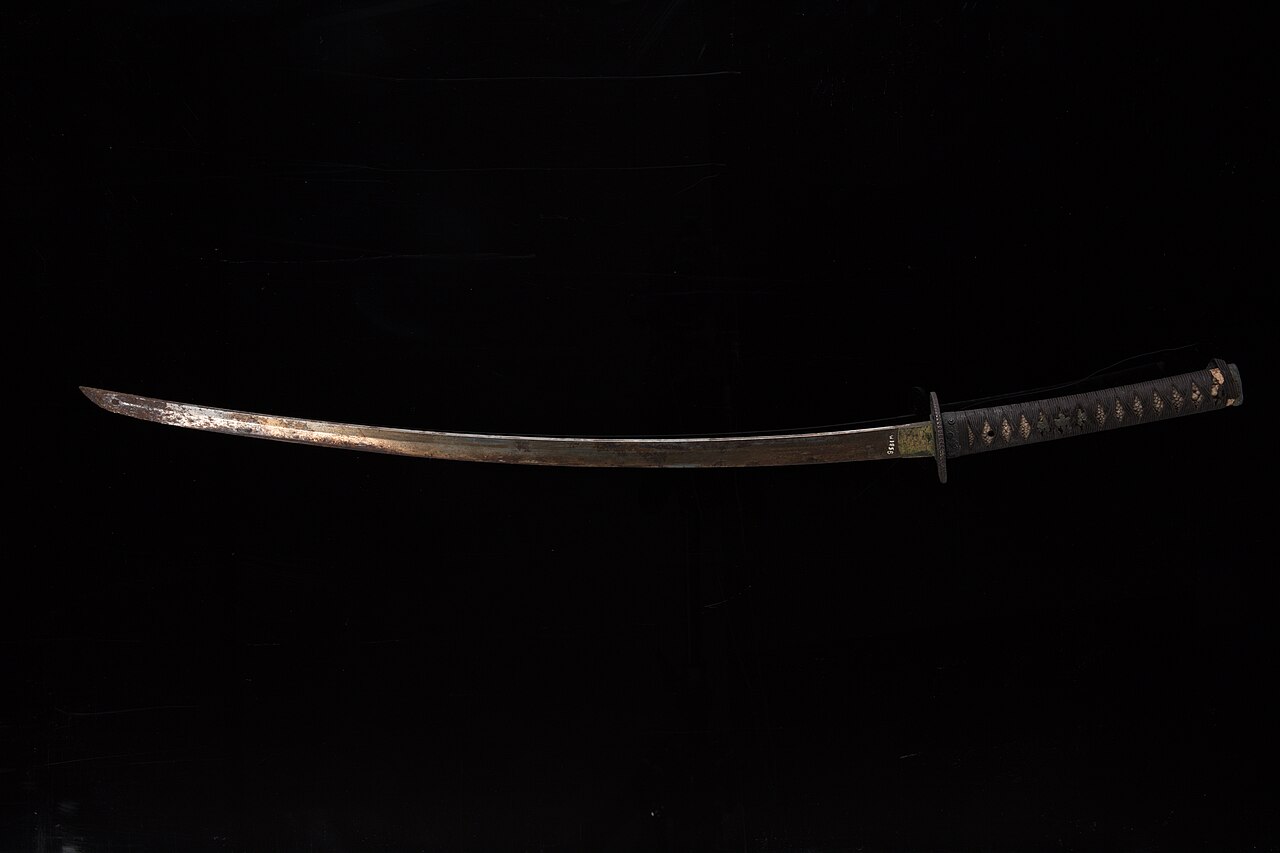
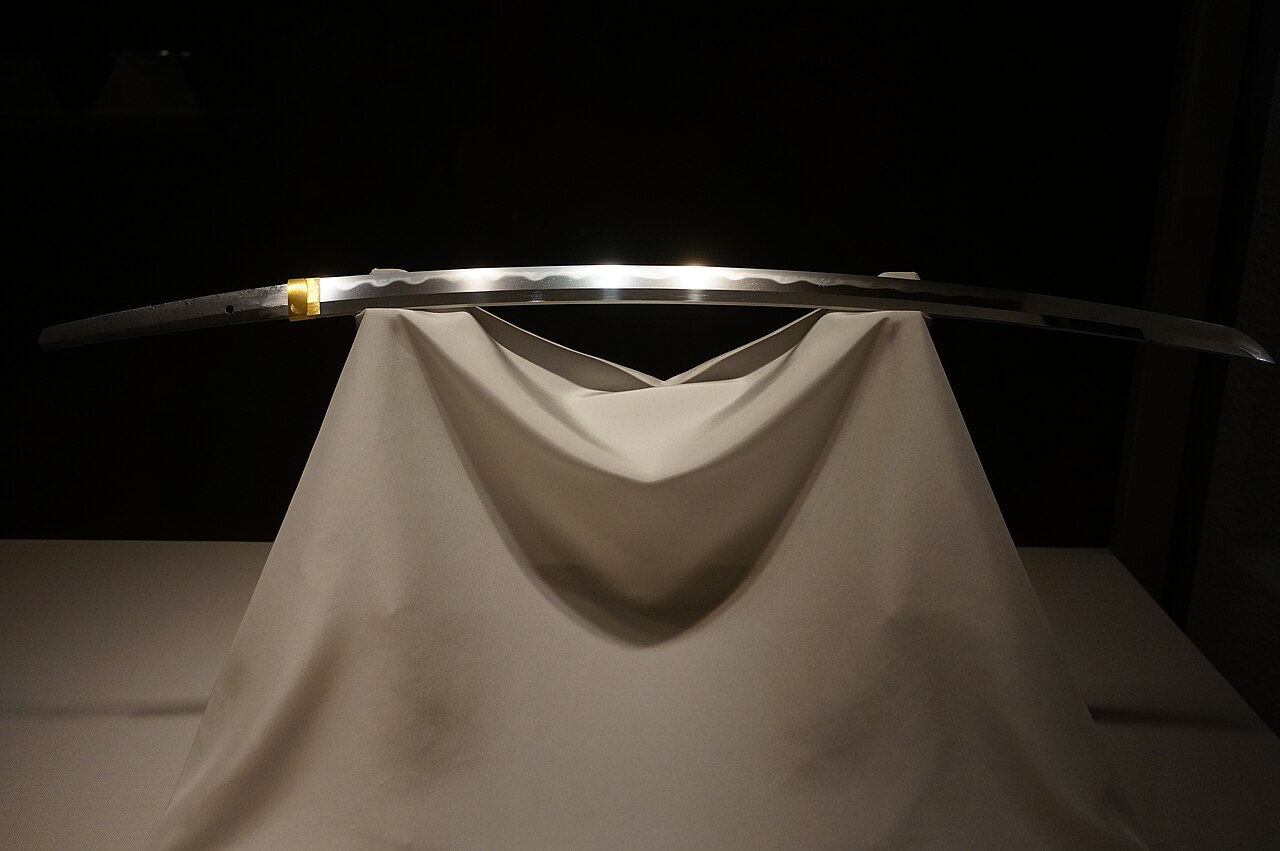
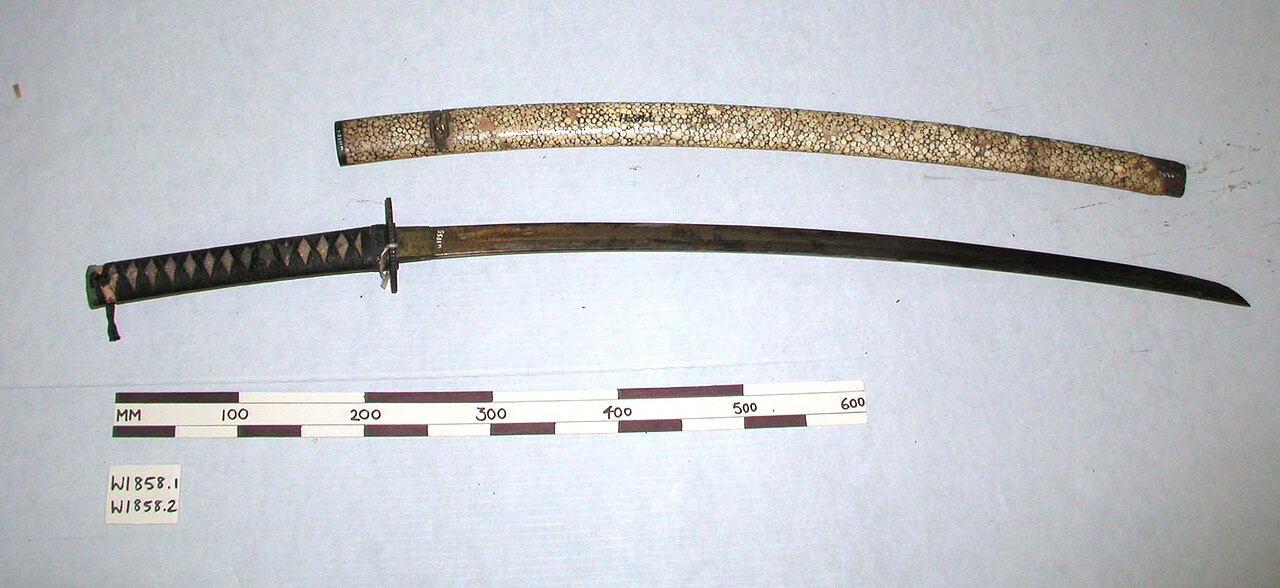
A katana is a Japanese sword characterized by a curved, single-edged blade with a circular or squared guard and long grip to accommodate two hands. Developed later than the tachi, it was used by samurai in feudal Japan and worn with the edge facing upward. Since the Muromachi period, many old tachi were cut from the root and shortened, and the blade at the root was crushed and converted into a katana. The katana is generally defined as the standard sized, moderately curved Japanese sword with a blade length greater than 60.6 cm (over 2 shaku).
Quick Facts
- Game appearances
- Saints Row 2
- Saints Row: The Third
- Saints Row IV
Lore & Background
The word katana first appears in Japanese in the Nihon Shoki of 720. The term is a compound of kata ('one side, one-sided') + na ('blade'), in contrast to the double-sided tsurugi. Katana originates from sasuga (刺刀), a kind of tantō used by lower-ranking samurai who fought on foot in the Kamakura period. In the Nanboku-chō period, sasuga were gradually lengthened and finally became katana.
Also, there is a theory that koshigatana, a kind of tantō equipped by high ranking samurai together with tachi, developed into katana. The oldest katana in existence today is called Hishizukuri uchigatana, forged in the Nanbokuchō period and dedicated to Kasuga Shrine. By the 15th century, Japanese swords including katana had gained international fame by being exported to China and Korea. According to the Veritable Records of the Joseon Dynasty (June 1, 1430), a Korean swordsmith who went to Japan and mastered the method of making Japanese swords presented a Japanese sword to the King of Korea and was rewarded for the excellent work.
Reader's Guide
The katana belongs to the nihontō family of swords, and is distinguished by a blade length (nagasa) of more than 2 shaku, approximately 60 cm. Katana can also be known as dai or daitō among Western sword enthusiasts, although daitō is a generic name for any Japanese long sword. As Japanese does not have separate plural and singular forms, both katanas and katana are considered acceptable forms in English. With a few exceptions, katana and tachi can be distinguished from each other, if signed, by the location of the signature (mei) on the tang (nakago). Since a tachi was worn with the cutting edge down, and the katana was worn with the cutting edge up, the mei would be in opposite locations on the tang.
Early Life and Heritage
Sumalee Montano grew up split between Filipino and Thai roots, bouncing across a few continents before her family settled for the long haul in the United States. Her kin spent meaningful stretches in Bangkok, Thailand, and that time down there clearly shaped how she carries different cultures and navigates languages. The performing-arts thread in her family predates her, too — her great-uncle, Severino Montano, was a well-known Filipino actor and writer. For Sumalee, acting started as just another after-school thing in high school, not a five-year plan. But those low-stakes roles, layered on top of the academic rigor she was already grinding through, eventually pulled her toward the creative side of things.
Career Pivot and Education
Before becoming a recognized actress, Montano achieved significant success in the corporate world. A graduate of Harvard University in 1993 and a U.S. Fulbright scholar, she initially pursued a career as an investment banking analyst with Morgan Stanley, working in both New York City and Hong Kong. However, she soon realized that high finance did not ignite her passion. In a bold move to find her true calling, she quit her lucrative position to backpack through Africa. This transformative journey clarified her desire to pursue acting professionally. Upon returning, she leveraged her academic discipline into the arts, eventually landing her first major live-action role as nurse Duvata Mahal on the hit medical drama ER for three seasons.
Voice Acting Versatility and Roles
Montano has established herself as a powerhouse in voice acting, renowned for her ability to master a wide array of accents including British, Southern, Japanese, Vietnamese, and Eastern European. Her career in this medium began in 1999 with the role of Pudding in the rhythm game Space Channel 5. Since then, she has voiced iconic characters across gaming and animation, such as Arcee in Transformers: Prime, the President in Saints Row IV, and Yuna in Ghost of Tsushima. In television animation, she brought warmth to Sharon McGee and Grandma Nin in The Loud House spin-off, while also voicing Katana in Beware the Batman. Her range extends from heroic figures like the female Inquisitor in Dragon Age: Inquisition to comedic roles as Maria Santiago in The Casagrandes.
Live-Action Television and Recent Acclaim
Beyond her voice work, Montano has delivered compelling performances in numerous live-action television series. She has appeared on popular shows such as Scandal, Veep, Nashville, This Is Us, and Days of Our Lives, demonstrating her adaptability across genres ranging from political satire to family drama. Her career reached a notable peak in 2021 when she gained significant acclaim for portraying Inoue Sato in the Peacock series The Lost Symbol. Following this critical success, she continued to expand her portfolio with roles in animated series like The Ghost and Molly McGee. Currently residing and working in Los Angeles, she remains an active and versatile presence in both film and television production.
Gallery

More in Arsenal, Vehicles & Customization
Elsewhere in Saints Row
Spotted an error? Know more?
Reader corrections go straight into our review queue. Suggest an edit · How this site is sourced