Lindisfarne Association
A foundation for the study and realization of a new planetary culture.

via Wikipedia: Lindisfarne Association · see source
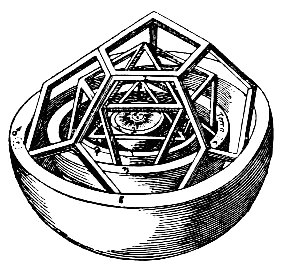
The Lindisfarne Association, active from 1972 to 2012, was a nonprofit foundation and intellectual network founded by cultural historian William Irwin Thompson. Its purpose was to explore and promote a new planetary culture, drawing on Alfred North Whitehead's philosophy of organism and Teilhard de Chardin's concept of planetization. The group focused heavily on sacred geometry, which Thompson described as a vision of divine intelligence manifesting in natural forms from seashells to galaxies.
Quick Facts
- Founded
- 1972
- Disbanded
- 2009 (as nonprofit); informal meetings continued until 2012
- Founder
- William Irwin Thompson
- Initial location
- Southampton, New York (1973)
- Later location
- Crestone, Colorado
- Key donors
- Nancy Wilson Ross, Sydney and Jean Lanier
Facts from the source article.
History
Thompson conceived the idea for the Lindisfarne Association while touring spiritual sites and experimental communities around the world. The association is named for Lindisfarne Priory—a monastery, known for the Lindisfarne Gospels, founded on the British island of Lindisfarne in the 7th century. Advertising executive Gene Fairly had just left his position at Interpublic Group of Companies and begun studying Zen Buddhism when he read a review of Thompson's At the Edge of History in the New York Times. Fairly visited Thompson at York University in Toronto to discuss forming a group for the promotion of planetary culture. Upon returning to New York he raised $150,000 from such donors as Nancy Wilson Ross and Sydney and Jean Lanier. Support from these donors served as an entrée to the Rockefeller Brothers Fund. Lindisfarne was incorporated as a non-profit educational foundation in December 1972. It began operations at a refitted summer camp in Southampton, New York on August 31, 1973. From 1974–1977 Lindisfarne held an annual conference "to explore the new planetary culture" with themes: Planetary Culture and the New Image of Humanity (1974), Conscious Evolution and the Evolution of Consciousness (1975), A Light Governance for America: the Cultures and Strategies of Decentralization (1976), and Mind in Nature (1977). The association was first based in Southampton, New York in 1973 and then in Manhattan at the Church of the Holy Communion and Buildings which was leased to Lindisfarne from 1976–1979. As Lindisfarne began to run low on funding, it faced the loss of its lease. At a conference at the New Alchemy Institute in Cape Cod, Massachusetts, Petro-Canada CEO and United Nations official Maurice Strong offered to donate land from his ranch in Crestone, Colorado. Thompson chose 77 acres of land near Spanish Creek—self-reportedly because his "Irish Druid Radar" had gone off while driving past—where Lindisfarne began to construct new buildings.
Goals and doctrine
The Lindisfarne doctrine is closely related to that of its founder, William Thompson. Mentioned as part of the Lindisfarne ideology are a long list of spiritual and esoteric traditions including yoga, Tibetan Buddhism, Chinese traditional medicine, Hermeticism, Celtic animism, Gnosticism, cabala, geomancy, ley lines, Pythagoreanism, and ancient mystery religions. The group placed a special emphasis on sacred geometry, defined by Thompson as "a vision of divine intelligence, the logos, revealing itself in all forms, from the logarithmic spiral of a seashell to the hexagonal patterns of cooling basalt, from the architecture of the molecule to the galaxy." Rachel Fletcher, Robert Lawlor, and Keith Critchlow lectured at Crestone on the application of sacred geometry, Platonism, and Pythagoreanism to architecture. The exemplar of these ideas is the Grail Chapel in Crestone (also known as Lindisfarne Chapel), which is built to reflect numerous basic geometrical relationships. Lindisfarne's social agenda was exemplified by the "meta-industrial village", a small community focused on subsistence and crafts while yet connected to a world culture. All members of a community might participate in essential tasks such as the harvest. Thompson has speculated that in the United States, 40% of the population could work at agriculture, and another 40% in social services. The villages would combine "the four classical economies of human history, hunting and gathering, agriculture, industry, and cybernetics", all "recapitulated within a single deme." The villages would be linked together by an electronic information network (i.e., what today we call the internet). Thompson called for a counter-cultural vanguard "which can formulate an integral vision of culture and maintain the high standards of that culture without compromise to the forces of electronic vulgarization." According to the Lindisfarne Association website, Lindisfarne's fourfold goals are: The Planetization of the Esoteric; The realization of the inner harmony of all the great universal religions and the spiritual traditions of the tribal peoples of the world; The fostering of a new and healthier balance between nature and culture through the research and development of appropriate technologies, architectural settlements and compassionate economies for meta-industrial villages and convivial cities; The illumination of the spiritual foundations of political governance through scholarship and artistic communications that foster a global ecology of consciousness beyond the present ideological systems of warring industrial nation-states, outraged traditional societies, and ravaged lands and seas.
More in Sacred Geometry
Spotted an error? Know more?
Reader corrections go straight into our review queue. Suggest an edit · How this site is sourced