Chita Republic
Short-lived soviet republic in Chita during the 1905 revolution.

via Wikipedia: Chita Republic · see source
The Chita Republic (Читинская республика) was a short-lived soviet republic based in Chita from the end of 1905 to the beginning of 1906. During the Russian Revolution of 1905, armed revolutionaries under the RSDLP, led by Viktor Kurnatovsky, Anton Kostiushko-Voliuzhanich, and Ivan Babushkin, organized a "Soviet of Soldiers' and Cossacks' Deputies" and took control of the city, declaring the republic in December 1905. Chita, a city in eastern Siberia and a place of exile for early revolutionaries and Russo-Japanese War combatants, was a center for worker unrest in the early 1900s.
Quick Facts
- Era
- 1905 Russian Revolution
- Empire
- Russian Empire
- Government
- Soviet republic
- Date start
- 22 November
- Established
- 1905
- Date end
- 22 January
- Dissolved
- 1906
- Capital
- Chita
Facts from the source article.
Background
The Transbaikal region experienced significant workers' unrest before the 1905 revolution. Although Siberian wages were about 30% higher than in European Russia, inflation was severe, with food prices rising 40–50% in the decade before the revolution while incomes increased only half as much. Poor harvests in 1901 and 1902 caused food price increases of up to 200%. On the Trans-Siberian Railroad, worker numbers could not keep pace with railway usage, and medical care was scarce, with accidents common due to cold and understaffing. Left-wing influence grew rapidly, and Chita was more influenced by the Bolsheviks than the Mensheviks. Unrest intensified in 1904 due to inflation from the Russo-Japanese War, and the RSDLP began agitating against the war along the Trans-Siberian Railroad, with major strikes starting in January 1905.
Revolution in Chita
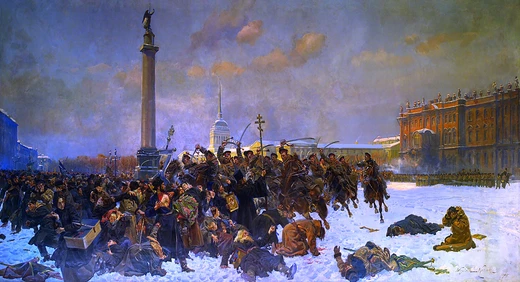
In Chita, railway workers first responded to Bloody Sunday with a single day off the job. Later in January, unpaid wages prompted a three-day strike. By July, the RSDLP had stirred a group of 20 craftsmen to submit demands to local officials; talks broke down into strikes on the 25th and 26th. Workshops closed on the 27th, and the next day workers issued 33 new demands, including an eight-hour workday.
Social-Democratic speeches drew up to 2,000 striking listeners. These walkouts spread along the Trans-Siberian Railway to Irkutsk, Zima, and Verkhneudinsk. In September, Chita Social Democrats held a congress of Transbaikal activists, with 18 delegates from regional railway workers, Chita shop and depot workers, and 5 RSDLP members. After the October general strike, Transbaikal railway telegraph employees called for radical land reform.
Chita railway engineers tried to build a national workers’ congress from their local union of engineers, while a separate union was created for shop and depot workers. By December, the Chita Republic covered most major stations; from January 3 to 6, 1906, 2,500 workers at twelve stations were organized under the local union, with 37 representatives. On November 16, 1905, about 4,000 workers rallied under the RSDLP to form a republic opposing the autocracy.
Anton Kostiushko-Voliuzhanich took charge of the Soviet of Soldiers’ and Cossacks’ Deputies on November 22. Railway workers declared an eight-hour workday. To stop fighting along the railway, the Joint Committee of Railway Workers and Service Personnel was established. A railway congress in mid-December in Irkutsk decided on revolutionary self-government in Chita, but not a takeover of the Trans-Siberian Railway.
On December 18, a mass rally called for the Congress of Delegates of Transbaikalia, which included the Chita Municipal Duma and representatives from local unions and political parties. On December 21, the congress, led by mayor Sergei Kirillovich Sheshmintev, approved self-government for Chita with universal elections. With Governor-General Kholshchelvnikov’s approval, the Chita Post and Telegraph Office fell under an elected committee.
Suppression
The republic's leaders attempted to organize administration in the city and its outskirts, and the periodical Zabaykalsky Rabochy was issued in Chita on December 7, 1905. However, the republic failed after the suppression of uprisings in Moscow and Saint Petersburg. Troops loyal to the regime, led by Paul von Rennenkampf and General Meller-Zakomelsky, were sent to suppress the territory. Chita was occupied by government troops on January 22, 1906.
At the beginning of 1906, Kurnatovsky was again arrested and sentenced to death; General Rennenkampf carried him on his train so he could witness executions of workers at every railway station. Six leaders of the Chita Republic were shot on the slope of Titovsky sopka. Kurnatovsky's death sentence was commuted to life-long exile in Siberia. Military courts gave death sentences to many others, including twenty-six soldiers. Several central streets of Chita were later named after the leaders.
More in Russian Revolution of 1905
Spotted an error? Know more?
Reader corrections go straight into our review queue. Suggest an edit · How this site is sourced