Speedcubing
Competitive puzzle-solving sport governed by the World Cube Association.
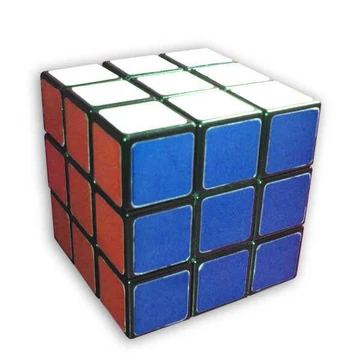
Speedcubing is the competitive practice of solving combination puzzles as quickly as possible, recognized as a mind sport. The 3×3×3 Rubik's Cube is the flagship event, and solving relies on pattern recognition, memorization of algorithms, inspection, and efficient finger movements. International competitions are governed by the World Cube Association, which standardizes regulations and maintains official rankings and world records.
Quick Facts
- Union
- World Cube Association
- Team
- Individual
- Registered
- 245,000+
- Region
- Worldwide
- First
- 1982, Budapest, Hungary
- Nicknames
- Speedsolving; Cubing
Facts from the source article.
History
The Rubik's Cube was created on May 19, 1974, by Hungarian architecture professor Ernő Rubik. A partnership with Ideal Toy Company in 1979 sparked global interest. The inaugural world championship took place in Budapest on June 5, 1982, featuring nineteen participants. American Minh Tai won with a single solve of 22.95 seconds, a world record at the time. Other competitors included Jessica Fridrich and Lars Petrus, who later advanced solving techniques and the community. After 1983, the cube faded from the spotlight, and official competitions stopped. However, the internet enabled online forums to emerge, nurturing a fresh wave of speedcubers. Key figures from these online spaces, including Ron van Bruchem, Tyson Mao, Chris Hardwick, and Ton Dennenbroek, aimed to establish a global competition network. In 2003, they hosted a championship in Toronto, followed by another in the Netherlands that same year. This resurgence led to a steady increase in events: twelve in 2004, 58 more between 2005 and 2006, over 100 in 2008, and more than 1150 in 2018. Since the 1982 competition, eleven additional World Championships have occurred, traditionally held every other year on odd-numbered years. The World Cube Association oversees these competitions. Speedcubing's growth also fueled businesses focused on manufacturing speedcubes. Brands like GANCUBE, MoYu, YJ, QiYi, DaYan, DianSheng, ShengShou, YuXin, and Vin Cube have refined cube technology for smoother motion and quicker solves, transforming the cube into a profitable industry.
World Cube Association
The World Cube Association is a non-profit organization that organizes speedcubing competitions and ratifies results. It consists of the WCA Board, WCA Committee, and WCA Council. The WCA Board leads the organization and handles tasks not completed by the other bodies. The WCA Appeals Committee ensures fair decisions in line with WCA Regulations, and the WCA Committee reviews appeals regarding decisions of other WCA Staff members. The WCA Council serves an advisory role and consists of community members, not WCA Staff. WCA Staff include organizers, who manage competitions, and delegates, who oversee competitions, assist unfamiliar competitors, and decide on penalties. Competitors must follow WCA Regulations, which are available on the official WCA website.
Methods
The standard 3×3×3 cube can be solved using several methods. The most common for speedcubing are CFOP, Roux, and ZZ, which are considered fastest. An emerging method, ZB, requires learning over 400 algorithms and relies heavily on pattern recognition and memorization. CFOP, used by most cubers, is a layer-by-layer method: it begins with a cross on any side, then F2L (inserting four corner-edge pairs), followed by OLL (Orientation of the Last Layer, 57 algorithms), and PLL (Permutation of the Last Layer, 21 algorithms). Roux, the second most popular, starts by forming a 1×2×3 block on one side, repeats it on the other, and solves the middle and top layers last, using fewer algorithms. ZZ uses Edge Orientation to improve turning ergonomics by reducing rotations. Petrus was popular in the past but is now considered sub-optimal to CFOP and Roux due to unfavorable finger tricks. Larger cubes like 4×4×4 and 5×5×5 are typically reduced to a 3×3×3 state and solved accordingly. The 2×2×2 can use similar methods, but specialized methods such as Ortega, CLL, and EG are quicker and allow planning the entire solution during inspection.
Competitions
Speedcubing competitions have been held every year since 2003, with the WCA formed in 2004 to govern official events. For a competition to be official, it must be WCA-approved and follow WCA regulations, including having one or more WCA delegates present to ensure compliance. After a competition, results are uploaded to the WCA website. Judges oversee rounds, delegates assist judges, runners transport puzzles, and scramblers scramble cubes using computer-generated moves. Most puzzle events use a trimmed mean of five, called an 'Average of 5': the competitor performs five solves, the fastest and slowest are discarded, and the mean of the remaining three is taken. The 6×6×6 and 7×7×7 events use a straight mean of three solves. For 3×3×3 blindfolded and 3×3×3 fewest moves, either a straight mean of three or best of three is used; 4×4×4 blindfolded, 5×5×5 blindfolded, and multiple blindfolded use best of one, two, or three depending on the competition. At the start of a round, competitors submit their puzzle. Each round uses five, three, or one scramble, and every competitor receives each scramble once. Before solving, competitors have up to 15 seconds to inspect the puzzle (inspection is not allowed for blindfolded events), monitored by a judge with a stopwatch. After solving, the judge records the time on the scorecard, signed by both. If the puzzle is unsolved when the timer stops, the result is recorded as a Plus 2 (adding two seconds) or a DNF (Did Not Finish). A two-second penalty may also be given for a face more than 45 degrees off or exceeding inspection time. A competitor may receive an extra solve to replace one, for instance due to a timer malfunction or duplicate scramble.
More in Rubik's Cube
Spotted an error? Know more?
Reader corrections go straight into our review queue. Suggest an edit · How this site is sourced