Frequently Asked Questions
The most-asked questions about romanian folklore.
What is Romanian folklore?
Romanian folklore is the vast body of oral myths, legends, folk beliefs, and seasonal customs that developed among Romanian-speaking communities in Romania, Moldova, and neighboring regions over many centuries. It weaves together pre-Christian animism, Orthodox Christian hagiography, and Turkic cultural layers into a distinctive narrative and ritual world.
Who are the most iconic figures in Romanian folklore?
The pantheon centers on beings like the Strigoi (undead revenants), the Iele (luminous meadow spirits), the Zmeu (seven-headed dragons), and Muma Pădurii (the forest mother). On the human side, the youngest-son hero Făt-Frumos and the clever peasant who outwits supernatural foes are the most recurring protagonists.
How does Romanian folklore differ from Slavic or Celtic traditions?
While sharing pan-European motifs such as dragons and the dead returning, Romanian folklore carries a heavier Turkic and Byzantine imprint and organizes its supernatural beings around the Iele and the Zmeu in ways that are largely unique. Its Orthodox Christian framework also shapes how pagan figures are moralized and embedded in a liturgical calendar, setting the tone apart from, say, Slavic or Celtic cycles.
What is a Strigoi, and how does it differ from the literary vampire?
In Romanian tradition a Strigoi is a person who, after an irregular or unclean death, returns as a restless, harmful presence that can afflict family members before the soul's final departure. Unlike the aristocratic, seductive vampire of later European literature, the Strigoi is typically an ordinary villager and is countered through specific communal rituals—binding, salt, prayer—rather than a single dramatic stake through the heart.
What are the Iele?
The Iele are ethereal, light-emitting female spirits who dance in open meadows at night, often in white, and can enchant or abduct any mortal who glimpses them. They occupy a liminal zone between the human and spirit worlds and appear in both protective and dangerous roles across folk tales, songs, and seasonal observances.
What is the Zmeu?
The Zmeu is a colossal, typically seven-headed dragon who hoards treasure, abducts princesses, and commands legions of lesser monsters. It serves as the archetypal antagonist in Romanian heroic cycles and can only be slain by a hero of special lineage, who must cut off its heads in a precise, prescribed order.
Which scholars or collections are foundational to the study of Romanian folklore?
The nineteenth-century field collections of Alexandru Vlahuta and Bogdan Petriceicu Hasdeu form the earliest systematic written record of the tales and beliefs. In the twentieth century, Mircea Eliade's comparative mythological work and the Romanian Academy's multi-volume 'Credințe și superstiții populare românești' became the standard scholarly references.
What seasonal rituals are most closely tied to Romanian folklore?
The winter-solstice colinde carols, the spring Mărțișor custom, the Midsummer Zestre bonfires, and the autumn harvest rites form a continuous year-round cycle of folk observance. Each is accompanied by specific songs, costumes, and symbolic foods that encode older mythological meanings within a Christian calendar structure.
Where should a newcomer start reading about Romanian folklore?
Translated selections from Vlahuta or Hasdeu's collections offer an accessible first taste of the tales and beliefs in relatively straightforward language. For broader scholarly context, Mircea Eliade's 'Myth, Dream and Mystery' and the Romanian Academy's ethnographic volumes provide deeper comparative and historical grounding.
Is Romanian folklore still alive and practiced today?
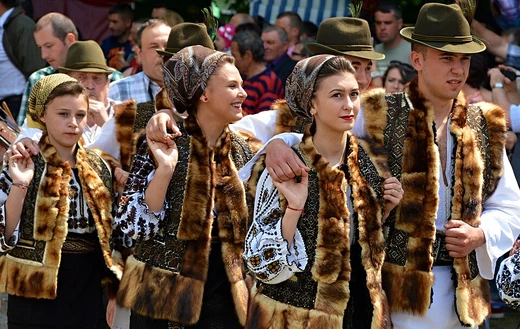
Yes, though its visibility varies by region; rural communities in Transylvania, Moldavia, and the Banat still observe many seasonal rites, tell the old stories, and maintain local variants of the myths. Urban and younger generations increasingly encounter the tradition through contemporary literature, film, music, and social media rather than through direct oral transmission.