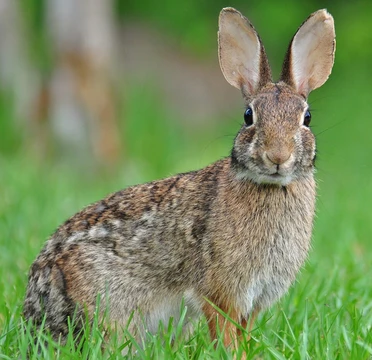
Brown rat
A widespread, adaptable rodent that thrives alongside humans.
Last updated
It weighs between 140 and 500 g and is thought to have originated in northern China and neighboring areas.[1] The species has spread to all continents except Antarctica and is the dominant rat in Europe and much of North America.[1] Weighing between 140 and 500 g, the brown rat (Rattus norvegicus) is a large muroid rodent; its body can reach 28 cm in length, and its tail is slightly shorter than its body, with fur that is brown or grey.[1]
Scientific classification
- KingdomAnimalia
- PhylumChordata
- InfraclassPlacentalia
- OrderRodentia
- FamilyMuridae
- GenusRattus
- SpeciesRattus norvegicus
Named by (Berkenhout, 1769)
Close relatives
Other species of Rattus with a Codexery entry.
- Black rat Rattus rattus
Sources: Wikipedia taxobox: Brown rat (CC BY-SA 4.0) · order, family and genus agree with WoRMS AphiaID 993634 (CC BY 4.0)
Conservation status
Least Concern (LC)
- LC▲ this species
- NT
- VU
- EN
- CR
- EW
- EX
Source: IUCN Red List assessment · GBIF copy of the Red List category
How big is it?
Largest length in the source, 0.28 m, next to a 1.8 m person.
Diagram: drawn by Codexery, schematic shapes to scale (not a likeness). Length: Wikipedia: Brown rat
Where the brown rat has been recorded
Each dot is a place where the species has been observed and reported (255,274 records, half-degree grid) — not a modelled range. 154 inland records left out (institution coordinates). 1 isolated far-off record not drawn.
Map: drawn by Codexery. Data: GBIF occurrence search (records CC0 / CC BY) · Natural Earth basemap (public domain)
Last updated 2026-10-07 from the source article.
Biology and range
Its vision is poor, around 20/600 for pigmented rats, and it is a dichromat that perceives colors like a human with red-green colorblindness.[2] The brown rat is capable of producing ultrasonic vocalizations, and as pups, young rats use different types of ultrasonic cries to elicit maternal search behavior.[3] Cereals make up a large part of the brown rat's diet, as it is a true omnivore, and it reproduces quickly, having a gestation period of just 21 days.[4][5] Subsurface locations like sewers and cellars, or burrows, are where brown rats live in large groups that have a hierarchy.[6]
A highly developed sense of smell, acute hearing, and sensitivity to ultrasound are characteristics of the brown rat.[2] When conditions are appropriate, a female brown rat can produce up to five litters each year and can breed throughout the year.[5] A litter can be as large as 14 young, and about five weeks after birth, the young become sexually mature.[5]
What the specialist sources record
The Animal Diversity Web notes that Norway rats are originally native to northern China, with the first sighting in the New World occurring in the 1770s as ship stowaways.[7] The same source states that in natural populations, rats are covered with coarse, brownish fur on their dorsal surface, which lightens to a gray or tan color nearing the underside.[7] The Animal Diversity Web also reports that the maximum lifespan of Rattus norvegicus is 4 years in captivity.[7] The "What Do Rats See?" account explains that rat vision is blurry, around 20/600 for normally pigmented rats, and that albino rats have about 20/1200 vision.[8]
The same source notes that the rat's color vision merges into the ultraviolet, allowing them to see ultraviolet shades that humans cannot.[8] The "Envirotrol Pest Management Systems" source confirms that brown rats live in large, hierarchical groups and that when food is in short supply, the rats lower in social order are the first to die.[6]
References
- Wikipedia, "Brown rat" (CC BY-SA 4.0), which cites: "Rattus norvegicus (Brown rat)", Animal Diversity Web; "Menopause-causing bait is curbing rat populations in New York", New Scientist, 2017; "Rodent-borne diseases and their risks for public health", Crit Rev Microbiol, 2009, p. 221–70 (we also read that source) en.wikipedia.org
- Wikipedia, "Brown rat" (CC BY-SA 4.0), which cites: Hanson, A., "What Do Rats See?", Rat Behavior and Biology, 2007 (we also read that source) en.wikipedia.org
- Wikipedia, "Brown rat" (CC BY-SA 4.0), which cites: Brunelli, "Hypothermic vocalizations of rat pups (Rattus norvegicus) elicit and direct maternal search behavior", Journal of Comparative Psychology, 1994, p. 298–303; White, N., "Regulation of rat maternal behavior by broadband pup vocalizations", Behavioral and Neural Biology, 1992, p. 131–137; Takahashi, "Developmental expression of defensive responses during exposure to conspecific adults in preweanling rats (Rattus norvegicus)", Journal of Comparative Psychology, 1992, p. 69–77; Brudzynski, S.M., "Principles of Rat Communication: Quantita en.wikipedia.org
- Wikipedia, "Brown rat" (CC BY-SA 4.0), which cites: Schein, "A Preliminary Analysis of Garbage as Food for the Norway Rat", The American Journal of Tropical Medicine and Hygiene, 1953, p. 1117–1130; Fragaszy, "The Biology of Traditions: Models and Evidence", Cambridge University Press, 2003, p. 165; Cottam, "Aquatic habits of the Norway rat", Journal of Mammalogy, 1948, p. 299; Gandolfi, "Predazione su Unio Pictorum L. da parte del ratto, Rattus norvegicus (Berkenhout)", Acta Naturalia, 1972, p. 1–27; Parisi, "Further aspects of the predation by rats on various mollusc species", Bollettino di en.wikipedia.org
- Wikipedia, "Brown rat" (CC BY-SA 4.0), which cites: "Norway rat (Rattus norvegicus) longevity, ageing, and life history", genomics.senescence.info (we also read that source) en.wikipedia.org
- "Envirotrol Pest Management Systems - Rodent Control", envirotroldfw.com. facts only, no text reused. envirotroldfw.com
- "Rattus norvegicus (Brown rat)", Animal Diversity Web. facts only, no text reused. animaldiversity.org
- Hanson, A., "What Do Rats See?", Rat Behavior and Biology, 2007. facts only, no text reused. ratbehavior.org
Each numbered sentence above was checked against the source it cites before publication. Sentences citing Wikipedia adapt text from the English Wikipedia article Brown rat (contributors), used under CC BY-SA 4.0; this entry is available under the same licence. Other sources were used for facts only; no text or images are copied from them.
More in Rodents And Lagomorphs
Sources
Compiled from Wikipedia and the sources listed below. Text from Wikipedia is available under CC BY-SA 4.0; this entry is adapted from it.
- Wikipedia: Brown rat (CC BY-SA 4.0).
- Classification: the source article's taxobox; order, family and genus checked against WoRMS, the World Register of Marine Species (CC BY 4.0).
- Conservation status: IUCN Red List assessment.
- Occurrence records: GBIF (CC0 / CC BY). Basemap: Natural Earth (public domain).
- Word definitions: the , each quoted from its Wikipedia article.
Spotted an error? Know more?
Reader corrections go straight into our review queue. Suggest an edit · How this site is sourced