Baroque (band)
Japanese rock band that pioneered oshare kei and set Oricon records.

This Photo was taken by Wolfgang Moroder . Feel free to use my photos, but pleas · CC BY-SA 3.0
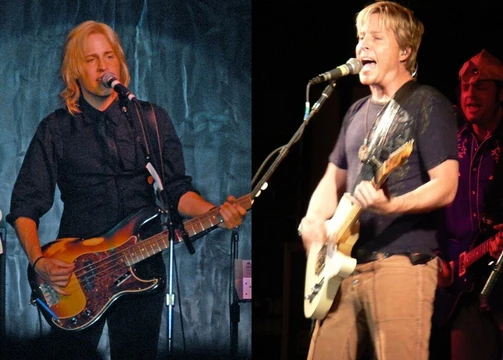
BAROQUE (also written as Baroque and baroque) was a Japanese rock group that came together in 2001. They are recognized for helping launch oshare kei, a visual kei style known for bright outfits and cheerful, fast-paced music. The band first signed with S'Cube, a branch of the indie label Free-Will, before moving to Free-Will's Firewall Division, with Sony Music Entertainment Japan handling distribution. Over their early years, they put out two albums, a greatest hits collection, several singles, and home videos, then broke up in 2004.
Early in their career, they performed at Tokyo's Nippon Budokan, though they were not the fastest band to do so. In 2011, they got back together for a free show, and in January 2012, they officially resumed full activities. That same month, they achieved notable chart success, though they were not the first independent act to claim three of the top five spots on Oricon's main chart. However, bassist Bansaku left later in 2012, and guitarist Akira followed in 2013, leaving only vocalist ryo and guitarist Kei as the permanent members.
The band formed in May 2001 when guitarist Akira and bassist Bansaku started it, with vocalist ryo and guitarist Kei joining in June. Their first concert was in August, and they released the demo "Hitei Derikashi" the next month. Drummer Naru joined around then, but left in March 2002 after the mini-album *Tokyo Stripper* came out at their first one-man show in January. Yuji replaced him. Even as an indie act, they played venues like NHK Hall and Akasaka Blitz. They remained on Free-Will's Firewall Division with Sony distribution, an indie label arrangement, throughout their early years. Yuji left in May 2003 for reasons not fully verified in reliable sources. Their first single under this arrangement, "Gakidou," dropped in July 2003, and their sound shifted to include a drum machine, while their style became more casual. The second single, "Ila" (2004), had a trance and electronica feel. After their Budokan show on August 20, 2003, the band faced some delays and cancellations, though specific details about guitarist Kei's involvement remain unconfirmed. In 2004, after resuming work and releasing more singles, Akira was hospitalized, causing more cancellations. In August, Bansaku announced he was quitting.
- Formed
- 2001
- Disbanded
- 2004 (original), active as duo from 2012
- Genre
- Rock, oshare kei
- Origin
- Japan
- Known for
- Early performances at Nippon Budokan; notable chart success as an independent act
Lore & Background
Baroque was formed in May 2001 by guitarist Akira and bassist Bansaku, with vocalist ryo and guitarist Kei joining in June. Their first concert was in August 2001, and they released the demo "Hitei Derikashi" the following month. Drummer Naru joined around that time but left in March 2002, replaced by Yuji. Despite being independent, they played at NHK Hall and Akasaka Blitz. They remained on Free-Will's Firewall Division with Sony distribution, an indie label arrangement. Yuji left in May 2003, though the specific cause is not verified in reliable sources. Their first single under this arrangement was "Gakidou" in July 2003, and their sound shifted to include a drum machine and casual clothing. The single "Ila" (2004) had a trance/electronica sound. After a concert at Nippon Budokan on August 20, 2003, the band experienced some delays and cancellations, but specific details about guitarist Kei's involvement are not documented in reliable sources.
Reader's Guide
Baroque's significance lies in their role as pioneers of oshare kei, a subgenre that brought brighter, happier aesthetics to visual kei. Their rapid rise to the Nippon Budokan—just two years and three months into their career—set a record for speed. After reuniting in 2011, they achieved a notable milestone in 2012 by becoming the first independent band to hold three of the top five positions on Oricon's main chart. Their later work as a duo, following the departures of Bansaku and Akira, saw them release three conceptual albums (Planetary Secret, PUER ET PUELLA, SIN DIVISION) and adopt innovative live approaches, such as allowing smartphone photography and 360° stages. The band's resilience through member changes and a hiatus underscores their lasting influence in the Japanese independent rock scene.
Did You Know?
- Baroque became the fastest band to play at Nippon Budokan, achieving this just two years and three months into their career.
- In January 2012, baroque became the first independent band to have three of the top five positions on Oricon's main chart.
- Bassist Bansaku went missing in June 2012; the band retitled their tour to 'Search for Bansaku' before learning he had left due to health issues.
- The band's 2020 album SIN DIVISION was the third of three planned albums after becoming a duo, referred to as a red book.
From Smile to a Royal Name
Brian May and Roger Taylor had already been making music together in a group called Smile when a young fan named Farrokh Bulsara — who would soon become Freddie Mercury — caught their attention. Mercury admired Smile's work and pushed the pair toward bolder stage and recording approaches. When the band's original singer departed in 1970, Mercury stepped in as lead vocalist and immediately proposed the name Queen, a suggestion his bandmates initially doubted but ultimately embraced. Bassist John Deacon rounded out the classic four-piece in February 1971, bringing both technical skill and a calm presence that balanced the group's energy. The self-titled debut album arrived in 1973, and the following year Queen II became their first entry on the UK charts, marking the start of a trajectory that would carry them from London's club circuit to the global stage.
From Prog Roots to Arena Dominance
Queen's earliest recordings drew heavily on progressive rock, hard rock, and heavy metal, giving their sound a dense, experimental texture. Yet the band steadily broadened their palette, weaving in arena rock and pop rock sensibilities that made their songs more accessible without sacrificing ambition. This evolution paid off spectacularly: Sheer Heart Attack in 1974 and A Night at the Opera in 1975 propelled them onto the international scene. The latter album produced Bohemian Rhapsody, a multi-sectioned masterpiece that spent nine weeks atop the UK singles chart and played a pivotal role in bringing the music video format into mainstream consciousness. By the late 1970s, tracks like We Will Rock You and We Are the Champions from News of the World had already begun their transformation into universal sporting anthems, a cultural footprint that would endure for decades beyond the band's active years.
Stadium Giants and a Cultural Monolith
By the early 1980s, Queen had cemented their status as one of the world's preeminent stadium rock acts. The Game (1980) delivered Another One Bites the Dust, which became their best-selling single, while the 1981 compilation Greatest Hits went on to claim the title of best-selling album in the United Kingdom and earned a 9× Platinum certification from the RIAA in the United States. Their live performances reached a legendary peak at the 1985 Live Aid concert, a set that numerous publications have since ranked among the greatest moments in rock history. The band's final chapter with Mercury at the helm closed in August 1986 at Knebworth, England, where he delivered his last performance with Queen. Together, these achievements — record-breaking sales, stadium-filling shows, and songs embedded in global sporting culture — established a commercial and artistic footprint that few acts in music history have matched.
After Mercury: Grief, Continuation, and Immortality
Mercury was diagnosed with AIDS in 1987, yet Queen pressed forward, releasing The Miracle in 1989 and Innuendo in 1991. On 23 November 1991, he publicly acknowledged his condition, and the following day he passed away from bronchopneumonia, a complication of the disease. A final album, Made in Heaven, appeared in 1995 built around his recorded vocals. John Deacon retired from music in 1997, leaving May and Taylor to make occasional joint appearances. Beginning in 2004, the duo launched the Queen + touring project, first with Paul Rodgers on vocals until 2009 and then with Adam Lambert from 2011 onward. Across more than half a century of cultural presence, Queen's estimated sales of 250 to 300 million records, their 2001 Rock and Roll Hall of Fame induction, the 2003 Songwriters Hall of Fame recognition for all four members, the 2018 Grammy Lifetime Achievement Award, and the 2025 Polar Music Prize collectively underscore a legacy that continues to expand long after the original lineup's final bow.
Gallery
Frequently Asked Questions
Who is Baroque (band)?
Baroque is a Japanese rock duo that came together in 2001 and is widely credited as one of the founding acts of the oshare kei movement. They released two studio albums, a greatest-hits compilation, and several singles before their initial run ended in 2004.
What role did Baroque play in oshare kei?
The band is recognized as a key early force in establishing oshare kei, a visual kei substyle defined by colorful fashion and upbeat, energetic songwriting. Their bright aesthetic and fast tempos helped set the template that later acts in the scene would follow.
What happened to Baroque after 2004?
The original lineup split in 2004 following a short but prolific career that included two albums and a hits collection. The duo later reactivated in 2012 and resumed performing as a pair.
What are Baroque's biggest live and chart achievements?
One of their most celebrated milestones was headlining Tokyo's Nippon Budokan very early in their career, a venue that typically hosts far more established acts. They also set Oricon chart records as an independent act, a feat that stood out for a band still operating under smaller labels like S'Cube and Free-Will.
Why do fans consider Baroque important in Japanese rock history?
Despite a brief initial run from 2001 to 2004, they helped shape an entire subgenre and proved that a small indie act could achieve major chart success and headline a landmark venue. Their influence on the oshare kei scene and their record-breaking independent chart performance continue to be cited by fans and music writers.
More in Rock music duos 1-24
Spotted an error? Know more?
Reader corrections go straight into our review queue. Suggest an edit · How this site is sourced