
Fender Precision Bass
The first commercially successful electric bass, delivering punch and presence with guitar-like playability.

via Wikipedia: Fender Precision Bass · see source
The Fender Precision Bass (often shortened to "P-Bass") is an electric bass guitar model manufactured by Fender since 1951. The Precision Bass is a solid body, four-stringed, full scale bass guitar equipped with a single pickup and a 20-fret maple neck. It produces a characteristically "deep and full-bodied sound."
Quick Facts
- Manufacturer
- Fender
- Bridge
- Fixed
Lore & Background
Leo Fender designed the Precision Bass prototype in 1950 for big band bass players and it was brought to market the following year. Roy Johnson of Lionel Hampton's big band was among the first bass players to use the Precision Bass in a concert setting. Music critic Leonard Feather wrote about this new development in Down Beat magazine, expressing surprise at hearing bass sounds from a guitar. Adoption by upright bass players was slow, however, and the Precision Bass did not find widespread success until the emergence of new styles of music like rock and roll and Motown, with the Precision Bass's guitar-like format allowing guitarists to easily transition to this new instrument.
In 1957, Fender introduced several design changes to its bass, notably altering the headstock and pickguard to more closely resemble those of the popular Stratocaster, and switching to a split-coil humbucker pickup. Fender reissued the original Precision Bass design in 1968 as the Telecaster Bass.
Reader's Guide
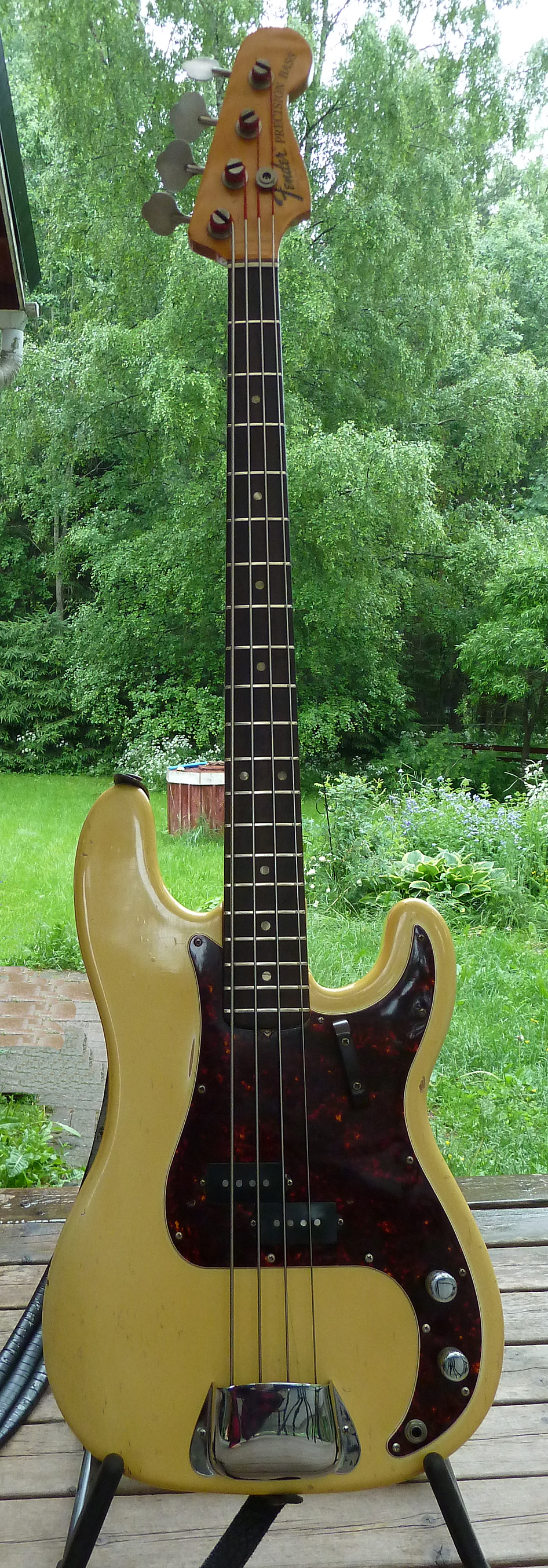
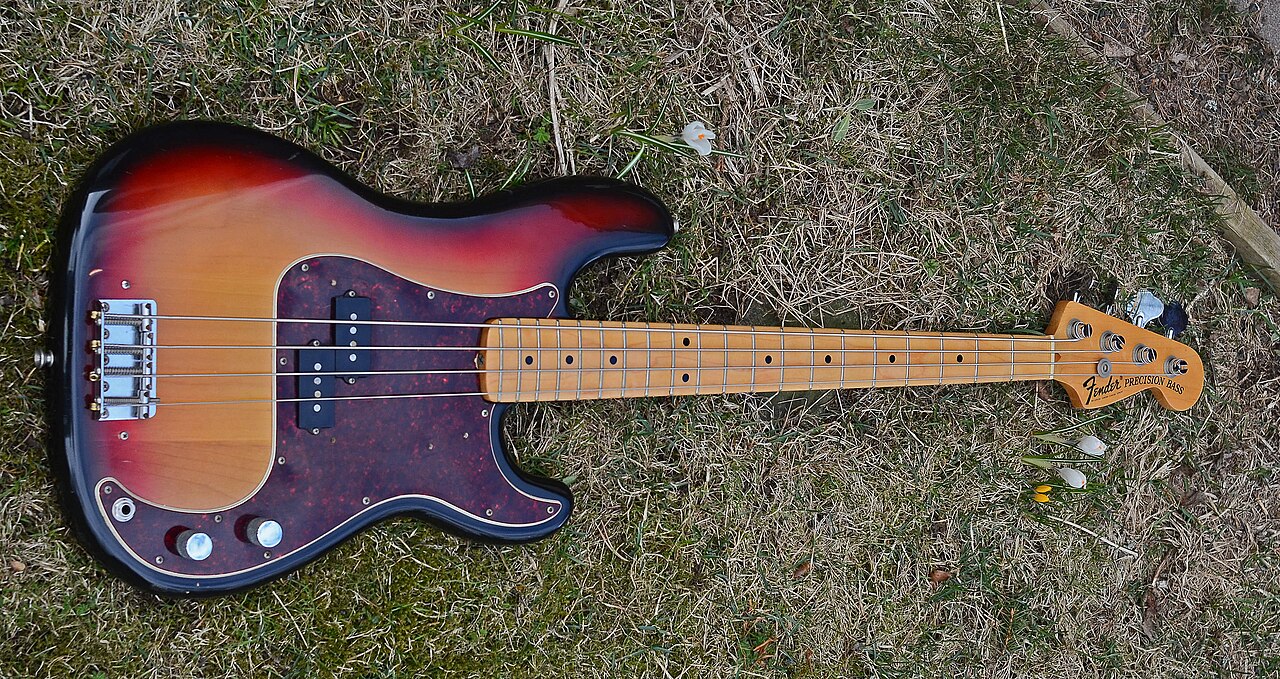
The Precision Bass uses a body shape similar to the earlier Esquire/Telecaster, but with an additional bass-side "horn", creating a double-cutaway silhouette. In its initial incarnation, the Precision Bass used squared-off edges without contouring, but rounded edges and contouring were introduced after the similarly-styled Stratocaster's release. The body was made of two pieces of matched and laminated ash. Alder became standard on models with sunburst finishes.
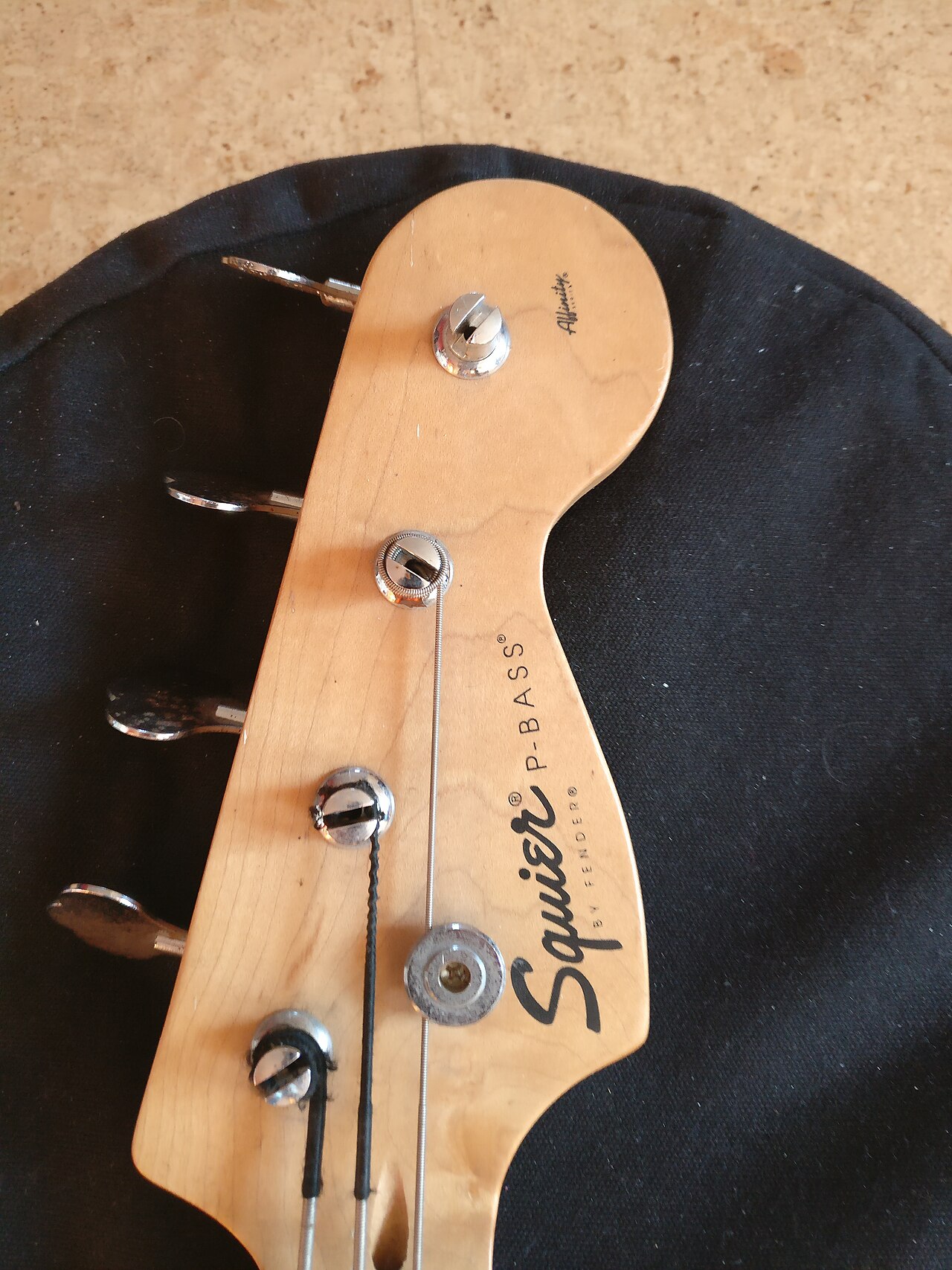
Fender chose a 34" scale length. Pre-1957 models used a headstock similar to a Telecaster, but this was later changed to bring it more in line with the Stratocaster's styling. The neck—initially made from a single piece of maple, but with rosewood later offered as a fretboard option—was bolted on using four screws. The neck used a large "C"-shape with a 7.25" radius fretboard.
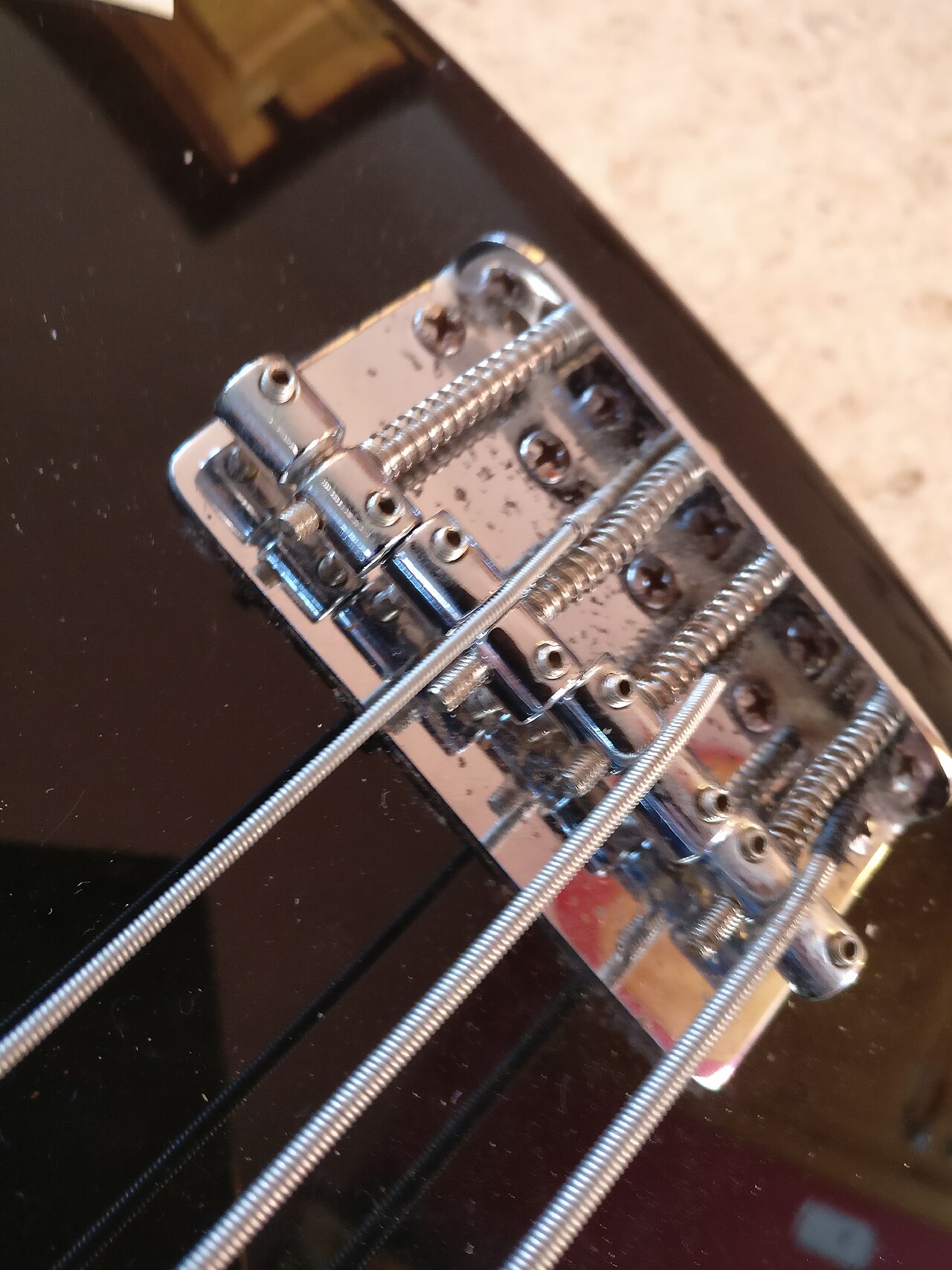
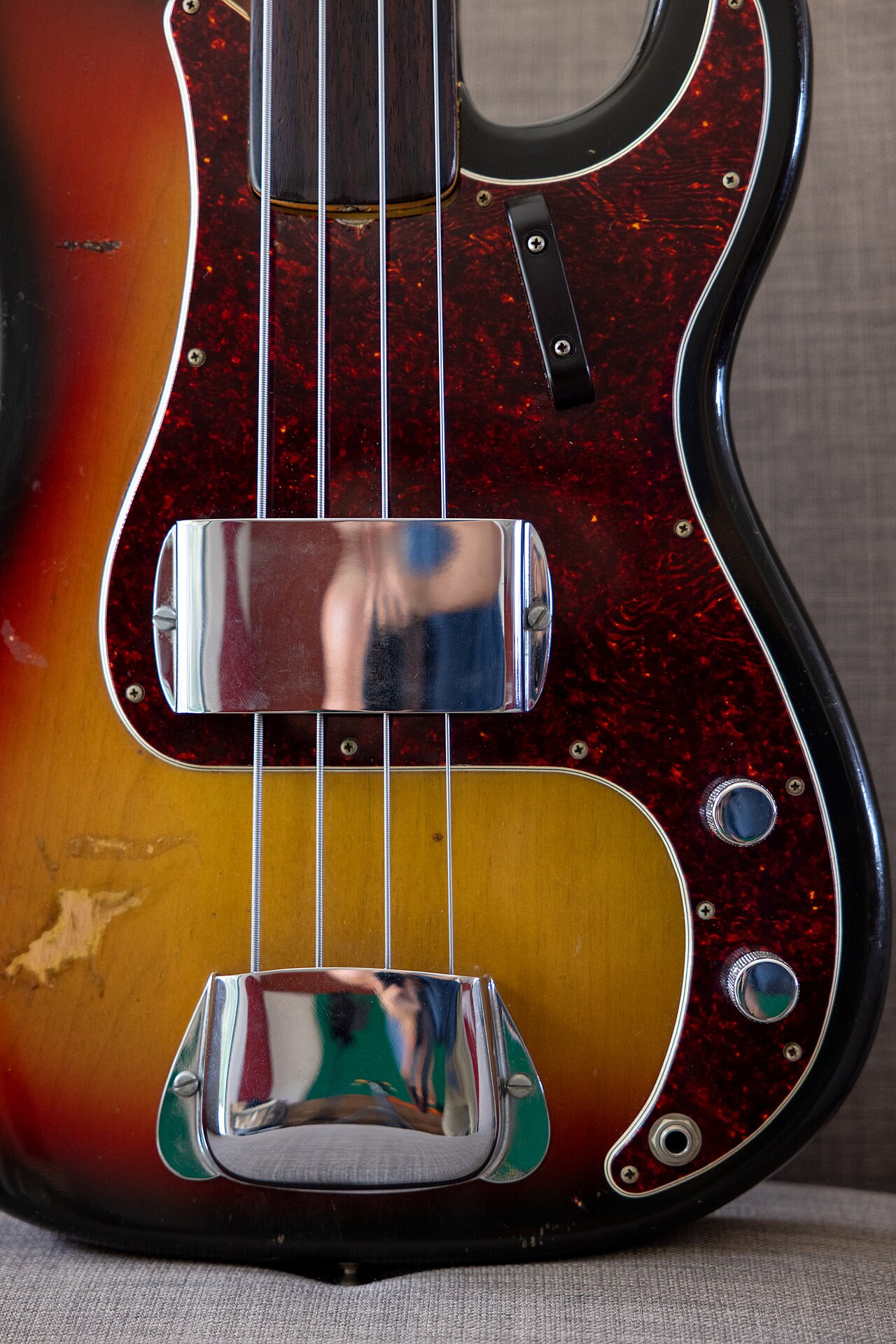
Modern versions typically use a flatter 9.5" radius. Pre-1957, strings were loaded through the body and over a bridge equipped with two pressed fiber saddles; post-1957, the strings were loaded at the bridge, which was later updated with four saddles made of steel. The bridge was initially equipped with a chrome cover with a foam insert. The original model's pickguard covered much of the Precision Bass's body, including both horns.
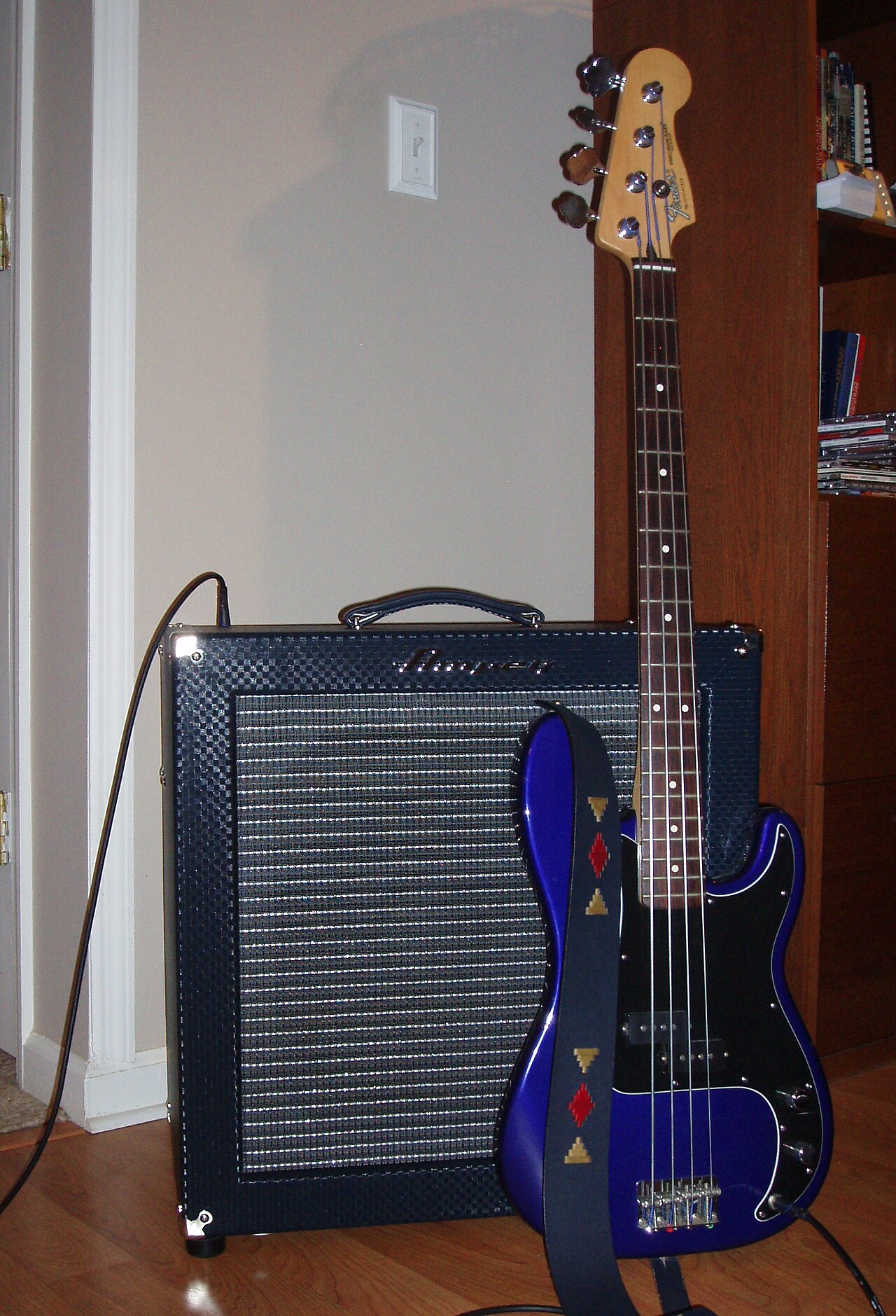
The later redesign was more Strat-like, covering less of the body but now with the bass's controls mounted directly onto it, as was a finger rest below the G string. At different times, the pickguard has been black, white, and tortoiseshell. The first pickups consisted of a simple, single-coil design with four Alnico V magnet pole pieces. Leo Fender solved the hum problem by splitting the pickup into two separate coils, which were wired out of phase with the magnets oriented with reverse polarities.
The transient problem was solved by placing pole pieces on either side of each string. These pickups have remained standard in Precision Basses ever since they were introduced in 1957. Some contemporary Precision Bass models additionally use a Fender Jazz Bass bridge pickup in what is known as a "PJ" pickup configuration.
Did You Know?
- Some historians consider the Precision Bass to have had a greater impact on popular music than Fender's widely-known Telecaster and Stratocaster electric guitars.
- The companion bass amplifier, the Fender Bassman, also proved influential.
- The name "Precision Bass" referenced the precision in which Fender's factory construction methods could install frets to achieve the most accurate pitch and intonation.
Gallery
More in Gear & Customization
Elsewhere in Rock Band
Spotted an error? Know more?
Reader corrections go straight into our review queue. Suggest an edit · How this site is sourced