Earl of Huntingdon
A medieval and Tudor earldom linked to Robin Hood.
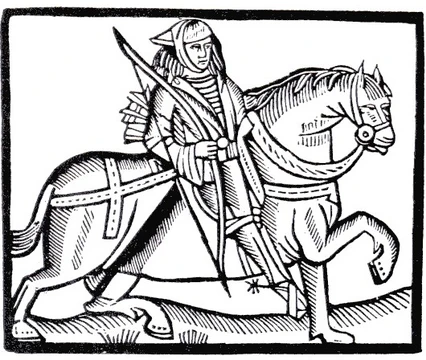
The title Earl of Huntingdon, part of the English peerage, has been revived multiple times. Its medieval version was tied to Scotland’s royal family. Since the 1500s, English folklore has linked the title to Robin Hood, frequently naming him Robert of Huntingdon.
Quick Facts
- Creation date
- 1065 (first creation); 1529 (current creation)
- Monarch
- Edward the Confessor (first creation); Henry VIII (current creation)
- Peerage
- Peerage of England
- First holder
- Waltheof, Earl of Northumbria
- Present holder
- William Hastings-Bass, 17th Earl of Huntingdon
- Heir presumptive
- The Hon. John Peter Robin Hood Hastings-Bass
- Remainder to
- heirs male of the body (lawfully begotten)
- Subsidiary titles
- None, invented courtesy title "Viscount Hastings" used by heir apparent
Facts from the source article.
Did You Know?
- The earldom was one of the seven earldoms of Saxon England during the reign of Edward the Confessor.
- Waltheof, the first earl of the 1065 creation, was executed after a rebellion in 1076.
- The third Earl of the 1529 creation was a possible heir presumptive to the crown through his mother.
Early history
Back in the 6th century, the Gyrwas people called Huntingdonshire home as part of East Anglia. The Danes took over in the 9th century, but Edward the Elder won it back in 915. Soon after, the Earldom of Huntingdon was created, one of just seven Saxon earldoms under Edward the Confessor. It was given to Beorn Estrithson, a cousin of future king Harold Godwinson, and its authority stretched across Northamptonshire, Bedfordshire, and Huntingdonshire.
First creation (1065)
In 1065 the earldom passed to Waltheof, son of Siward, Earl of Northumbria. He kept his title after the Conquest in 1066 and after a rebellion in 1067, marrying Judith, King William's niece. Following a second rebellion in 1076, he was executed and the earldom was reduced in size and power. It was inherited by Waltheof's daughter Maud, countess of Huntingdon, passing to her husbands Simon de Senlis and then David King of Scotland. After her death, during the reigns of Matilda and Stephen, the earldom was disputed between Maud's sons Simon II and Henry of Scotland. With the death of David's childless son John in 1237, the title became extinct.
Seventh creation (1529)
The title was re-created for George Hastings, 3rd Baron Hastings, who fought in the French Wars of Henry VIII and helped suppress the Pilgrimage of Grace. His eldest son, the second Earl, served as Commander-in-Chief of the Army and married Catherine, daughter of Henry Pole, 1st Baron Montagu, linking the family to the Duke of Clarence. The third Earl was a possible heir presumptive to the crown under Elizabeth I, though never officially acknowledged, and was a custodian of Mary, Queen of Scots and President of the Council of the North.
He was succeeded by his younger brother, the fourth Earl, who served in the House of Commons and as Lord-Lieutenant of Rutland and Leicestershire. The fifth Earl was Lord-Lieutenant of Leicestershire and Rutland, followed by the sixth Earl, who sat as MP for Leicestershire. The seventh Earl served as Lord-Lieutenant of Leicestershire and Derbyshire. The eighth Earl carried the Sceptre at the Coronation of Queen Anne but died young.
The ninth Earl carried the Sword of State at the Coronation of King George II. The tenth Earl served as Master of the Horse and died without legitimate male issue in 1789, making the earldom dormant.
More in Robin Hood
Spotted an error? Know more?
Reader corrections go straight into our review queue. Suggest an edit · How this site is sourced