Sacred dance
Ritual dance used in worship across cultures and history.
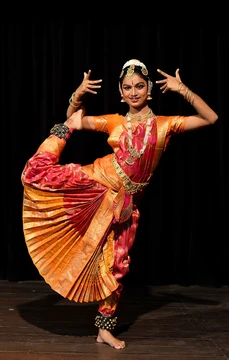
Dance has long been woven into religious ceremonies and rituals, appearing across most faiths throughout history. Because it connects to the human body and fertility, some religions—like certain branches of Christianity and Islam—have banned it. In Hindu temples, dance is a major form of worship, with formal styles like Bharatanatyam requiring skilled performers. In the 1900s, choreographers such as Bernhard Wosien revived sacred dance to strengthen community bonds.
Quick Facts
- Proposed purposes by theologian
- W. O. E. Oesterley (1923)
- Contemporary sacred dance teacher
- Laura Shannon (2018)
- Hittite sanctuary inscription date
- c. 1200 BC
- Location of hittite sanctuary
- Yazılıkaya, near Hattusa, Cappadocia
- Founder of mevlevi order
- Rumi
Facts from the source article.
Purposes
Sacred dance has served many purposes across cultures and centuries. In 1923, theologian W. O. E. Oesterley outlined a range of these functions, with the primary one being to honor supernatural beings. Other reasons included showing off before those powers, and achieving union with a divine force, as seen in dances dedicated to the Greek goddesses Demeter and Persephone. Dancers might also dance ecstatically until losing consciousness, making their bodies a temporary home for a deity. Some dances aimed to help crops grow or encourage a deity to do so, like the dance of Ariadne mentioned in the Iliad. In sacrificial rites, participants would circle an altar or a victim—for example, the Israelites circling an altar or the Sarawak Kayans circling a pig. Dances could pay homage to a deity present at an initiation, aid warriors in battle and appease the spirits of slain enemies, or ward off dangers at a wedding. At funerals, dancing might drive away a malevolent ghost, prevent a ghost from leaving its grave, frighten evil spirits drawn to the corpse, temporarily bring the dead person back to join the dance invisibly, or simply honor the deceased.
In 2009, dancer and scholar Harriet Lihs categorized religious dance into four types: imitation dances, such as mimicking animals seen as spirit messengers or reenacting battles; medicine dances for healing, like the serpent dances in India used to prevent disease; commemorative dances for events like the winter solstice; and dances for spiritual connection, exemplified by the whirling of the Whirling Dervishes in Sufism.
More recently, in 2018, sacred dance teacher Laura Shannon described the purposes of contemporary sacred dance as practiced at the Findhorn Foundation. She stated these dances aim to be inclusive, mutually supportive, and to connect participants with the earth, spirit, and each other, ultimately helping them become more whole. This practice serves as a way to channel healing energy, not only for the dancers themselves but also for their families, communities, and the entire world.
Within religious contexts, ecstatic dance remains a common method for inducing religious ecstasy.
In world religions
Judaism observes the festival of Simchat Torah, which includes dancing in synagogues. The Hasidic movement, which dates from the 18th century, practices dancing in a religious context. Some Christian traditions make use of liturgical or worship dance, but it has long been controversial within the church. It has been supported, sometimes fervently, by both priests and Christian scholars; and opposed, sometimes stridently, by others who for example wrote some 157 tracts against dance between 1685 and 1963. The early church was largely in favour of dance, with the eminent Church Father Augustine arguing that Christian dance ought to be orderly according to a reasoned rhythm, in harmony with the Jewish tradition, but in contrast to ecstatic Greco-Roman dance. A typical early Christian dance is the 2nd century AD circle dance in the Acts of John which states that "Grace danceth. I would pipe: dance ye all. The whole world on high hath part in our dancing." Circle dance is used, in its more meditative form, in worship within religious traditions including the Church of England. In northern Greece and southern Bulgaria, in the annual celebrations for Saint Constantine and Saint Helen, dancers perform the Anastenaria, a fire-walking ritual, as the climax of three days of processions, music, dancing, and animal sacrifice. Indian classical dances such as Bharatanatyam, Kathak, Odissi, and Mohiniattam can be traced to the Sanskrit text Natya Shastra. They are a traditional drama-dance expression of religion, related to Vaishnavism, Shaivism, Shaktism, pan-Hindu epics and the Vedic literature. As a religious art, they are either performed inside the sanctum of a Hindu temple, or near it. Dance is unusual within Islam, but circle dance is used in the Islamic Haḍra dances. In the tradition of the Mevlevi Order founded by Rumi, ecstatic Sufi whirling is practised by devotees as a form of active meditation within the Sama (worship ceremony). In 2007, Sufi practices including ecstatic dance and the reciting of religious poetry were a focus for political resistance in Iran, reportedly banned by Shi'a clerics. The syncretic Afro-American religious tradition Candomblé, practiced mainly in Brazil, makes use of music and ecstatic dance in which worshippers become possessed by their own tutelary deities, Orishas.
More in Ritual Dances
Spotted an error? Know more?
Reader corrections go straight into our review queue. Suggest an edit · How this site is sourced