Frequently Asked Questions
The most-asked questions about revolutions and conflicts.
What does 'revolutions and conflicts' actually cover as a subject?
It is the broad study of how societies violently or radically restructure their political and social orders, ranging from peasant uprisings to full-scale civil wars and interstate wars. It spans every continent and era, making it one of the most sprawling topics in human history.
Who are the central figures a newcomer should know first?
Names like Napoleon, Lenin, Mao, Simón Bolívar, and George Washington tend to anchor the narrative, but the true engine of most events was the mass of soldiers, workers, and civilians whose collective actions drove outcomes. Most reference works treat leaders as protagonists while acknowledging the crowd as the underlying force.
Where should a newcomer start reading?
A solid entry point is choosing one well-documented revolution—such as the French, American, or Russian Revolution—and working through a single narrative history before branching out. From there, comparative studies on why revolutions succeed or fail help connect patterns across cases.
What themes recur across nearly every major conflict?
Power vacuums, ideological mobilization, the tension between gradual reform and radical rupture, and the question of who bears the human cost appear in almost every case. The cycle of revolution, reaction, and counter-revolution is perhaps the most recognizable structural pattern.
What is considered the single most iconic moment in the field?
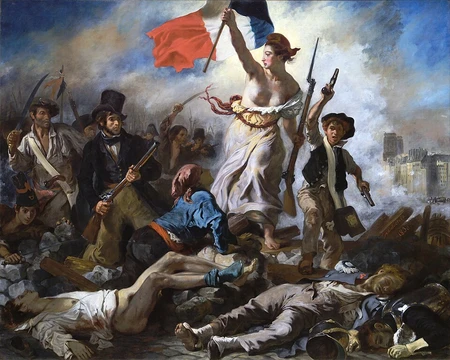
The storming of the Bastille in 1789 is frequently cited as the most symbolic image, though the fall of the Berlin Wall in 1989 and the October 1917 uprising are equally iconic in their own spheres. Different communities tend to champion different moments as their defining scene.
How do revolutions differ from ordinary wars?
Revolutions aim to fundamentally restructure the governing system and social hierarchy, whereas conventional wars typically seek territorial gains or policy shifts within an existing order. In practice the line blurs constantly, and many conflicts contain elements of both simultaneously.
What is a common misconception among newcomers?
Many assume revolutions are clean, decisive breaks where the old order simply vanishes overnight. In reality they are messy, prolonged, and often followed by decades of instability, civil war, or authoritarian backlash.
How do reference works usually organize this material?
Most encyclopedias sort entries chronologically or geographically, with cross-references linking related uprisings and shared ideological lineages. Thematic indices covering topics like peasant revolts or cold-war proxy conflicts help readers spot patterns across time and place.
Why do people get so passionate about this topic?
It touches directly on questions of justice, freedom, and who gets to decide how a society is governed, so it resonates on a deeply personal level. Fans often see their own political struggles mirrored in historical cases, which keeps the discourse alive and contested.
What is the long-term legacy of major revolutions and conflicts?
They reshaped borders, legal systems, and cultural identities in ways still visible today, from the modern nation-state to universal-rights frameworks. The field ultimately reminds us that political order is never permanent and is always open to contestation.