Mastic (plant resin)
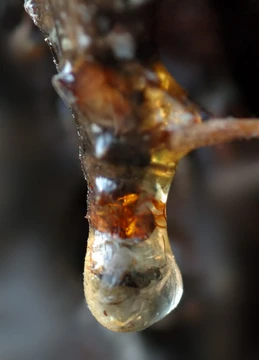
Resin from Pistacia lentiscus, traditionally produced on Chios.
Mastic (Μαστίχα) is a resin obtained from the mastic tree (Pistacia lentiscus), also known as tears of Chios. It is produced in droplets by the resin glands of this evergreen shrub and dries into brittle, translucent pieces. When chewed, it softens to a bright white, opaque consistency and releases a flavor initially bitter then reminiscent of pine and cedar.
Quick Facts
- Also known as
- tears of Chios
- Traditional production region
- island of Chios
- Harvest name
- kentos
- Harvest period
- beginning of July to beginning of October
- Growers' cooperative founded
- 1938
Facts from the source article.
History
Chios mastic has been used in traditional medicine for about 2,500 years. The word mastic derives indirectly from μαστίχη, possibly related to μασᾶσθαι. Hippocrates first mentioned actual mastic 'tears', using it for digestive problems, colds, and as a breath freshener. Romans included mastic in the spiced wine conditum paradoxum with honey, pepper, and egg.
Under the Byzantine Empire, the mastic trade became the Emperor's monopoly; during Ottoman rule, the Sultan gathered the finest crop, and mastic was worth its weight in gold. The Turkish name for Chios, Sakız Adası, means 'gum island'. The mastic villages were built fortress-like, hidden from the sea, with high walls and no street-level doors, entered only by ladders, to protect the sap. A traditional Greek digestif liqueur, Mastichato (Mastika), is tied to this history, and similar grape-based digestive liqueurs were known as Greek elixirs before the French Revolution. Production was threatened by a forest fire in August 2012 that destroyed some mastic groves.
Cultivation
Producing mastic resin is a year-round process. The harvest, called kentos, runs from early July to early October. Growers first clear the area around the trees and sprinkle it with inert calcium carbonate. Every 4–5 days, 5–10 incisions are made in each tree's bark to release resin; the clear drops hanging in sunlight are described as resembling crystalline teardrops, giving the resin the name 'tears of Chios'.
About 15–20 days pass before the first resin crystals harden and fall. Farmers collect the dry pieces, wash them in natural spring water, and spend most of the winter cleaning and separating the tears from sand by hand, a process regulated by the Mastic Growers' Association. Mastic oil is also produced. As of 2024, twenty-four mastichochoria (mastic villages) on Chios are dedicated to cultivation.
The designation 'Masticha Chiou' ('Khios mastic') has European Union protected designation of origin (PDO) status. Production is controlled by the Chios Gum Mastic Growers Association (CGMGA), founded in 1938, a secondary cooperative representing twenty primary cooperatives from the mastic villages, with exclusive management of natural Chios Masticha in Greece and abroad. The Chios Mastic Museum has a permanent exhibition on mastic production, history, cultivation techniques, and modern uses.
Uses
In the Eastern Mediterranean, mastic appears in brioches, ice cream, and other desserts. In the Levant it is added to booza (Levantine ice cream); in Turkey it is used in Turkish delight, dondurma, puddings such as sütlaç, salep, tavuk göğsü, mamelika, muhallebi, and in soft drinks. Mastic syrup is added to Turkish coffee on the Aegean coast. In Greece, mastic is used in liqueurs like Mastika (or Mastichato), in a spoon sweet called 'submarine' (υποβρύχιο), and in beverages, chewing gum, sweets, desserts, breads, and cheese, and to stabilise loukoumi and ice cream.
In the Maghreb, it is used mainly in cakes, sweets, pastries, and as a stabilizer in meringue and nougat; in Morocco it is used in preparing smoked foods. One of the earliest uses was as chewing gum; mastic (מסטיק) is the colloquial Hebrew word for chewing gum. Some scholars identify the biblical bakha with the mastic plant, the name possibly derived from בכה (weeping), referring to the resin's 'tears'. Ancient Jewish halachic sources mention mastic for bad breath, permitting its chewing on Shabbat for that purpose. Mastic is an essential ingredient of chrism, the holy oil used for anointing by Eastern Orthodox Churches.
More in Resins
Spotted an error? Know more?
Reader corrections go straight into our review queue. Suggest an edit · How this site is sourced