
Creed
A statement of shared beliefs summarizing core tenets of a religious community.

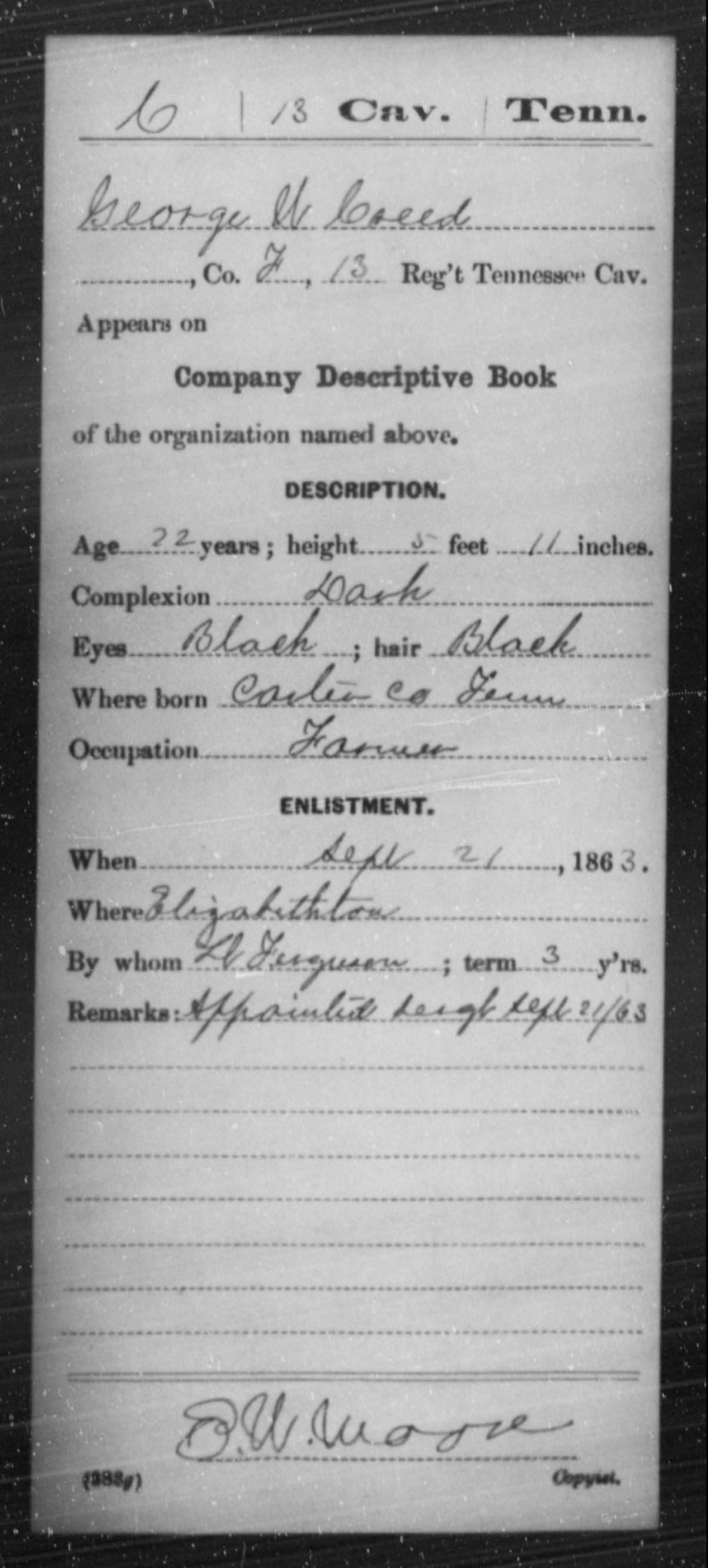
War Department. The Adjutant General's Office. 3/4/1907-9/18/1947 · Public domain
A creed—also called a confession of faith, symbol, or statement of faith—is a concise summary of the core beliefs held by a community, most often a religious one. In Christianity, three major creeds are widely used: the Niceno-Constantinopolitan Creed, the Apostles' Creed, and the Athanasian Creed, though some Christian groups reject all three. The term can also apply to similar concepts in other religions; for instance, the Islamic ʿaqīdah, meaning "bond" or "tie," is frequently translated as "creed."
Quick Facts
- Field
- Religious doctrine
- Earliest known creed
- "Jesus is Lord" from Paul the Apostle
- Non christian equivalent
- Islamic ʿaqīdah
Facts from the source article.
Lore & Background
The earliest known creed in Christianity, "Jesus is Lord", originated in the writings of Paul the Apostle. One of the most significant and widely used Christian creeds is the Nicene Creed, first formulated in AD 325 at the First Council of Nicaea to affirm the deity of Christ and revised at the First Council of Constantinople in AD 381 to affirm the trinity as a whole. In 451, the Council of Chalcedon adopted the Chalcedonian Definition, a separate document that defined the two natures of Christ (the hypostatic union) rather than simply affirming the Nicene Creed. Affirmation of the Nicene Creed, which describes the Trinity, is often taken as a fundamental test of orthodoxy by many Christian denominations, and was historically purposed against Arianism. The Apostles' Creed, another early creed which concisely details the trinity, virgin birth, crucifixion, and resurrection, is most popular within western Christianity, and is widely used in Christian church services. In Islamic theology, the term most closely corresponding to "creed" is ʿaqīdah.
Reader's Guide
The term "creed" typically refers to a brief statement recited during liturgy. It comes from the Latin word "credo," meaning "I believe," which begins the Latin versions of the Apostles' Creed and the Nicene Creed. A creed can also be called a "symbol," a usage that entered Late Middle English from the Latin "symbolum" (meaning "creed," as in the Apostles' Creed) and the Greek "symbolon" (meaning "token" or "watchword"). In Protestant traditions, longer statements of faith are often termed "confessions of faith" or simply "confessions," like the Helvetic Confession. Evangelical Protestants frequently prefer "doctrinal statement" or "doctrinal basis." These statements may specify positions on lectionaries and Bible translations, especially among fundamentalist churches within the King James Only movement.
From "Jesus Is Lord" to the Councils: The Birth of Christian Creeds
The roots of Christian creedal language stretch back to the apostolic era. The phrase "Jesus is Lord," found in the letters of Paul, stands as the earliest known creed within the faith. Slightly later, the passage in 1 Corinthians 15:3–7 preserves what most biblical scholars date to within roughly five years of Jesus' death, likely originating in the Jerusalem apostolic community and summarizing his death and resurrection. These early formulations set a pattern that would grow more structured over the following centuries. The Old Roman Creed, drawing on second-century Rules of Faith and the interrogatory declarations used at baptism, eventually evolved into the Apostles' Creed, which by the fourth century had settled into a tripartite structure echoing Matthew 28:19. Together, these documents became the backbone of orthodox Christian self-understanding.
The Language of Belief: Etymology and Terminology
The very word "creed" carries a linguistic history that mirrors the theological traditions it describes. It is an anglicization of the Latin credo, meaning "I believe," which serves as the opening word of the Latin versions of both the Apostles' Creed and the Nicene Creed. In a more specialized sense, a creed has also been called a "symbol," a usage that entered Late Middle English from the Latin symbolum, itself borrowed from the Greek symbolon, originally meaning "token" or "watchword." This etymological layering reflects how early Christians understood a creed as a shared password of identity. Terminology diverges across traditions. In much of the Protestant world, longer statements are labeled "confessions of faith" or simply "confession," as in the Helvetic Confession. Evangelical Protestantism tends to prefer "doctrinal statement" or "doctrinal basis," and in fundamentalist circles of the King James Only movement, such documents may also take positions on lectionaries and Bible translations.
Faith Without a Formula: The Non-Creedal Tradition
Not every Christian community has embraced a formal creed. A tradition known as non-creedalism holds that no human summary can adequately capture the faith. Anabaptism, emerging from the sixteenth-century Radical Reformation, gave rise to groups that declared "No creed, but the Bible" or "No creed, but the New Testament." This stance made them targets of persecution from both Catholic and Protestant authorities. Descendants of that movement include the Amish, Hutterites, Mennonites, the Church of the Brethren, River Brethren, Bruderhof, and the Apostolic Christian Church. The Quakers, founded in the seventeenth century, similarly rejected creeds, arguing that written words, steeple-houses, and clerical hierarchies cannot replace communal relationships and a direct connection with God. The Restoration Movement and its heirs, including the Disciples of Christ and various Churches of Christ, profess "no creed but Christ." The Seventh-day Adventist Church and Jehovah's Witnesses share comparable reservations, the latter contrasting the memorization of creeds with the act of doing what Jesus taught.
Creed as Boundary: Orthodoxy, Fellowship, and Exclusion
Beyond serving as a summary of belief, creeds have functioned as instruments of inclusion and exclusion. Affirmation of the Nicene Creed is widely treated as a fundamental test of orthodoxy, originally designed to guard against Arianism. Many denominations publish their own confessions of faith as the basis for fellowship among churches of the same tradition, while deliberately leaving room for differing opinions on secondary matters and remaining open to revision when needed. At the other end of the spectrum, excommunication remains a practice across most Christian denominations, intended to protect the community from the consequences of heretical teaching and apostasy by excluding members who refuse to respect the church's confession of faith and who do not repent.
Gallery




More in Religious Practices And Symbols
Spotted an error? Know more?
Reader corrections go straight into our review queue. Suggest an edit · How this site is sourced