Time in physics
Time is defined by measurement and is a fundamental quantity in physics.
Last updated
A clock's reading is what defines time in physics.[1]
Quick Facts
- Unit
- second (s)
Facts from the source article.
Key facts and history
Before clocks, time was measured by physical processes such as the heliacal rising of Sirius to mark the Nile's flooding and the length of a gnomon's shadow.[2] Galileo discovered in 1583 that a pendulum's harmonic motion has a constant period, which he timed with his pulse.[3] In his 1638 work Two New Sciences, Galileo used a water clock to measure the time for a bronze ball to roll down an inclined plane.[4] The SI unit of time is the second, defined since 1967 as the duration of 9,192,631,770 periods of radiation from caesium 133.[5]
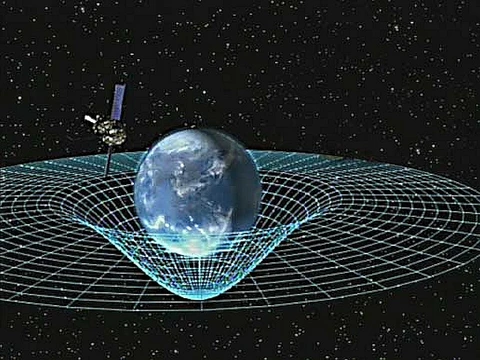
Einstein showed that if the speed of light is constant between reference frames, space and time must adjust so the moving observer measures the same speed of light.[6] An atomic time standard, the UTC timestamp, is used worldwide and has a relative accuracy of about 10−15.[7] Three arrows of time—psychological, thermodynamic, and cosmological—are distinguished by Stephen Hawking.[8]
What the cited sources add
The Stanford SOLAR Center notes that heliacal risings were so specific—just one day—that many ancient civilizations used them to mark events like drought season and planting time.[9] The same source states that not all stars have heliacal risings because some remain above the horizon all the time.[9]
References
- Wikipedia, "Time in physics" (CC BY-SA 4.0), which cites: Considine, "Process instruments and controls handbook", McGraw-Hill, 1985, p. 18–61 (we also read that source) en.wikipedia.org
- Wikipedia, "Time in physics" (CC BY-SA 4.0), which cites: For example, Galileo measured the period of a simple harmonic oscillator with his pulse.; Otto Neugebauer The Exact Sciences in Antiquity. Princeton: Princeton University Press, 1952; 2nd edition, Brown University Press, 1957; reprint, New York: Dove; Otto Neugebauer The Exact Sciences in Antiquity. Princeton: Princeton University Press, 1952; 2nd edition, Brown University Press, 1957; reprint, New York: Dove; See, for example William Shakespeare Hamlet: " ... to thine own self be true, / And it must follow, as the night the day, / Thou en.wikipedia.org
- Wikipedia, "Time in physics" (CC BY-SA 4.0), which cites: Jo Ellen Barnett, Time's Pendulum p.99. (original not read by us) en.wikipedia.org
- Wikipedia, "Time in physics" (CC BY-SA 4.0), which cites: Galileo 1638 Discorsi e dimostrazioni matematiche, intorno á due nuoue scienze 213, Leida, Appresso gli Elsevirii (Louis Elsevier), or Mathematical discourses a (original not read by us) en.wikipedia.org
- Wikipedia, "Time in physics" (CC BY-SA 4.0), which cites: "Unit of time (second)", SI brochure, p. Section 2.1.1.3 (original not read by us) en.wikipedia.org
- Wikipedia, "Time in physics" (CC BY-SA 4.0), which cites: Einstein 1905, Zur Elektrodynamik bewegter Körper [On the electrodynamics of moving bodies] reprinted 1922 in Das Relativitätsprinzip, B.G. Teubner, Leipzig. Th (original not read by us) en.wikipedia.org
- Wikipedia, "Time in physics" (CC BY-SA 4.0), which cites: S. R. Jefferts et al., "Accuracy evaluation of NIST-F1". (original not read by us) en.wikipedia.org
- Wikipedia, "Time in physics" (CC BY-SA 4.0), which cites: pp. 182–195. Stephen Hawking 1996. The Illustrated Brief History of Time: updated and expanded edition (original not read by us) en.wikipedia.org
- "Heliacal/Dawn Risings", Solar-center.stanford.edu. facts only, no text reused. solar-center.stanford.edu
Each numbered sentence above was checked against the source it cites before publication. Sentences citing Wikipedia adapt text from the English Wikipedia article Time in physics (contributors), used under CC BY-SA 4.0; this entry is available under the same licence. Other sources were used for facts only; no text or images are copied from them.
More in Relativity And Spacetime
Sources
Compiled from Wikipedia and the sources listed below. Text from Wikipedia is available under CC BY-SA 4.0; this entry is adapted from it.
- Wikipedia: Time in physics (CC BY-SA 4.0).
Spotted an error? Know more?
Reader corrections go straight into our review queue. Suggest an edit · How this site is sourced