Frequently Asked Questions
The most-asked questions about reef sharks and rays, part 2.
What does Part 2 of the reef sharks and rays encyclopedia cover that Part 1 didn't?
Part 1 introduced basic taxonomy and general reef ecology, while Part 2 dives into species-specific profiles, behavioral deep-dives, and the latest conservation research on reef-associated elasmobranchs. It also expands the ray section significantly, adding pelagic and deep-water species that were only briefly mentioned before.
Who are the key contributors or 'main figures' behind the Part 2 entries?
The encyclopedia is a collaborative fan project with no single author; the most-cited contributors are a small group of marine biology students and hobbyist divers who wrote the species profiles and behavior chapters. Their names appear in the contributor credits at the end of each section.
Where should a complete newcomer start reading Part 2?
Begin with the 'Reef Shark Species Index' chapter, which lists every covered species with a one-paragraph summary and a difficulty rating for further reading. After that, the 'Ray Diversity' overview gives the broadest single introduction to the ray material before you branch into individual entries.
What are the most-searched key facts about reef sharks in this section?
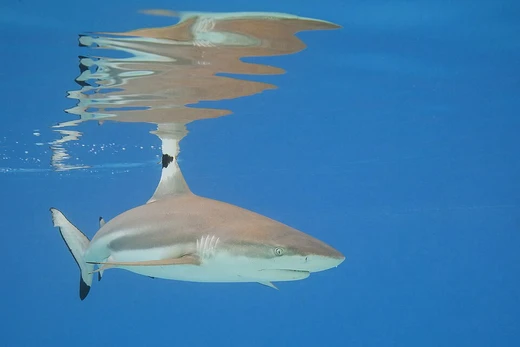
Fans most often look up the blacktip reef shark's daytime foraging behavior, the whitetip reef shark's nocturnal resting posture on the reef slope, and the leopard shark's spotted pattern variation across populations. The 'Quick Fact Cards' appendix at the back of Part 2 compiles these in a single reference page.
What is the most notable 'moment' or highlight entry in Part 2?
The 'Manta Ray Cleaning Station' chapter is the most frequently bookmarked entry, describing the symbiotic relationship between reef manta rays and cleaner wrasse in vivid detail. It includes a timeline of documented cleaning interactions and a glossary of the specific fin-posture signals mantas use.
How does Part 2 handle conservation status information?
Each species entry includes a current IUCN Red List category with a short paragraph explaining the primary threats, such as fin trade pressure or coral-reef degradation. A dedicated 'Conservation Watchlist' chapter tracks species whose status changed in the last five years and links to active protection programs.
What's the main difference in how sharks and rays are presented in Part 2?
Shark entries tend to emphasize predatory ecology, social hierarchy, and reef-zone specialization, while ray entries focus more on filter-feeding strategies, wing morphology, and migration patterns. The two sections use different diagram styles and habitat maps to reflect those distinct ecological niches.
Does Part 2 correct any common misconceptions carried over from Part 1?
Yes—the 'Myths Revisited' sidebar in the introduction explicitly walks back the oversimplified 'sharks are apex predators' framing from Part 1, noting that many reef sharks are actually mesopredators or scavengers. It also clarifies that rays are not simply 'flat sharks' and belong to a distinct evolutionary lineage.
Is Part 2 scientifically peer-reviewed or purely fan-written?
It is an unofficial fan project, so entries are not peer-reviewed, though contributors cite published papers and IUCN assessments for factual claims. The encyclopedia includes a disclaimer noting that readers should consult primary literature for research-grade information.
How long does Part 2 run, and is it published in one volume or split into chapters?
Part 2 is roughly 300 pages of text and illustrations, organized into four major chapters: Shark Species, Ray Species, Behavior & Ecology, and Conservation. Readers can work through it as a single volume or jump directly to the species index for targeted lookups.