Vlosh
An ancient Albanian red grape from the Narta Lagoon region.
Last updated
Vlosh is a red grape variety indigenous to southwestern Albania, among the country's oldest cultivars. It has traditionally been grown in vineyards surrounding Narta Lagoon and was regarded as a premium cultivar during the Middle Ages, cultivated extensively on estates of leading Albanian noble families such as the Muzaka, Spata and Thopia dynasties.
Distribution
Vlosh is cultivated across much of southern Albania, with its main area concentrated in coastal hills around Narta Lagoon, particularly near Kaninë, Trevëllazër and Zvërnec. Smaller vineyards exist in Berat and Fier. The variety likely takes its name from the village of Vlosh in Roskovec municipality. In Panajë and the Vlorë coastal plain, grapes ripen between late August and early September, with hand-harvesting beginning in the second half of September.
Ampelography
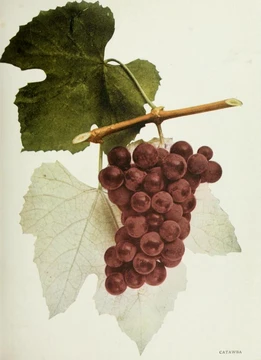
The vine bears medium-sized, moderately compact clusters. Leaves are nearly circular and deeply divided into five lobes.
Berries are round to slightly oval with skins ranging from pinkish-red to reddish-purple. When fully ripe, grapes contain 21–22% sugar and 5.8–6.2 g/L titratable acidity. Traditional winemaking uses spontaneous fermentation with native yeasts lasting five to seven days.
Winemaking
Vlosh is technically a red grape, but its thin skins give the wine a lighter color than most reds, starting as pale ruby and shifting to amber or onion-skin shades as it ages. The wine itself is full-bodied, with firm structure and plenty of tannins, plus strong aromas of ripe red fruit. Alcohol levels usually fall between 12% and 14%, and the wine is known for its balanced acidity and a finish that is pleasantly bitter and slightly astringent. Beyond dry reds, Vlosh is also made into sweet wines, and its must is used for dessert wines and liqueurs.
Winemakers often blend it with grapes like Cabernet Sauvignon to boost color, body, and aroma. Traditionally, Vlosh is meant to be drunk young rather than aged, and it has long been a match for seafood from the Narta Lagoon, especially baked eel, mullet, and other local fish. Starting in the 1970s, many vineyards around Vlorë—including areas like Babicë, Akërni, Trevëllazër, and Çekodhimë—were turned into olive groves, which sharply cut Vlosh’s acreage. Today, just a handful of Albanian wineries still produce varietal wines from this grape.
More in Red Wine Grape Varieties
Sources
Compiled from Wikipedia and the sources listed below. Text from Wikipedia is available under CC BY-SA 4.0; this entry is adapted from it.
- Wikipedia: Vlosh (CC BY-SA 4.0).
Spotted an error? Know more?
Reader corrections go straight into our review queue. Suggest an edit · How this site is sourced