Frequently Asked Questions
The most-asked questions about rebellions against the united states.
What does 'rebellions against the United States' refer to as a historical category?
It is an umbrella term for armed or organized uprisings directed at the U.S. federal government or its authority, spanning from the colonial-era American Revolution through the Civil War, the Texas Revolution, the Whiskey Rebellion, and various smaller insurrections. Scholars typically group them by era, scale, and whether they sought independence, secession, or policy change.
Who are the most frequently cited figures across these rebellions?
Names that recur most often include George Washington and Thomas Jefferson (Revolution), Aaron Burr and the Whiskey Rebels, Sam Houston and the Texian leaders, and on the secessionist side, Jefferson Davis and Robert E. Lee. Each figure is tied to a specific episode rather than a single continuous movement.
Where should a newcomer begin if they want a broad overview?
A standard U.S. survey textbook's chapters on the Revolution, the early republic, and the Civil War cover the three largest episodes. From there, dedicated short histories of the Whiskey Rebellion, the Texas Revolution, and the Philippine-American War fill in the mid-scale conflicts.
What is the single most consequential rebellion in this category?
The American Revolution (1775–1783) stands out because it produced the nation itself, making every later rebellion a challenge to an existing state rather than a fight for one. Its constitutional and ideological legacy still frames debates about federal power to this day.
How did the Civil War differ from the other rebellions on the list?
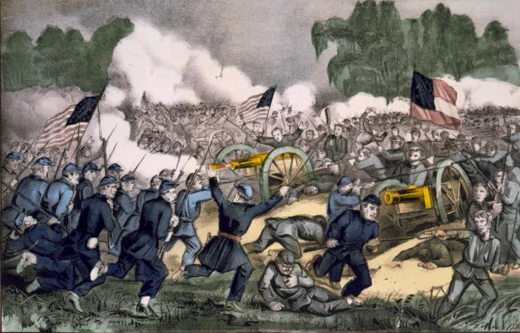
It was the only one fought between two fully organized governments with standing armies, a dedicated treasury, and international recognition, lasting four years and killing roughly 620,000 soldiers. Unlike the Revolution or Texas, it was a secession crisis within an already-established union rather than a break from a colonial or foreign power.
What was the Whiskey Rebellion and why is it often overlooked?
In 1791–1794, western Pennsylvania farmers violently resisted a federal excise tax on distilled spirits, and President Washington personally led militia to suppress the uprising. It is often skipped because it was short, regionally confined, and predates the more dramatic Civil War narrative.
Did any rebellion against the U.S. succeed in creating a lasting separate state?
Texas (1836) and, in a different context, the Philippines (1899–1902, though it ultimately lost) are the clearest cases. Texas gained independence and was later annexed, while the Philippine Republic was defeated and the islands remained under U.S. control until 1946.
What legal or constitutional principles were tested by these rebellions?
They forced the young republic to define the boundaries of federal taxation authority (Whiskey), the right of a state to secede (Civil War), and the limits of executive power to deploy the military domestically (Washington's 1794 muster). Each episode produced precedents still cited in constitutional law.
Are there reliable primary-source collections a fan can browse?
The National Archives, the Library of Congress digital collections, and the American Revolution Institute's online papers are the most accessible starting points. For the Civil War, the National Park Service's battle-park archives and the Freedmen's and Soldiers' Home records add ground-level detail.
What is a commonly misunderstood point about these rebellions?
Many assume every uprising was purely a fight over liberty or taxation, but most had layered economic, racial, and geopolitical motives that shifted over the course of the conflict. Reducing them to a single grievance tends to flatten the decisions and compromises that actually shaped the outcomes.